
Natashia Shelley
MA, LCMHC · NPI 1497158661
Licensed clinical mental health counselor who supports individuals and families through mood concerns, stress, and life changes.
NuTrans Health offers therapy and psychiatric care for people living with bipolar disorder and the family members who support them. Our Raleigh team helps you track mood changes, protect sleep and routines, work through the impact of episodes, and coordinate medication management when it is part of treatment.

Licensed therapists and a psychiatric provider can coordinate care when counseling and medication management are both needed.
Licensed clinical mental health counselor who supports individuals and families through mood concerns, stress, and life changes.

Clinical social worker who uses CBT, solution-focused methods, and strengths-based care for mood and substance-use concerns.

Dual board-certified psychiatric provider with more than 15 years of experience in evaluations and medication management.

Behavioral health clinician who connects mental health and addiction care with practical goals and whole-person support.

Licensed clinical social worker experienced in mood concerns, grief, trauma, identity, and major life transitions.
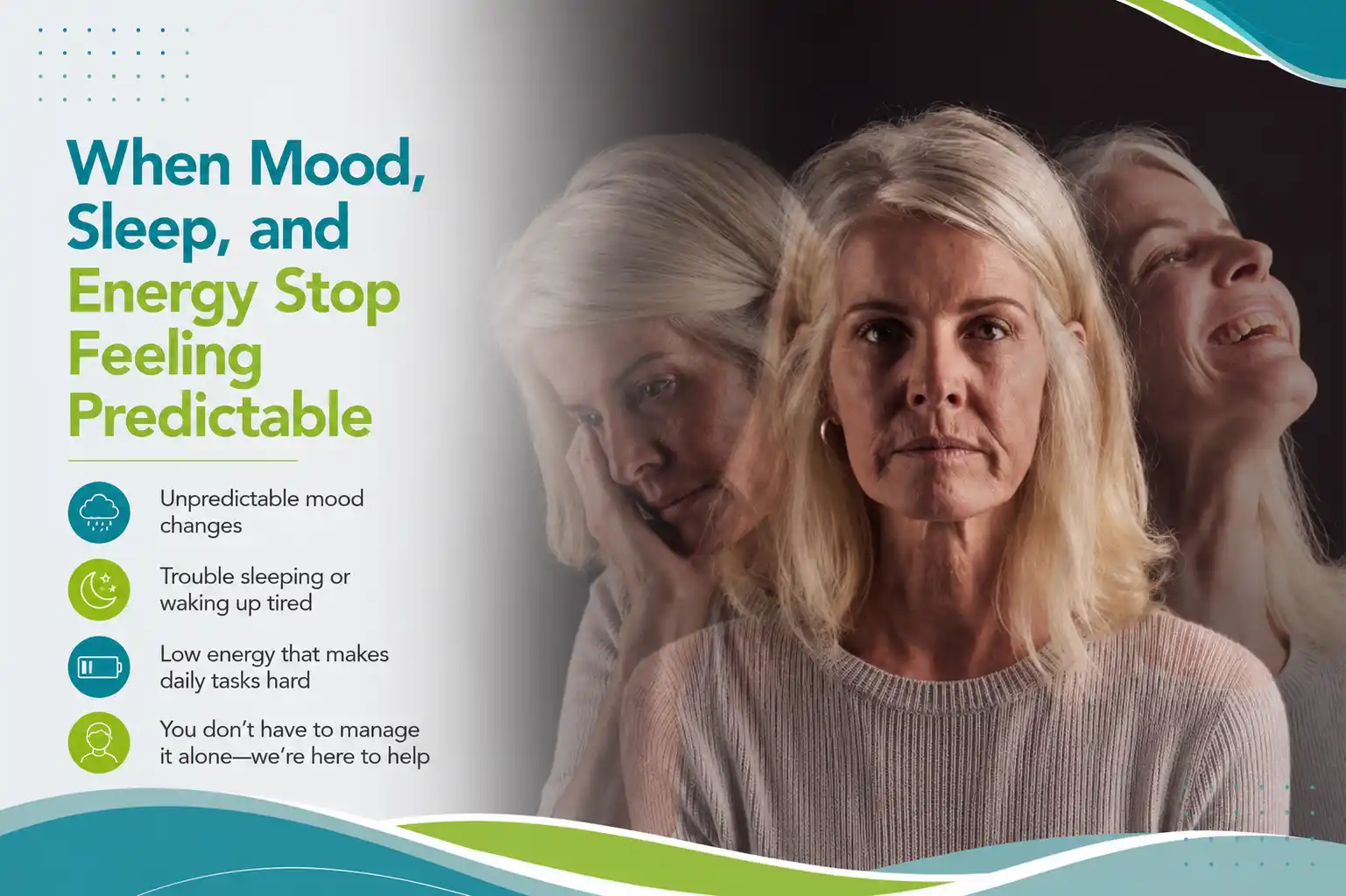
Bipolar disorder involves more than ordinary ups and downs. The pattern may include periods of depression and periods of unusually elevated, energized, or irritable mood.
Several conditions can cause similar symptoms. A careful psychiatric evaluation looks at the full pattern over time before a diagnosis or treatment plan is made.
Bipolar treatment often works best when therapy, psychiatric care, daily routines, and early-warning planning stay connected.
Your provider reviews mood episodes, sleep, energy, medical history, medications, substance use, and other possible causes.
Counseling helps with stress, relationships, self-understanding, difficult episodes, and the practical effects of mood changes.
A psychiatric provider can discuss medication, monitor response and side effects, and adjust care as your needs change.
You build a clear plan for sleep disruption, stress, early warning signs, support contacts, and changes that need attention.

Treatment is not limited to getting through a crisis. Therapy also helps you understand your patterns and protect the parts of life that support stability.
You discuss periods of depression, elevated or irritable mood, sleep changes, behavior, past treatment, and how symptoms affected daily life.
Your provider considers medical conditions, medications, substances, trauma, ADHD, anxiety, and other factors that can overlap with mood symptoms.
You receive recommendations for therapy, psychiatric care, medication management, routines, and family support based on your needs.
Your team reviews mood, sleep, functioning, medication response, and early warning signs so the plan can change when needed.
Coverage can differ for therapy, psychiatric evaluation, and medication management. Our team checks your benefits before the first appointment.
A plan not listed may still be accepted. Contact the office for a benefits check.
Initial evaluation
Follow-up: $100
Initial evaluation
Follow-up: $100
We serve Raleigh, Cary, Morrisville, Apex, Wake Forest, Garner, Knightdale, and clients using telehealth elsewhere in North Carolina.
Very intimate, I love the fact that they listen. I am glad I found a place where I know they care about me and my well-being.
I cannot express how much I appreciate NuTrans Health. The staff is prompt and courteous, and tele-visits fit my lifestyle and schedule well.
I had a great experience with NuTrans Health. The staff is professional, and the care I received was excellent.
Very good at listening and making a plan for future goals. I am feeling good about this.
Therapy can help you recognize early mood changes, protect sleep and daily routines, manage stress, repair relationships after difficult episodes, and follow a treatment plan more consistently.
A psychiatric evaluation reviews mood episodes, sleep, energy, behavior changes, family and medical history, substance use, medications, and other conditions that can cause similar symptoms. Diagnosis is based on the pattern over time, not one difficult day.
Medication is commonly part of bipolar treatment because it can help stabilize mood and reduce future episodes. The exact plan depends on your symptoms, history, preferences, and medical needs, and should be discussed with a qualified psychiatric provider.
Yes. Stable periods are useful for identifying triggers, building routines, planning for early warning signs, strengthening relationships, and preparing for changes before they become a full episode.
Family involvement can be helpful when you want support with communication, boundaries, warning signs, and a shared plan. Your therapist will discuss consent and privacy before including anyone in care.
Yes. Secure telehealth appointments are available to eligible North Carolina residents. Your provider may recommend an in-person visit when a closer assessment or additional support is needed.
NuTrans Health accepts many major insurance plans. Benefits can differ for therapy, psychiatric evaluation, and medication management, so the team verifies your coverage before care begins.
Bipolar disorder can affect sleep, work, relationships, confidence, and the sense that you can trust your own rhythm. Consistent treatment gives you a clearer way to respond when mood starts to shift.