Questions to ask your partner to build intimacy can open honest talks and help both people feel closer. These questions help couples discuss feelings, trust, love, comfort, boundaries, and future plans. The right question can make your partner feel seen, heard, and respected. It can also show where the relationship needs more care.
Intimacy does not grow from one perfect talk. It grows when both partners feel safe enough to speak honestly. Use these questions slowly and with patience. The aim is not to test your partner. The aim is to understand them better.

Table of Contents
- What Does Intimacy Mean in a Relationship?
- Why These Questions Matter
- The Intimacy Map Behind These Questions
- How to Use These Questions
- The 5-Layer Intimacy Question Model
- Questions by Relationship Stage
- Light Questions to Start the Conversation
- Emotional Intimacy Questions
- Trust-Building Questions for Couples
- Vulnerability Questions That Deepen Connection
- Romantic Questions to Ask Your Partner
- Physical Intimacy and Boundary Questions
- Future and Values-Based Questions
- Conflict Repair Questions for Couples
- A 10-Minute Intimacy Exercise
- FAQs About Intimacy Questions
What Does Intimacy Mean in a Relationship?
Intimacy means more than physical closeness. It means your partner feels safe with you. It means both people can share feelings without fear. It also means emotions are heard, not ignored.
A close relationship has many forms of intimacy. Emotional intimacy helps partners share feelings, fears, and needs. Romantic intimacy keeps love, affection, and appreciation alive. Physical intimacy includes touch, comfort, consent, and boundaries. Intellectual intimacy includes thoughts, beliefs, opinions, and curiosity. Values-based intimacy includes family, faith, money, lifestyle, and future goals.
A couple may feel close in one area and distant in another. That is why a simple question list is not enough. A strong relationship needs questions about trust, communication, romance, conflict, boundaries, and future plans.
Why These Questions Matter
Many couples talk every day but still feel far apart. They may discuss work, bills, chores, children, or daily plans. Yet they may not discuss fears, emotional needs, hopes, or hidden pain. That gap can make love feel routine.
Good questions can change that pattern. They invite your partner to share what they may not say on their own. They also show where trust feels strong and where reassurance is needed. A good question can reveal a need, a fear, or a wish.
These questions are not meant to trap your partner. They are not a test of love. They are a way to listen with more care. They can bring warmth back into daily life when used with respect.
The Intimacy Map Behind These Questions
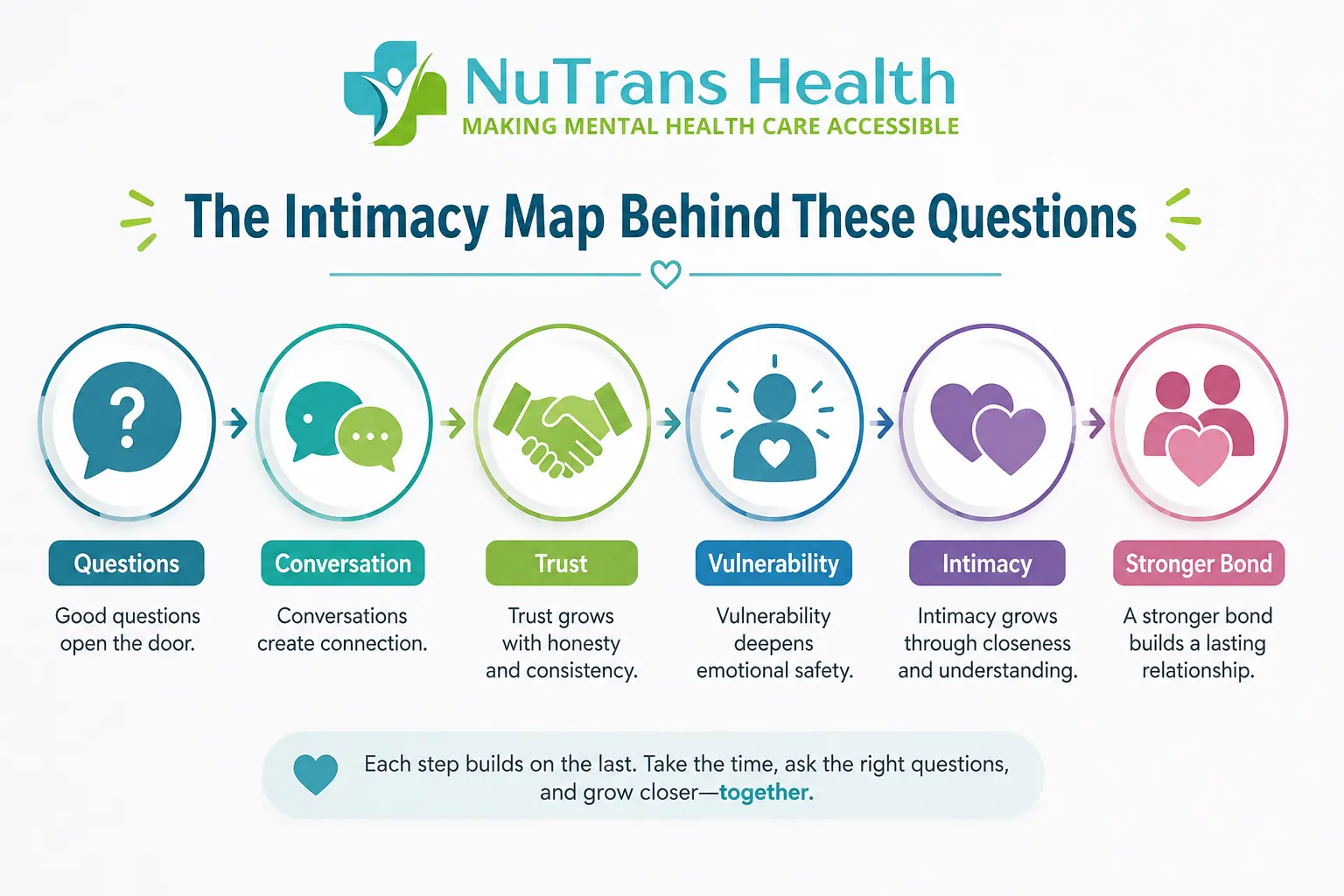
This question list follows a simple relationship map. Questions lead to conversation. Conversation leads to openness. Openness builds trust. Trust makes vulnerability feel safer. Vulnerability creates emotional closeness. Emotional closeness helps build a stronger bond.
The path looks like this:
Questions → Conversation → Openness → Trust → Vulnerability → Safety → Intimacy → Stronger Bond
Each section below supports one part of that path. Light questions build comfort. Emotional questions build understanding. Trust questions build safety. Vulnerability questions build closeness. Romantic questions build affection. Physical intimacy questions protect comfort and consent. Future questions show compatibility. Conflict questions help repair hurt.
How to Use These Questions
Do not ask all questions in one night. Pick three to five questions at a time. Give your partner time to think. Let silence stay for a moment because some answers need space.
Choose a calm time to talk. A quiet walk can work well. A slow dinner can also work well. A relaxed date night can make the talk feel easier. A weekend morning may also help if both people feel rested.
Avoid these questions during an argument. Avoid them when your partner is tired, busy, or defensive. Do not ask them to prove a point. Do not use a blaming tone. The way you ask matters as much as the question itself.
Before You Ask, Say This
Some partners need a softer start before personal questions. A short line can lower pressure and make the talk feel safer.
You can say:
- “I want us to feel closer.”
- “Can I ask something a little more personal?”
- “You do not have to answer right away.”
- “I want to understand you better.”
- “This is not a test or complaint.”
These lines show care before the question begins. They also tell your partner that they are not being judged.
The 5-Layer Intimacy Question Model
Use this model to choose the right question for the moment. Start with lighter questions before harder ones. Move slowly if the relationship feels tense.
Layer 1: Comfort
Comfort questions help your partner relax. They are warm, easy, and low pressure. Use them when the mood feels quiet or distant.
Layer 2: Understanding
Understanding questions reveal feelings and emotional needs. They show what makes your partner feel loved. They also show what makes them feel unseen.
Layer 3: Trust
Trust questions discuss safety, loyalty, honesty, and respect. They show what makes your partner feel secure. They can also reveal old hurt that needs repair.
Layer 4: Vulnerability
Vulnerability questions invite tender truth. They may bring up fear, shame, regret, or pain. Ask them only when both people feel ready.
Layer 5: Future Bond
Future questions discuss values, plans, and shared dreams. They show long-term fit between partners. They also reveal concerns about marriage, family, money, and lifestyle.
Questions by Relationship Stage
Not every couple needs the same questions. A new couple needs softer questions. A long-term couple may need reconnection questions. A married couple may need family and future questions. A struggling couple may need safety and repair questions first.
New Couples
New couples should start with comfort and curiosity. Ask about memories, hobbies, values, affection, and daily habits. Avoid heavy pressure too soon because trust may still be growing.
Good topics for new couples include favorite memories, comfort, love style, hobbies, and values.
Long-Term Couples
Long-term couples may need questions that bring back closeness. They can ask about missed needs, daily support, and emotional distance. These questions can help partners feel noticed again.
Good topics for long-term couples include support, habits, appreciation, trust, and future dreams.
Married Couples
Married couples often carry more shared duties. They may need questions about family, children, money, roles, and home life. They may also need questions that repair stress after conflict.
Good topics for married couples include children, home life, roles, support, and long-term goals.
Struggling Couples
Struggling couples should start with emotional safety. They should avoid blame-heavy questions at first. Shorter talks may work better than long serious talks.
Good topics for struggling couples include trust, emotional safety, repair, boundaries, and feeling heard.
Light Questions to Start the Conversation
Light questions make the talk feel easy. They help both partners warm up before serious topics. They are good for date night, long drives, or quiet evenings. They also help couples return to happy memories.
Light Questions to Ask Your Partner
- What made you smile today?
- What is your favorite memory of us?
- What small thing do I do that you like?
- What helps you feel relaxed with me?
- What song reminds you of us?
- What meal would you enjoy sharing with me?
- What was your first thought about me?
- What do you enjoy most about our time together?
- What is one thing we should do again?
- What makes our relationship feel fun?
- What place would you like us to visit?
- What is your favorite simple moment with me?
Why These Questions Help
These questions build comfort and ease. They remind your partner of shared memories. They also make serious questions feel less sudden.
Good Follow-Up Questions
- What made that memory special?
- How can we make more moments like that?
- What should we do again this week?

Emotional Intimacy Questions
Emotional intimacy means your partner feels understood. It includes feelings, emotional needs, fears, and support. These questions help your partner share their inner world. They also show how they want to be cared for.
Emotional Questions to Ask Your Partner
- When do you feel closest to me?
- What helps you feel understood by me?
- What emotion is hardest for you to share?
- What do you need when you feel low?
- What makes you feel cared for?
- What makes you feel distant from me?
- What do you wish I noticed more?
- What makes you feel emotionally safe?
- What do you rarely say out loud?
- What kind of support feels best to you?
- What do you need more of from me?
- What helps you open up without fear?
- When do you feel most accepted by me?
- What feeling do you hide most often?
- What should I understand better about your heart?
Why These Questions Help
These questions reveal emotional needs. They help reduce guessing between partners. They also show where more care is needed.
Good Follow-Up Questions
- What can I do when you feel that way?
- Have I missed this need before?
- What would help you feel safer next time?
- How can I show more care then?
Trust-Building Questions for Couples
Trust makes deeper intimacy feel safe. Without trust, hard questions can feel risky. These questions discuss honesty, loyalty, respect, and security. They also help partners talk about repair after hurt.
Trust Questions to Ask Your Partner
- What helps you trust me more?
- What makes you feel secure with me?
- What does loyalty mean to you?
- What makes honesty feel safe for you?
- When have you felt fully supported by me?
- What makes you feel unsure in love?
- What kind of reassurance helps you most?
- What should we protect in our relationship?
- Is there anything we need to repair?
- How can I show you I am reliable?
- What makes you feel respected by me?
- What makes you feel emotionally protected?
- What breaks trust fastest for you?
- What helps you forgive after hurt?
- What promise matters most to you?
Why These Questions Help
These questions make trust easier to discuss. They also show where reassurance is needed. They can help partners repair emotional distance.
Good Follow-Up Questions
- What did that moment feel like?
- What can I do differently next time?
- What would make trust feel stronger now?
- Is there one habit that would help?
Vulnerability Questions That Deepen Connection
Vulnerability means sharing tender truth. It can include fears, shame, regrets, or pain. These questions should be asked gently. Never use these answers against your partner later.
Vulnerability Questions to Ask Your Partner
- What fear do you rarely talk about?
- What part of yourself do you protect most?
- What experience changed how you love?
- What insecurity still affects you?
- What do you wish people understood about you?
- What past hurt shaped your boundaries?
- What makes you afraid of being misunderstood?
- What is hard for you to ask for?
- When have you felt most vulnerable with me?
- What truth feels hard to share?
- What memory still affects your heart?
- What do you avoid saying because it feels risky?
- What do you need when you feel ashamed?
- What do you hide when you feel hurt?
- What would make opening up easier?
Why These Questions Help
These questions help your partner feel known. They also invite honesty beyond daily talk. A gentle response can build lasting closeness.
Good Follow-Up Questions
- Thank you for trusting me with that.
- What do you need from me now?
- How can I hold that with care?
- Do you want comfort or advice right now?
Romantic Questions to Ask Your Partner
Romantic intimacy needs care, affection, and attention. It grows when partners feel chosen, wanted, and appreciated. These questions show how your partner likes to receive love. They also help you stop guessing what feels romantic to them.
Romantic Questions for Couples
- What makes you feel loved by me?
- What kind of affection means most to you?
- What romantic memory do you still think about?
- What makes you feel desired?
- What compliment stays with you?
- What date would feel special right now?
- How do you like to receive love?
- What small gesture means a lot to you?
- What makes you feel chosen by me?
- What do you want more of romantically?
- What makes you feel emotionally attracted to me?
- What makes a moment feel romantic to you?
- What should I do more often?
- What makes you feel appreciated?
- What love habit should we protect?
Why These Questions Help
These questions show your partner’s love style. They can bring warmth into normal days. They also help affection feel more personal and less guessed.
Good Follow-Up Questions
- How can I show that more often?
- Is there a gesture I should bring back?
- What would feel romantic this week?
- What makes affection feel natural for you?
Physical Intimacy and Boundary Questions
Physical intimacy should feel safe and respectful. It includes touch, comfort, affection, consent, and boundaries. It is not only about sex. Many couples need better talks about physical closeness.
These questions help partners discuss comfort without pressure. They also help each person understand limits, needs, and affection style. Ask them in a calm tone.
Physical Intimacy Questions
- What kind of touch feels comforting to you?
- How do you like me to show affection?
- What helps you feel relaxed with closeness?
- Are there boundaries I should understand better?
- What kind of nonsexual touch do you enjoy?
- What makes physical affection feel safe?
- What makes you feel pressured?
- How can I respect your comfort zone better?
- What helps you feel more connected physically?
- What should we talk about more openly?
- What makes touch feel caring to you?
- How can I check in without making it awkward?
Why These Questions Help
These questions protect consent and respect. They also help partners avoid assumptions. Physical closeness feels better when both people feel safe.
Good Follow-Up Questions
- Is there anything I should stop doing?
- Is there anything I should do more gently?
- How can we make affection feel safer?
- What helps you feel fully comfortable?
Future and Values-Based Questions
Future questions help couples talk about shared direction. They include values, family, money, lifestyle, faith, work, and long-term hopes. These topics matter because love also needs shared decisions.
These questions do not need perfect answers. They simply help both partners see where they agree, differ, or need more discussion.
Future Questions to Ask Your Partner
- What kind of future do you imagine for us?
- What values matter most in a relationship?
- How do you define a healthy partnership?
- What life goal matters most to you right now?
- What dream do you want us to share?
- How do you feel about marriage?
- How do you feel about having children?
- What kind of home life do you want?
- How should we handle money as a couple?
- What lifestyle feels right for you?
- What role does family play in your future?
- What does commitment mean to you?
- What do you want us to build together?
- What worry do you have about the future?
- What should we plan more clearly?
Why These Questions Help
These questions show long-term fit. They help couples talk before small differences become bigger stress. They also help partners feel included in future plans.
Good Follow-Up Questions
- What part of that matters most to you?
- Where do you think we agree already?
- What should we talk about again soon?
- What feels unclear for you right now?

Conflict Repair Questions for Couples
Every couple disagrees at times. Conflict does not always damage intimacy. The real issue is how partners repair after hurt. These questions help couples feel heard after stress, silence, or arguments.
Ask these questions when both people are calm. Do not use them while anger is high. Repair works better when both partners can listen.
Conflict Repair Questions
- What helps you feel heard during conflict?
- What should I avoid saying when we argue?
- How do you prefer to calm down?
- What makes a disagreement feel unsafe?
- What helps you feel respected during hard talks?
- How can we repair faster after a fight?
- What apology feels meaningful to you?
- What do you need after we disagree?
- What makes you shut down during conflict?
- How can I bring up problems more gently?
- What pattern should we change together?
- What helps you forgive and reconnect?
- When do you feel blamed by me?
- What makes you feel understood after hurt?
- How can we protect love during conflict?
Why These Questions Help
These questions help repair emotional distance. They also teach each partner how to handle stress with more care. Repair can make a relationship feel safer.
Good Follow-Up Questions
- What should I do differently next time?
- What helps you feel safe after a fight?
- What did I miss in that moment?
- How can we restart the talk better?
Fun Date Night Questions
Fun questions matter too. Intimacy should not only feel serious. Playfulness, laughter, and shared memories help couples feel connected.
Use these questions during dinner, a walk, or a quiet night at home. They can make the mood lighter while still building closeness.
Fun Questions for Couples
- What trip should we take one day?
- What song should be our song?
- What food should we cook together?
- What silly memory of us makes you laugh?
- What new hobby should we try?
- What movie feels like our relationship?
- What would your perfect date with me include?
- What adventure should we plan?
- What is one thing on your bucket list?
- What game should we play together?
- What place feels peaceful to you?
- What small tradition should we start?
- What makes you laugh the most with me?
- What is your dream weekend with me?
- What surprise would make you happy?
Why These Questions Help
These questions bring lightness into the relationship. They remind couples that closeness also comes from fun. Joy can make hard talks easier later.
Good Follow-Up Questions
- When should we do that?
- What would make it special?
- How can we make it simple?
- What should we plan this month?
Bad Questions vs Better Questions
The wording of a question can change the whole talk. Some questions sound blaming, even when the feeling is real. Better questions lower pressure and invite honesty.
| Bad Question | Better Question |
|---|---|
| Why don’t you open up to me? | What helps you feel safe enough to share? |
| Why are you so distant? | Is something making you feel disconnected lately? |
| Do you even care about us? | What helps you feel more invested in us? |
| Why do you always shut down? | What happens inside when conflict starts? |
| Why can’t you be more romantic? | What kind of romance feels natural to you? |
| Are you hiding something from me? | Is there anything you feel afraid to share? |
| Why don’t you trust me? | What would help trust feel stronger? |
| Why are you so sensitive? | What part of this feels painful to you? |
Better questions use less blame. They help your partner answer without feeling attacked. They also make the talk more honest.
Questions to Avoid Asking Too Soon
Some questions can feel too heavy early in a relationship. Some can also feel unsafe during a tense time. Ask with care, and respect your partner’s limits.
Avoid questions that compare your partner to someone else. Avoid questions that bring shame into the talk. Avoid questions that demand instant answers. Avoid questions that sound like accusations.
Avoid Questions Like These
- Why are you always like this?
- Why can’t you be more like my ex?
- Do you still think about your ex?
- Why don’t you love me the way I love you?
- What is wrong with you?
- Why do you never understand me?
- Are you hiding something from me?
- Why do I always have to ask for love?
These questions can make your partner feel attacked. A softer question can still address the real issue. Intimacy grows when both people feel respected.
What to Do When Your Partner Answers
How you respond matters after the question. Your partner may share something honest, painful, or unexpected. Stay calm and listen fully before replying.
Do not interrupt. Do not correct their feelings. Do not defend yourself too fast. Do not turn their answer into a fight. Try to repeat what you understood.
You can say:
- “I hear you.”
- “That makes sense.”
- “I did not know you felt that way.”
- “Thank you for telling me.”
- “I want to understand this better.”
- “I will think about what you shared.”
A safe response makes future honesty more likely. A harsh response can make your partner close off.
Green Flag Answers to Notice
Some answers show emotional safety in the relationship. They do not need to be perfect. They simply show care, honesty, and respect.
Healthy signs include:
- Your partner listens without mocking you.
- They ask the question back.
- They respect your boundaries.
- They admit when something hurts.
- They take some responsibility.
- They show interest in your feelings.
- They remember what you shared later.
- They do not rush your answer.
- They thank you for opening up.
- They try to repair after conflict.
These signs show that your partner can handle honest talks with care.
Red Flag Responses to Notice
Some responses can make intimacy feel unsafe. One bad moment does not define a person. Repeated patterns matter more.
Be careful if your partner often mocks your feelings. Be careful if they use your honesty against you later. Be careful if they refuse every serious talk. Be careful if they blame you for every problem.
Warning signs include:
- They laugh at your feelings.
- They call your needs dramatic.
- They pressure you to answer.
- They ignore your boundaries.
- They twist your words.
- They avoid all responsibility.
- They punish you with silence.
- They bring up your past to hurt you.
- They make every talk about blame.
- They never ask about your feelings.
These signs may need a calmer talk later. Some couples may also need help from a trained counselor.
A 10-Minute Intimacy Exercise
This short exercise can help couples use the questions better. It works best when both people feel calm.
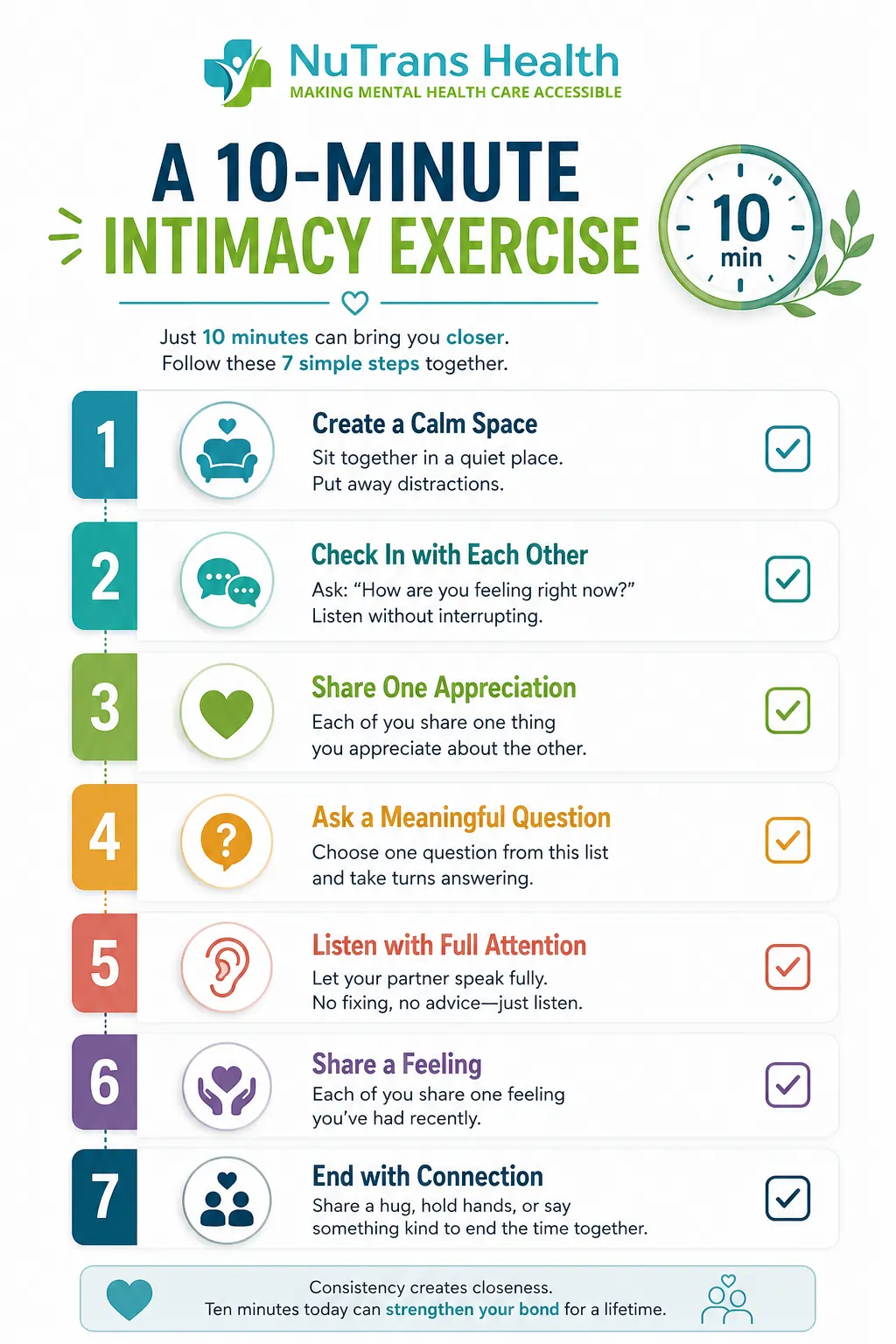
- Step 1: Each partner chooses three questions.
- Step 2: One person answers first.
- Step 3: The other person listens without interrupting.
- Step 4: The listener repeats what they heard.
- Step 5: The speaker says if anything was missed.
- Step 6: Both partners share one thing they appreciate.
- Step 7: Choose one small action for the week.
The action should be simple. It can be a walk, a kind text, a hug, or a check-in. Small actions make the talk feel real.
Quick Question Sets by Goal
Use this section when you want a faster choice. Pick the goal that fits your relationship today.
If You Want More Emotional Closeness
- When do you feel closest to me?
- What do you need more of from me?
- What helps you feel understood?
- What feeling do you hide most often?
If You Want More Trust
- What helps you trust me more?
- What makes you feel secure with me?
- What kind of reassurance helps you?
- Is there anything we need to repair?
If You Want More Romance
- What makes you feel loved by me?
- What kind of affection means most?
- What date would feel special right now?
- What makes you feel chosen?
If You Want Better Conflict Repair
- What helps you feel heard during conflict?
- What should I avoid saying when we argue?
- What apology feels meaningful to you?
- How can we repair faster?
If You Want Better Future Talks
- What kind of future do you imagine for us?
- What values matter most to you?
- What worry do you have about the future?
- What should we plan more clearly?
FAQs About Intimacy Questions
What questions build intimacy in a relationship?
Questions about feelings, trust, fears, love, boundaries, and future plans can build intimacy. The best questions help your partner feel safe, heard, and respected.
How many intimacy questions should I ask at once?
Ask three to five questions at one time. Too many questions can feel like pressure. A short, honest talk is often better.
Are intimacy questions only about romance?
No, intimacy is not only romance. It includes emotional safety, trust, comfort, touch, values, shared memories, and future plans.
What should I do if my partner does not want to answer?
Respect their answer. You can say, “That is okay, we can talk another time.” Pressure can make the talk feel unsafe.
Can these questions help a struggling relationship?
They can help if both partners are willing to listen. If the relationship feels unsafe, outside help may be needed.
What is a good first intimacy question?
A good first question is, “When do you feel closest to me?” It is gentle, clear, and easy to answer.
What questions help rebuild trust?
Ask what helps your partner feel safe, respected, and reassured. Also ask what needs repair and what actions would help.
What should couples avoid during these talks?
Avoid blame, sarcasm, pressure, and quick defensiveness. Do not use your partner’s honest answers against them later.
Building Closeness One Question at a Time
Questions to ask your partner to build intimacy work best when they are asked with care. The goal is not to finish every question. The goal is to hear your partner more clearly.
Start with light questions. Move into emotional, trust, and future questions when the mood feels safe. Use follow-up questions gently. Respect boundaries when your partner needs time.
If deeper talks feel hard to handle alone, couples therapy in Raleigh, couples therapy in Charlotte, or family counseling in Freehold, NJ can help partners work on trust, communication, emotional closeness, and relationship stress.
At NuTrans Health, we believe healthy relationships grow through honest talks, emotional safety, and steady support. Small conversations can help couples feel closer, safer, and more connected over time.
About the Reviewer
Natashia Shelley, MA, LCMHC
Licensed Clinical Mental Health Counselor
Clinical Director, NuTrans Health
Natashia Shelley is a licensed mental health counselor with expertise in couples therapy, family communication, and relationship dynamics. With a master’s degree in mental health counseling and clinical experience across multiple therapeutic modalities, Natashia brings evidence-based practices to relationship guidance. She is committed to helping couples and families build stronger emotional connections through open, honest dialogue and professional therapeutic support.
Ready to Work with a Couples Therapist?
NuTrans Health offers professional couples and family therapy services across three convenient locations:
- Raleigh, NC – 5109 Hollyridge Drive, Suite 103
- Charlotte, NC – 3440 Toringdon Way, Suite 205
- Freehold, NJ – 4400 Route 9 South, Suite 1000
Phone: (844) 748-8443
Hours: 9 AM – 6 PM EST
Services: Individual counseling, family therapy, couples counseling, group therapy, telehealth, and weekend appointments
Most insurance plans accepted. Self-pay options available.
Schedule Your Appointment Today
Related Services
Couples Therapy in Raleigh
Support for communication, trust, conflict repair, and emotional closeness.
Read MoreCouples Therapy in Charlotte
Relationship support for partners who want healthier communication and repair.
Read MoreFamily Counseling in Freehold, NJ
Counseling support for families and relationships in Freehold and through telehealth.
Read More