Yes, individual therapy can help a marriage by focusing on personal growth, improving communication skills, and addressing individual issues like trauma or anxiety that affect the relationship. It offers a private space to gain self-awareness, recognize negative patterns, and develop healthy boundaries, leading to a more balanced partnership. However, relying only on individual therapy can be limiting if relationship issues are not addressed directly. In many cases, combining it with couples therapy produces the best results.

According to the American Association for Marriage and Family Therapy (AAMFT), over 90% of clients report better emotional health, and about two-thirds see improved relationships, showing that individual therapy can directly contribute to a healthier, more resilient marriage.
This article explains how individual therapy supports a stronger marriage, enhances communication, and complements couples therapy.
Understanding the Difference: Individual vs. Couples Therapy
Individual therapy focuses on personal growth, emotional regulation, and self-awareness. It helps you explore your thoughts, feelings, and behaviors to better understand how they influence your relationship. Through one-on-one sessions, you can work on managing stress, healing from past experiences, and improving how you communicate and connect with your partner.
Couples therapy, on the other hand, centres on the relationship itself. It provides a space for both partners to address communication challenges, recurring conflicts, and emotional distance together. A couples therapist helps identify negative interaction patterns and teaches strategies to build trust, empathy, and teamwork.
While individual therapy focuses on personal change, couples therapy promotes mutual understanding and shared growth. When used together, they can complement each other by helping both partners heal individually while strengthening the bond between them.
The choice depends on your goals. If you are struggling with personal issues that affect your relationship, individual therapy may be a good first step. If the main challenges involve communication or recurring conflicts, couples therapy can help both partners work through them together.
Common Marital Issues That Stem from Individual Challenges
Many couples assume that relationship problems begin within the partnership itself, but often the root cause lies within individual struggles.. Understanding these deeper issues is the first step toward meaningful and lasting change. Below are some common personal challenges that often show up in marriages
- Emotional Baggage from Past Relationships or Family Trauma Unresolved pain from past relationships or childhood experiences can carry over into marriage. Someone who has experienced betrayal, neglect, or emotional abuse may struggle to trust, feel safe, or express love openly. This emotional baggage can create walls in the relationship, leading to distance or ongoing conflict.
- Anxiety, Depression, or Low Self-Esteem Impacting Communication Mental health challenges often influence how partners communicate and relate. Anxiety can cause overthinking or fear of confrontation, while depression may lead to emotional withdrawal or apathy. Low self-esteem can result in jealousy, insecurity, or excessive dependence on a partner for validation.
- Poor Conflict-Resolution Skills Many disagreements escalate because one or both partners lack the tools to manage conflict constructively. Some may shut down or avoid issues, while others react defensively or with anger. These patterns can create resentment and emotional distance over time.
- Fear of Vulnerability or Commitment Opening up emotionally or committing fully can be difficult for individuals who fear rejection or loss of control. This fear often stems from past experiences of abandonment or disappointment.
-
Unhealthy Boundaries or Codependency
Some individuals rely too heavily on their partner for emotional fulfilment, while others keep too much distance. Both extremes can cause imbalance and dissatisfaction.
How Individual Therapy Can Help a Marriage
When one partner chooses to focus on personal growth, it can create powerful ripple effects that strengthen the entire relationship. Below are some key ways individual therapy can support a marriage and long-term relationship growth:
1. Builds Self-Awareness
Self-awareness is the foundation of personal and relational growth. It allows you to understand how your emotions and behaviors affect your partner.
- Recognize Triggers: Therapy helps identify emotional reactions and behaviors that cause tension in the relationship.
- Understand Patterns: You learn how past experiences and family dynamics shape your current communication style.
- Encourage Growth: Self-awareness fosters maturity, helping you respond thoughtfully rather than react impulsively.
Developing self-awareness leads to more mindful choices and greater emotional stability within the marriage.
2. Improves Communication Skills
Healthy communication is one of the most important skills for maintaining a strong relationship. Therapy helps you express yourself more effectively and listen with empathy.
- Identify Communication Patterns: Therapy reveals unhelpful habits such as avoidance, criticism, or defensiveness.
- Practice Active Listening: Learning to listen with empathy encourages meaningful and respectful conversations.
- Express Emotions Constructively: You learn to communicate feelings and needs without blame or hostility.
Improved communication reduces misunderstandings and builds trust, helping couples handle challenges more productively.
3. Strengthens Emotional Regulation
Learning to manage emotions is key to preventing unnecessary conflict and maintaining peace in a relationship.
- Recognize Emotional Triggers: Therapy helps identify situations that provoke anger, frustration, or anxiety.
- Develop Coping Strategies: Individuals learn techniques to manage stress and remain calm during disagreements.
- Build Emotional Resilience: Emotional control fosters patience and support, even during difficult times.
Better emotional regulation creates a calmer, more supportive environment where both partners feel safe to express themselves.
4. Encourages Personal Responsibility
Taking ownership of your behavior rather than blaming your partner promotes accountability and balance.
- Shift Perspective: Therapy helps redirect focus from your partner’s actions to your own growth and responses.
- Foster Accountability: Owning your mistakes and emotions creates fairness and respect in the relationship.
- Improve Dynamics: When both partners take responsibility, cooperation and mutual understanding naturally increase.
Personal accountability strengthens trust and reduces cycles of blame or defensiveness in marriage.
5. Fosters Empathy and Understanding
Empathy allows you to see your partner’s perspective and respond with compassion instead of frustration.
- See Both Sides: Therapy helps you view conflicts from your partner’s emotional viewpoint.
- Deepen Compassion: Recognizing your partner’s struggles nurtures connection and forgiveness.
- Support Connection: Empathy builds emotional intimacy and strengthens long-term commitment.
Greater empathy transforms how couples communicate, helping them feel seen, valued, and understood.
6. Supports Healing from Personal Trauma
Healthy communication is one of the most important skills for maintaining a strong relationship. Therapy helps you express yourself more effectively and listen with empathy.
- Address the Past: Therapy offers a safe space to process pain or trauma that may impact the relationship.
- Rebuild Trust: Healing from emotional wounds allows for openness and vulnerability with your spouse.
- Create Safety: Emotional healing strengthens intimacy and fosters a deeper sense of security.
By working through past pain, individuals bring healthier energy and authenticity into the marriage.
7. Reduces Dependency and Co-Dependency
Individual therapy helps create emotional independence while maintaining closeness and connection.
- Build Independence: Gaining self-sufficiency reduces pressure and emotional strain in the marriage.
- Recognize Co-Dependent Behaviors: Therapy helps identify patterns that create imbalance or resentment.
- Promote Healthy Boundaries: Learning to set and respect boundaries builds trust and equality.
Reducing dependency fosters a partnership based on mutual respect and emotional balance.
8. Encourages Mutual Therapy Participation
Personal growth through therapy often inspires shared healing between partners.
- Inspire Commitment: When one partner takes the initiative to grow, it encourages the other to do the same.
- Rebuild Trust: Visible personal progress demonstrates sincerity and commitment to the relationship.
- Combine Efforts: Addressing both individual and shared issues creates lasting, positive change.
Mutual participation in therapy builds teamwork and strengthens the emotional foundation of the marriage.
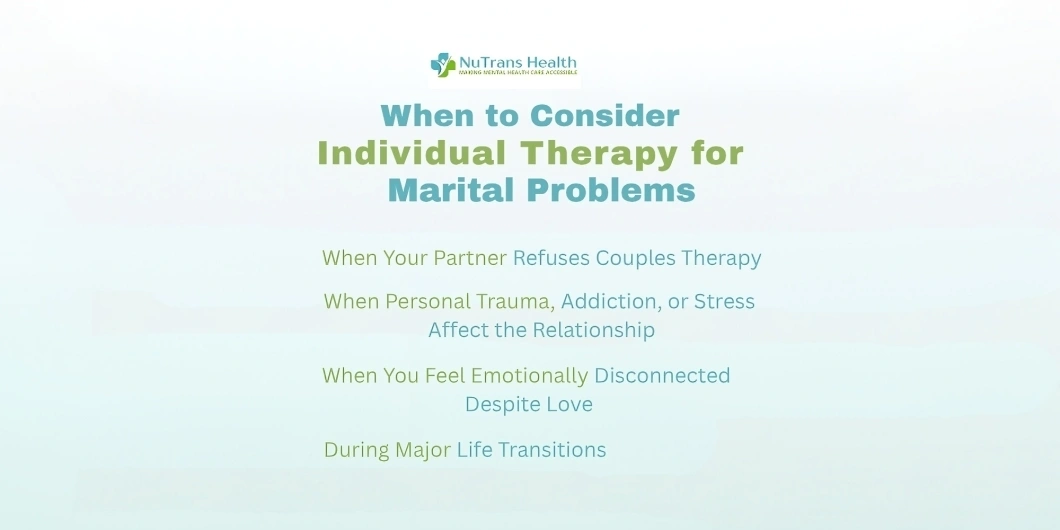
When to Consider Individual Therapy for Marital Problems
Every marriage faces challenges, but sometimes the issues run deeper than everyday disagreements. Below are some common situations where individual therapy can be especially helpful for improving your marriage:
-
When Your Partner Refuses Couples Therapy
When your spouse is not open to attending therapy, you can still take the first step on your own. Individual therapy allows you to explore your feelings, learn healthier ways to respond, and create positive changes that may inspire your partner to engage later on. -
When Personal Trauma, Addiction, or Stress Affect the Relationship
Unresolved trauma, addiction, or chronic stress can strain even the strongest relationships. Therapy provides a safe space to process these experiences, manage emotional triggers, and develop healthier coping mechanisms that prevent these issues from damaging your marriage. -
During Major Life Transitions
Big life changes, such as becoming parents, relocating, or changing careers, can shift relationship dynamics. Individual therapy helps you manage the stress and identity changes that often accompany these transitions, allowing you to stay grounded and emotionally present for your partner. -
When You Feel Emotionally Disconnected Despite Love
Sometimes love is present, but emotional closeness fades. Therapy can help uncover the reasons behind this distance, such as unresolved resentment, unmet needs, or communication barriers. Reconnecting with yourself often leads to a deeper connection with your spouse.
Need help in choosing the right therapist? Read our detailed guide on how to find the best therapist in Raleigh, NC, to make an informed choice for your relationship journey.
Start Your Journey Toward a Healthier Marriage with NuTrans Health
Individual therapy is one of the most effective ways to strengthen both your personal well-being and your relationship. By improving communication, emotional awareness, and resilience, you create space for deeper understanding and lasting connection. Whether you’re navigating stress, trauma, or emotional distance, investing in yourself can transform your marriage from the inside out.
At NuTrans Health, our licensed therapists and psychiatrists are here to support you with compassionate, evidence-based care tailored to your unique needs.
Take the first step toward healing and growth. Visit NuTrans Health today to schedule your confidential therapy session and begin building a stronger, more connected relationship.