Deep diaphragmatic breathing and the 5-4-3-2-1 grounding method are two of the simplest and most effective ways to calm an overstimulated nervous system. These techniques help slow your stress response, release physical tension, and bring your mind back to the present moment when anxiety or overwhelm begins to take hold.
Many people struggle with racing thoughts, tension, irritability, or trouble focusing without realizing these are signals of an overstimulated nervous system. In a fast-paced world full of constant demands, the body can easily get stuck in alert mode. Learning to regulate this response can significantly improve emotional balance and overall well-being.
This blog explains how deep breathing and grounding work, why they’re effective, and how you can use them to create more calm, clarity, and stability in daily life.
Table of ContentsHow Your Nervous System Responds to Stress
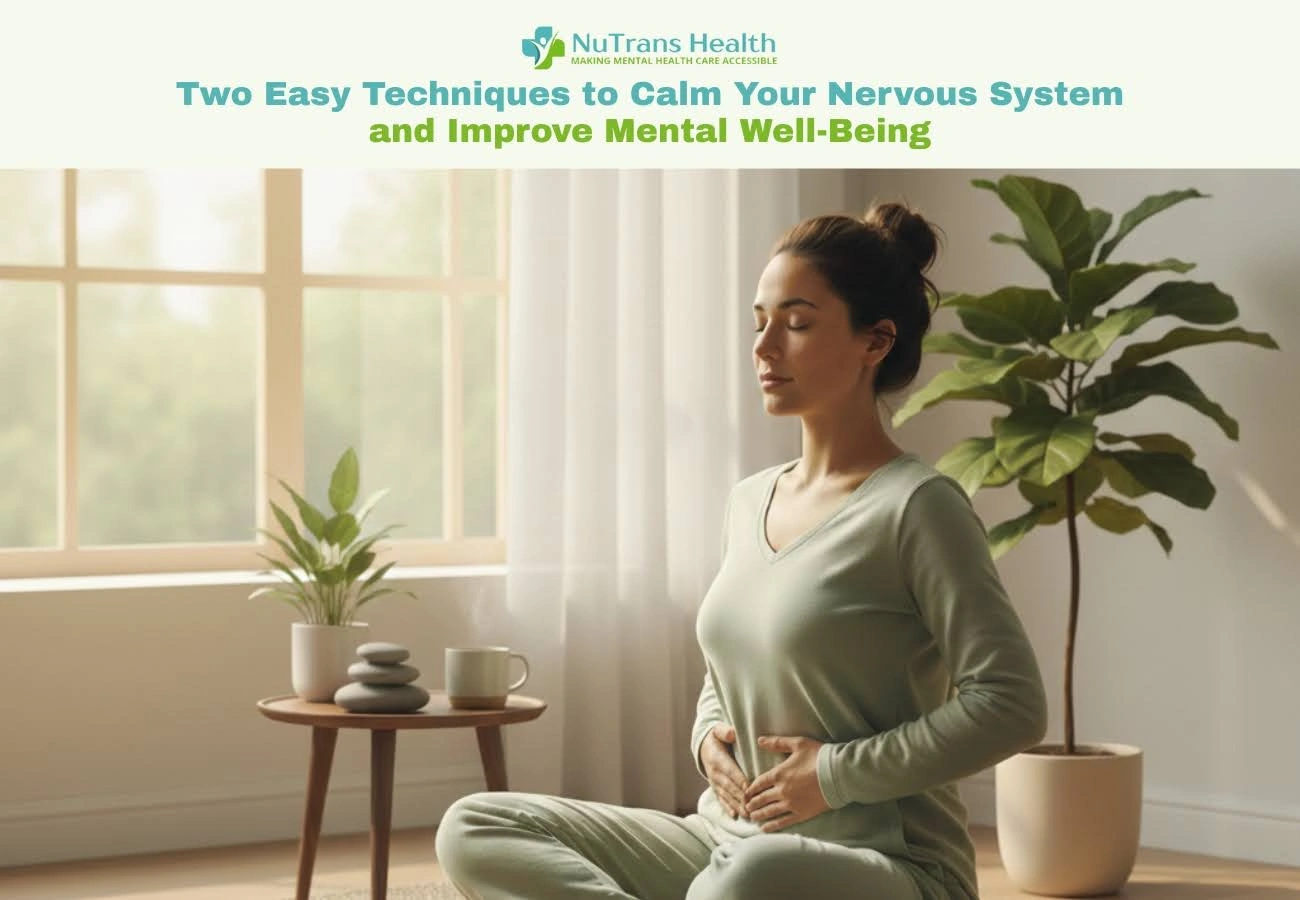
Before exploring the techniques, it helps to understand what is actually happening in your body during stress. When you feel anxious, overwhelmed, or trapped in racing thoughts, it is not just in your head. Your body is reacting exactly as it was designed to thousands of years ago.
Your nervous system has two main branches that shape your stress response.
1. The Sympathetic Nervous System (Fight, Flight, Freeze)
This is your body’s internal alarm system. When your brain senses or even simply perceives a threat, this system activates. Your heart begins to race, breathing becomes shallow, muscles tighten, and you may feel on edge or mentally scattered.
In modern life, the “threats” are not predators but things like packed schedules, overflowing inboxes, challenging conversations, and uncertainty about the future. Yet the body responds as if the danger is immediate and physical.
2. The Parasympathetic Nervous System (Rest, Digest, Restore)
This is the calming branch of your nervous system. When it is activated, your heart rate slows, your breath deepens, your muscles loosen, and your body enters a state of safety and restoration.
A balanced nervous system supports better sleep, clearer focus, steadier emotions, and greater resilience. The key is learning how to activate this calming state intentionally, especially when stress begins to take over.
Now let’s explore two of the simplest and most effective ways to do that.
Technique #1: Deep Diaphragmatic Breathing
Deep breathing is one of the oldest and most validated methods for calming the nervous system. You have probably heard someone say, “Just take a deep breath,” but this advice is more than a cliché; it is backed by decades of neuroscience and psychology.
When you breathe deeply using your diaphragm (rather than shallow breathing from your chest), you stimulate the vagus nerve, a major communication superhighway between your brain and body. This triggers a parasympathetic response and signals to your entire system that it is safe to relax.
Why Deep Breathing Works
Most people naturally shift into shallow, rapid breathing during stress. This keeps your body in a state of alertness and can make you feel even more anxious. When you intentionally slow and deepen your breath:
- Your heartbeat slows
- Your blood pressure decreases
- Your muscles loosen
- Your brain gets the signal that the danger has passed
It is one of the quickest ways to shift from stress mode to calm mode.
How to Do Diaphragmatic Breathing (Step-By-Step)
You can practice this technique almost anywhere, your desk, car, living room, or even in a crowded space, without anyone noticing.
-
Sit or lie down comfortably.
Keep your spine long but relaxed. -
Place one hand on your chest and one on your belly.
This helps you feel where your breath is moving. -
Inhale through your nose for 4 seconds.
Let your belly expand like a balloon. Your chest should stay mostly still. -
Pause at the top of your breath for a moment.
-
Exhale slowly through your nose or mouth for 6–8 seconds.
The long exhale is key; it activates the calming part of your nervous system. -
Repeat for 1–3 minutes.
Even one minute can create a noticeable shift.
Tips to Make It More Effective
-
Use the Extended Exhale
Longer exhales increase parasympathetic activation. If 4–6 feels good, try 4–8 or 4–10. -
Try Box Breathing
This is especially helpful for focus and emotional regulation:- Inhale for 4
- Hold for 4
- Exhale for 4
- Hold for 4
Repeat for several cycles. Athletes, military members, and therapists often use this to regain calm quickly. -
Incorporate Sound (Humming or “Om” tones)
Humming creates vibrations that stimulate the vagus nerve. It is also surprisingly soothing. -
Practice Consistently
Breathing techniques are most powerful when used daily, even for 2–3 minutes. Over time, they retrain your stress response so you can return to calm more easily.
Technique #2: The 5-4-3-2-1 Grounding Method Signs and Symptoms of Perinatal Mental Health Challenges
When anxiety hits, your thoughts often pull you into future catastrophizing or past regrets. Grounding techniques help bring your awareness back to the present moment, back into your body, your senses, and your actual lived experience.
The 5-4-3-2-1 method is one of the most widely used grounding exercises. It is simple, discreet, and incredibly effective at calming the nervous system during stress, panic, or moments of mental overwhelm.
Why Grounding Works
Your brain cannot be fully engaged in anxious thinking and sensory observation at the same time. When you direct your attention to your senses, you interrupt the cycle of racing thoughts and return to the here and now.
This technique works especially well when:
- Your mind feels chaotic
- You’re spiraling into “what-if” thinking
- You feel disconnected from your body
- You’re overwhelmed in a public place
- You need immediate mental clarity
How to Practice the 5-4-3-2-1 Method
Move through each step slowly, letting your breath flow naturally.
-
5 — NOTICE FIVE THINGS YOU CAN SEE
Look around and identify five visible objects. They can be big (a window, a tree) or small (a pen, the pattern on a mug). -
4 — NOTICE FOUR THINGS YOU CAN TOUCH
Feel the chair beneath you, the texture of your clothing, the warmth of your hands, the weight of your phone. -
3 — NOTICE THREE THINGS YOU CAN HEAR
Listen carefully: distant traffic, typing, birds, your own breathing, anything counts. -
2 — NOTICE TWO THINGS YOU CAN SMELL
If you can't smell anything immediately, think of two scents you enjoy: coffee, fresh air, lavender, or soap. -
1 — NOTICE ONE THING YOU CAN TASTE
Take a sip of water, chew gum, or simply notice the lingering taste in your mouth.
This sensory awareness pulls your nervous system back into the present moment, helping your body relax and your mind settle.
Tips to Deepen the Practice
-
Add Descriptions
Instead of naming objects, describe them:- “The mug is glossy and blue with chipped edges.”
- “The air feels cool on my skin.”
This increases mindfulness and grounds you even more effectively. -
Use a Grounding Object
Some people carry a small stone, keychain, or textured item to touch when they feel stressed. The familiar sensation can bring comfort and stability. -
Try a Short Version When You’re in Public
If you are in a meeting, grocery store, or conversation:- Identify 1 thing you can see
- 1 You can hear
- 1 You can feel
Even this micro-practice can break the cycle of stress. -
Combine It with Breathing
Slow exhalations while grounding amplify the calming effect.
When and Where to Use These Techniques
One of the best things about both techniques is their flexibility. They can be used:
-
During Moments of Acute Stress
If your heart is racing or your thoughts feel out of control, these practices can bring rapid relief. -
Before High-Pressure Situations
- Presentations
- Interviews
- Social events
- Exams
- Difficult conversations
A few minutes of diaphragmatic breathing can help steady your nerves. -
As Part of Your Daily Wellness Routine
Practising grounding or deep breathing regularly trains your nervous system to be more resilient. Consider using them:- In the morning to set your tone
- Mid-day to reset your energy
- At night to unwind before sleep
-
During Transitions
Life transitions can cause anxiety, as moving from one task to another can create mental clutter. Brief grounding can help you shift gears with more clarity.
Read our latest blog to find out how life transitions can cause anxiety and practical ways to overcome it. -
When You Feel Disconnected
Grounding, in particular, can help you feel more embodied and “back in your life.”
Additional Benefits of Calming Techniques You May Notice Over Time
Even though these techniques are simple, many people report surprisingly powerful benefits when they practice consistently. You may experience:
Improved Focus and Mental Clarity
When your nervous system is calm, your brain has more bandwidth for creativity, problem-solving, and thoughtful decision-making.
Reduced Physical Tension
Stress often shows up in the body, tight shoulders, a clenched jaw, and shallow breathing. Calming practices help these symptoms melt away.
Greater Emotional Resilience
The more often you practice returning to calm, the easier it becomes to do so during challenging situations.
Better Mood Regulation
Slowing your breath and anchoring your senses can help interrupt cycles of rumination and emotional reactivity.
Improved Sleep
A regulated nervous system promotes deeper, more restorative rest.
A Stronger Mind-Body Connection
Understanding the link between your thoughts, body, and breath gives you a sense of agency, even in moments that feel overwhelming.
Unlock practical ways to manage workplace stress with Mental Health Counseling insights from experts in Raleigh.
Find Calm and Balance with NuTrans Health
Simple practices like deep diaphragmatic breathing and the 5-4-3-2-1 grounding technique can quickly ease stress and help you feel more centered, clear, and in control.
For those who want deeper support, NuTrans Health offers a comprehensive stress management program available in Raleigh with both in-person and virtual appointments, and fully virtual services for individuals in Freehold, New Jersey and Charlotte, North Carolina.
Take the next step toward a calmer, more resilient life by connecting with Expert Stress Management and Therapists in New Jersey today.
Related Blogs
Mental Health Services in Raleigh NC and How AI Improves It
Mental Health Services in Raleigh NC and How AI...
Read MoreMental Health Counseling and Workplace Stress in Raleigh
Mental Health Counseling and Workplace Stress in Raleigh The...
Read MoreTeletherapy vs. In-Person Counseling: Which One is Right for You?
Teletherapy vs. In-Person Counseling: Which One is Right for...
Read More