Divorce can significantly affect children’s mental health, often leading to anxiety, sadness, guilt, behavioral changes such as aggression or withdrawal, and difficulties at school. Without consistent emotional support, these challenges may increase the risk of long-term issues, including problems with relationships or substance use. However, when parents provide reassurance, maintain stability, and communicate openly, especially by emphasizing that the divorce is not the child’s fault, many children can cope successfully and develop resilience.
This article explores how divorce can affect children’s mental health, what signs to watch for, and how parents can help their children cope and build resilience.
Table of Contents- How Children Experience Divorce at Different Ages
- Common Mental Health Effects of Divorce on Children
- Factors That Influence a Child’s Adjustment After Divorce
- How Parents Can Support Children’s Mental Health During Divorce
- Role of Therapy and Counseling in Supporting Children Through Divorce
- Support Your Child’s Mental Well-Being with NuTrans Health
How Children Experience Divorce at Different Ages
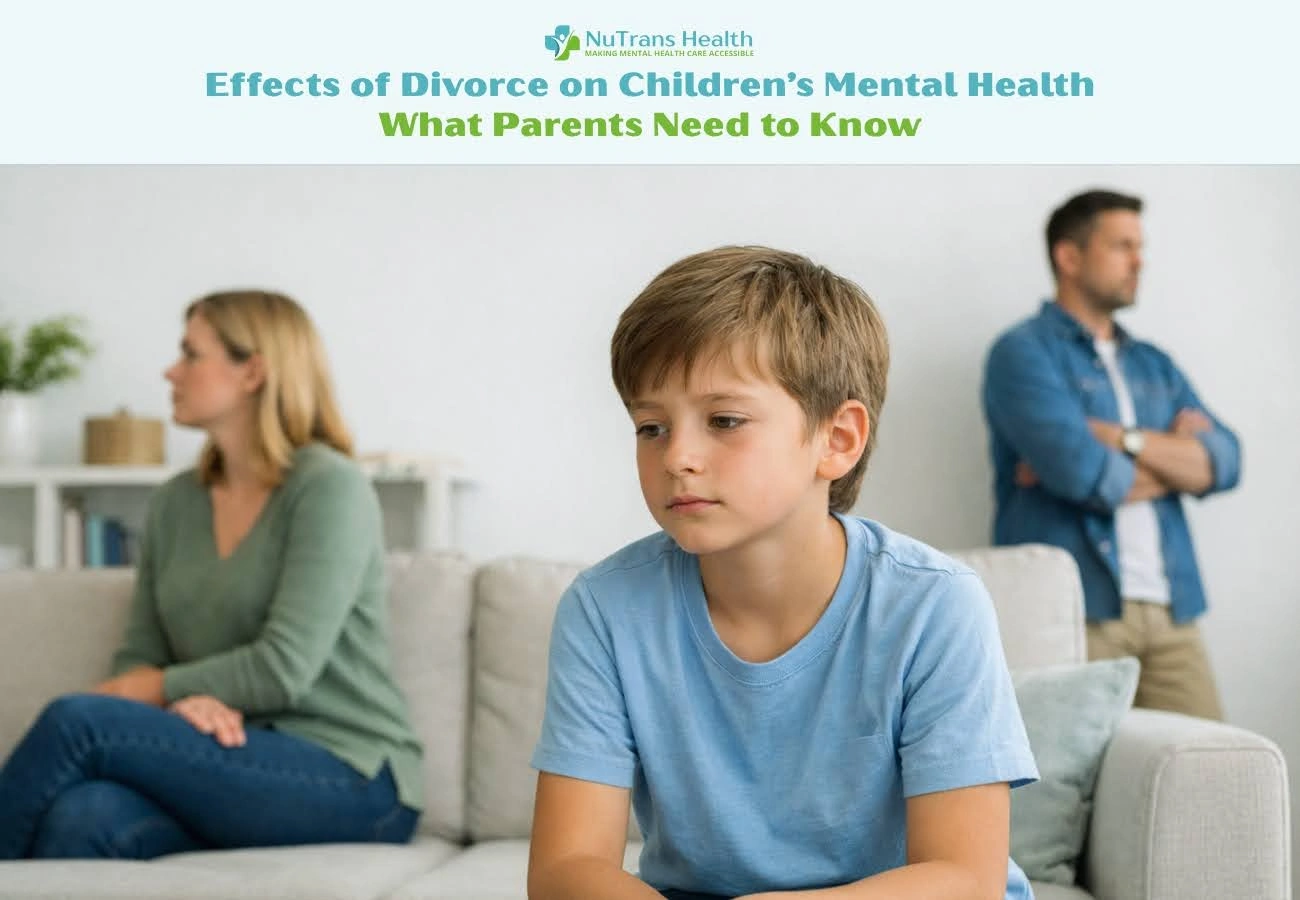
Children’s reactions to divorce are closely shaped by their developmental stage, as their ability to understand relationships, change, and emotions influences how they process the separation. For this reason, it is helpful to examine how children experience divorce at different stages of development.
Infants and Toddlers
Although infants and toddlers do not understand divorce cognitively, they are highly sensitive to changes in routine, environment, and caregiver availability. Inconsistent schedules, emotional distress in caregivers, or disruptions in attachment can lead to increased fussiness, sleep problems, separation anxiety, or developmental regression.
At this stage, children benefit most from calm, predictable routines and emotionally responsive caregiving.
Preschool and Early Childhood
Preschool-aged children often struggle to understand why divorce occurs and may interpret it in very personal ways. It is common for children at this age to believe they caused the separation or to fear that one or both parents may leave them.
Emotional responses may include clinginess, tantrums, regression in toilet training, nightmares, or heightened emotional sensitivity. Simple, age-appropriate explanations and frequent reassurance that they are loved and not responsible for the divorce are essential.
School-Aged Children
School-aged children have a greater awareness of family dynamics and may experience sadness, anger, anxiety, or loyalty conflicts. They may worry about choosing sides or feel torn between parents. These emotional struggles can affect concentration, academic performance, and peer relationships.
Some children internalize their distress, becoming quiet or withdrawn, while others express it through irritability or behavioral changes. Open communication and emotional validation help children feel supported and understood.
Adolescents and Teens
Adolescents generally understand divorce on a cognitive level, but that does not lessen its emotional impact. Teens may experience grief, resentment, embarrassment, or fear about their own future relationships. Some may withdraw emotionally, while others display increased defiance, risk-taking behavior, or conflict at home.
Supporting teens involves respecting their growing independence while maintaining emotional availability. Honest conversations, consistent boundaries, and reassurance that parental relationships remain intact are especially important.
Common Mental Health Effects of Divorce on Children
Divorce can affect children’s mental health in several interconnected ways, influencing how they feel, behave, and function in daily life. While these effects are not inevitable and vary from child to child, they are common enough to require careful attention. Children’s responses are often shaped by the level of emotional support they receive, the degree of parental conflict, and how stable their environment remains during and after the separation. Below are the three main areas in which these effects commonly appear.
Emotional Effects
Children may experience a wide range of emotional responses as they adjust to divorce. These feelings may change over time and can surface immediately or months later. Common emotional responses include:
- Sadness and grief: Mourning the loss of family unity, routines, and a sense of normalcy
- Anxiety and fear: Worry about abandonment, future changes, or parental availability
- Guilt and self-blame: Believing they caused the divorce or could have prevented it
- Emotional withdrawal: Suppressing feelings or appearing emotionally distant as a coping strategy
- Mood fluctuations: Shifts between anger, sadness, and irritability
- Negative beliefs about relationships: Loss of faith in marriage, distrust in long-term relationships, or fear of commitment later in life
Younger children may struggle to identify or express these emotions, while older children and adolescents may hide distress or minimize their feelings.
Behavioral and Social Effects
Emotional distress often appears through changes in behavior, particularly when children lack the language or skills to express what they are feeling. Common behavioral and social changes include:
- Increased aggression or defiance: Acting out anger, frustration, or confusion
- Heightened irritability or sensitivity: Becoming easily overwhelmed or emotionally reactive
- Loss of interest in social activities: Reduced participation in friendships, extracurricular activities, or hobbies once enjoyed
- Difficulty adapting to change: Struggling with new routines, transitions between homes, or changes in family roles
- Destructive or risky behaviors: Acting out through property damage, self-harm, substance use, or other harmful behaviors, particularly in adolescents
These behaviors are typically signs of emotional overload rather than intentional misbehavior and often improve with support and stability.
Cognitive and Academic Effects
Stress related to divorce can interfere with children’s ability to focus, learn, and stay engaged in school and daily tasks. Common cognitive and academic effects include:
- Difficulty concentrating: Trouble paying attention or staying focused in class
- Memory and motivation challenges: Reduced ability to retain information or complete tasks
- Declining academic performance: Lower grades or missed assignments
- Loss of interest in school activities: Disengagement from learning or extracurricular involvement
- School behavior changes: Increased restlessness, withdrawal, or emotional outbursts at school
Teachers and caregivers may notice these changes during the adjustment period. With consistent emotional support and routine, many children gradually regain confidence and academic stability.
Factors That Influence a Child’s Adjustment After Divorce
Not all divorces affect children in the same way. The following factors play a significant role in how children cope and adjust.
Level of Parental Conflict
Ongoing parental conflict is one of the strongest predictors of emotional distress in children. Exposure to arguments, hostility, or tension—whether direct or indirect—can be more damaging than the divorce itself. Children benefit most when parents manage conflict privately and avoid involving them in adult disagreements.
Quality of Co-Parenting
Cooperative co-parenting helps children feel secure. Consistent routines, predictable schedules, and respectful communication between parents support emotional stability and reduce anxiety.
Stability and Support Systems
Maintaining stability in housing, school, and social relationships helps children feel grounded. Support from extended family members, teachers, and trusted adults can buffer stress and promote resilience.
Individual Temperament and History
Each child’s personality, coping skills, and prior mental health experiences influence how they respond to divorce. Some children adapt quickly, while others need more time and support.
How Parents Can Support Children’s Mental Health During Divorce
Parents play a critical role in shaping how children experience, understand, and recover from divorce. While parents cannot remove all stress associated with separation, consistent emotional support, healthy communication, and stable routines can significantly protect children’s mental health and promote long-term resilience. Below are some key ways parents can support their children’s mental health during this transition.
Maintain Emotional Safety
Children need frequent reassurance that they are loved, safe, and not responsible for the divorce. Parents should avoid blaming language, negative comments about the other parent, or sharing adult conflicts with children. Placing children in the middle of disputes or asking them to take sides can increase anxiety and emotional distress. A calm, respectful environment helps children feel secure during uncertainty.
Encourage Open Communication
Creating space for open and honest communication allows children to express their feelings without fear of judgment or pressure. Encourage children to talk about their emotions, and listen with empathy rather than immediately trying to solve the problem. Acknowledging and validating feelings such as sadness, anger, or confusion helps children feel understood and supported, strengthening emotional resilience.
Create Stability and Predictability
Consistency provides children with a sense of control and safety during major life changes. Maintaining predictable routines, clear expectations, and familiar environments helps reduce stress and anxiety. Whenever possible, keeping regular schedules for school, meals, bedtime, and transitions between homes supports emotional regulation and adjustment.
Model Healthy Coping Skills
Children learn how to manage stress by observing the adults around them. Demonstrating healthy coping strategies, such as managing emotions calmly, seeking support from trusted people, and practicing self-care, teaches children constructive ways to handle difficult emotions. Showing that it is acceptable to ask for help reinforces the importance of emotional well-being.
Role of Therapy and Counseling in Supporting Children Through Divorce
Therapy and counseling can play an important role in helping children navigate the emotional challenges associated with divorce. Professional support provides children with a safe, neutral space to express their feelings, develop coping skills, and process changes in their family dynamics in a healthy way.
When to Consider Professional Help
Seeking professional support may be beneficial when emotional or behavioral changes persist over time, interfere with daily functioning, or significantly impact a child’s well-being. Therapy is also particularly helpful during high-conflict divorces or when children have difficulty expressing or regulating their emotions.
Signs that professional help may be needed include ongoing anxiety or sadness, behavioral difficulties, withdrawal, academic decline, or physical symptoms related to stress.
Need help choosing a therapist? Visit How To Find the Right Therapist in Raleigh, NC: A Guide For Finding The Best Match for expert tips and guidance.
Types of Therapy That Support Children
Different therapeutic approaches can be effective depending on a child’s age, needs, and circumstances.
- Play therapy: Helps younger children express emotions, reduce anxiety, and process experiences through play rather than words
- Cognitive Behavioral Therapy (CBT): Teaches children and adolescents practical coping strategies, emotional regulation skills, and ways to manage negative thought patterns
- Family therapy: Supports healthier communication, strengthens relationships, and helps families adjust to new roles and routines following divorce
Benefits of Early Support
Early mental health intervention can make a meaningful difference in a child’s adjustment and long-term well-being. Timely support helps children understand and express their emotions, build resilience, and develop healthy coping strategies. Addressing concerns early also reduces the risk of long-term psychological challenges and promotes emotional stability as children continue to grow and adapt.
Support Your Child’s Mental Well-Being with NuTrans Health
Divorce can be emotionally challenging for children, but with reassurance, stability, and open communication, they can adapt and build resilience. NuTrans Health offers compassionate, affirming mental health counseling services for children and families navigating divorce, with in-person sessions in Raleigh and online therapy services available in Charlotte and New Jersey. If your child is struggling or you need guidance, our experienced psychiatrists in Raleigh are here to help.
Contact NuTrans Health today to learn more or schedule an appointment and support your child’s emotional well-being.
Related Blogs
Mental Health Services in Raleigh NC and How AI Improves It
Mental Health Services in Raleigh NC and How AI...
Read MoreMental Health Counseling and Workplace Stress in Raleigh
Mental Health Counseling and Workplace Stress in Raleigh The...
Read MoreTeletherapy vs. In-Person Counseling: Which One is Right for You?
Teletherapy vs. In-Person Counseling: Which One is Right for...
Read More