Overcoming fear of flying usually involves retraining the brain to stop viewing air travel as dangerous. Therapists often use techniques like Cognitive Behavioral Therapy (CBT), gradual exposure, breathing exercises, grounding strategies, and acceptance-based coping skills to reduce flying anxiety over time.
According to the Cleveland Clinic, around 25 million U.S. adults experience flying anxiety, ranging from mild nervousness to severe panic and travel avoidance. The good news is that aviophobia is highly treatable, and many people learn to manage flying anxiety with the right coping strategies and therapeutic techniques.
In this guide, you’ll learn therapist-backed strategies to overcome fear of flying and regain control over travel anxiety.
Table of Contents
- What Is Aviophobia?
- Why Do People Develop a Fear of Flying?
- How Anxiety Works During Flying
- Therapist-Recommended Strategies to Overcome Fear of Flying
- 1. Identify the Real Fear
- 2. Use Cognitive Behavioral Therapy (CBT)
- 3. Learn How Flying Actually Works
- 4. Practice Gradual Exposure
- 5. Practice Diaphragmatic Breathing
- 6. Use Grounding Techniques During Flights
- 7. Practice Radical Acceptance
- 8. Choose the Right Seat
- 9. Create a Calm Kit
- 10. Reduce Stress Before the Flight
- What To Do During Turbulence
- How To Handle a Panic Attack on a Plane?
- How To Prepare Before Flight Day?
- Should You Use Medication for Flying Anxiety?
- When To Seek Professional Help
- Overcome Fear of Flying With Nutrans Health
- Frequently Asked Questions
What Is Aviophobia?
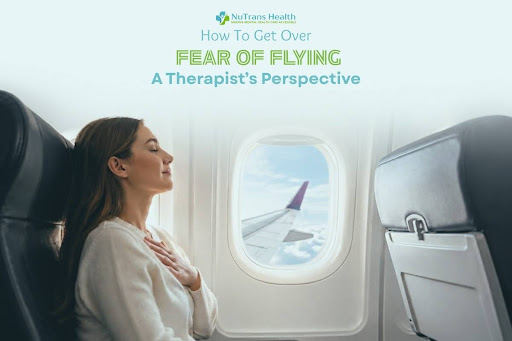
Aviophobia is an intense fear of flying or being on an airplane. It may involve fear of crashing, turbulence, heights, enclosed spaces, panic attacks, or losing control.
For some people, the fear begins days before travel. Others only feel anxious once they board the plane or experience turbulence.
Fear of flying can cause emotional and physical symptoms before and during travel, including:
- Anxiety days before a flight
- Trouble sleeping before travel
- Racing heartbeat or sweating
- Nausea or stomach discomfort
- Panic during turbulence or takeoff
- Obsessively checking flight or weather updates
The severity varies from person to person, but the emotional distress can significantly impact daily life and personal freedom.
Why Do People Develop a Fear of Flying?
Aviophobia usually develops from a mix of psychological and emotional factors rather than one single cause.
Common triggers include:
- Fear of losing control during the flight
- Anxiety about turbulence or crashing
- Claustrophobia and feeling trapped inside the cabin
- Previous negative flight experiences or panic attacks
- General anxiety disorders, such as panic disorder or GAD
For many people, flying becomes a situation where underlying anxiety feels more intense because of uncertainty, limited control, and unfamiliar sensations.
How Anxiety Works During Flying
From a therapeutic perspective, aerophobia is closely connected to the body’s fight-or-flight response.
When the brain perceives danger, it releases stress hormones that prepare the body to react quickly. This causes symptoms like:
- Faster breathing
- Increased heart rate
- Muscle tension
- Sweating
- Hypervigilance
The problem is that anxiety can mistake discomfort for danger.
For example:
- Turbulence feels dangerous even when it is normal
- A racing heartbeat feels like a loss of control
- Unfamiliar airplane sounds feel threatening
These thoughts intensify physical symptoms, which then reinforce fear even further. Therapy helps interrupt this cycle.
Therapist-Recommended Strategies to Overcome Fear of Flying
Therapists often recommend a combination of mental and physical coping strategies to reduce flying anxiety. These techniques help retrain the brain, calm the nervous system, and make flying feel more manageable over time.
Here are some of the most effective strategies for overcoming flying phobia :
1. Identify the Real Fear
Many people say they are “afraid of flying,” but the deeper fear is often something else.
Ask yourself:
- Am I afraid of crashing?
- Am I afraid of having a panic attack?
- Am I afraid of being trapped?
- Am I afraid of embarrassment?
- Am I afraid of losing control?
Understanding the true source of anxiety helps therapists create more effective treatment plans.
2. Use Cognitive Behavioral Therapy (CBT)
Cognitive Behavioral Therapy is one of the most effective treatments for flying anxiety
CBT helps identify distorted thoughts and replace them with more balanced, realistic thinking.
For example:
| Anxious Thought | Balanced Thought |
|---|---|
| “Turbulence means danger.” | “Turbulence is uncomfortable but normal.” |
| “I won’t survive this panic attack.” | “Panic attacks feel intense but are not dangerous.” |
| “Planes are unsafe.” | “Commercial aviation has extensive safety systems.” |
The goal is not to force positivity. The goal is to challenge irrational thinking patterns that fuel anxiety.
3. Learn How Flying Actually Works
Education can reduce uncertainty and fear. Understanding basic aeromechanics often helps anxious flyers feel more grounded and informed.
Important facts include:
- Turbulence is expected during flights
- Aircraft are built to handle severe weather conditions
- Pilots undergo extensive training
- Planes have multiple backup safety systems
- Flying is statistically one of the safest forms of travel
Therapists often encourage clients to replace imagination-based fears with factual information.
4. Practice Gradual Exposure
Avoidance strengthens fear over time. Every avoided flight teaches the brain:
“Flying must be dangerous because I escaped it.”
Exposure therapy works by gradually helping the brain learn that flying is survivable.
Exposure may begin with:
- Looking at airplane photos
- Watching flight videos
- Visiting an airport
- Sitting on a plane
- Taking short flights
Over time, repeated exposure reduces anxiety intensity.
5. Practice Diaphragmatic Breathing
Anxiety often causes shallow chest breathing, which increases panic symptoms. Diaphragmatic breathing helps calm the nervous system.
Try this exercise:
- Place one hand on your chest and one on your stomach
- Inhale slowly for 5 seconds
- Let your stomach expand more than your chest
- Hold briefly
- Exhale slowly for 7 seconds
Longer exhales activate the body’s relaxation response and reduce anxiety.
6. Use Grounding Techniques During Flights
Grounding techniques help bring attention back to the present moment instead of fearful thoughts.
One effective exercise is the 5-4-3-2-1 method:
- 5 things you can see
- 4 things you can touch
- 3 things you can hear
- 2 things you can smell
- 1 thing you can taste
This technique helps interrupt panic spirals and calm the nervous system.
7. Practice Radical Acceptance
Many people try to fight anxiety by forcing themselves to “calm down.” Ironically, resisting anxiety often makes it stronger.
Therapists frequently teach radical acceptance instead:
- Accept the anxious feelings
- Stop treating panic as danger
- Allow discomfort without catastrophizing
Instead of saying:
“I cannot feel anxious.”
Try:
“I feel anxious right now, and I can still get through this flight.”
Acceptance reduces emotional resistance and helps anxiety pass more naturally.
8. Choose the Right Seat
Small environmental changes can make flying feel safer and more manageable.
Helpful seat strategies include:
- Sitting over the wings for less turbulence sensation
- Choosing an aisle seat if you dislike feeling trapped
- Sitting near the front of the engine noise increases anxiety.
Feeling physically comfortable can reduce emotional stress during travel.
9. Create a Calm Kit
Preparing comforting items before the flight can help regulate anxiety.
Your calm kit may include:
- Noise-canceling headphones
- Relaxing music
- Guided meditations
- A comforting book
- Chewing gum
- Lavender essential oil
- Stress balls
- Positive coping statements
Sensory distractions help shift focus away from fear.
10. Reduce Stress Before the Flight
Your physical state before travel greatly affects anxiety levels.
Before flying:
- Avoid excessive caffeine
- Stay hydrated
- Get enough sleep
- Eat balanced meals
- Arrive at the airport early
- Avoid rushing
A regulated nervous system handles stress more effectively.
What To Do During Turbulence
Turbulence is uncomfortable, but it is rarely dangerous. Therapists often encourage reframing turbulence using simple comparisons:
- A plane moving through turbulence is similar to a car driving over bumps
- It may feel unsettling, but the aircraft is designed for it
During turbulence:
- Focus on slow breathing
- Keep your body relaxed
- Avoid catastrophic thoughts
- Remind yourself that turbulence is routine
The goal is to teach the brain that discomfort does not equal danger.
How To Handle a Panic Attack on a Plane?
Panic attacks during flights can feel frightening, but they are temporary and not physically harmful. If panic begins during a flight:
- Slow your breathing and focus on longer exhales to help calm the nervous system
- Stay grounded by feeling your feet on the floor or holding the armrest
Remind yourself:
- “This is anxiety.”
- “My body is reacting to fear.”
- “I am safe.”
- Avoid treating panic as danger, as fearful interpretation can intensify symptoms
- Allow the sensations to rise and fall naturally instead of trying to force them away
Panic attacks always pass, even when they feel overwhelming in the moment.
How To Prepare Before Flight Day?
Many people with flying anxiety experience anticipatory stress days before boarding, so calming your nervous system ahead of time is important.
Helpful preparation strategies include:
- Getting enough sleep the night before your flight
- Staying hydrated and eating balanced meals
- Avoiding excessive caffeine or alcohol, which can worsen anxiety symptoms
- Arriving at the airport early to avoid rushing and added stress
- Downloading calming music, movies, podcasts, or guided meditations before the flight
- Practicing breathing exercises or grounding techniques in advance
- Letting trusted travel companions know about your anxiety for emotional support
Creating a calming pre-flight routine can help your brain and body feel more prepared, regulated, and emotionally grounded before boarding the plane.
Should You Use Medication for Flying Anxiety?
Some individuals benefit from medication prescribed by a medical professional.
Options may include:
- Anti-anxiety medications
- Beta blockers
- Motion sickness medication
Medication may help reduce symptoms during flights, especially while working on long-term coping strategies in therapy.
For individuals with severe anxiety or recurring panic attacks, understanding the benefits of combined therapy and psychiatric care can be helpful
When To Seek Professional Help
Consider speaking with a therapist if:
- Flying phobia limits your opportunities
- You avoid travel entirely
- Panic attacks occur frequently
- Anxiety interferes with work or relationships
- Your fear feels overwhelming
If you’re considering professional support for anxiety or phobias, understanding Mental Health Therapist Licenses can help you make informed decisions.
Overcome Fear of Flying With Nutrans Health
Flying anxiety can feel overwhelming, but it is treatable with the right support and coping strategies. At Nutrans Health, our mental health therapists in Raleigh provide compassionate therapy services, including Cognitive Behavioral Therapy (CBT), to help individuals manage anxiety, panic, and phobias like Fear of flying on aeroplanes.
Schedule an appointment with Nutrans Health to speak with a licensed therapist and explore in-person or virtual therapy options designed to support your mental well-being.
Frequently Asked Questions
Is flight anxiety common?
Yes. Millions of people experience flying anxiety, ranging from mild nervousness to severe panic that affects travel plans and daily life.
What causes fear of flying?
Common causes include fear of turbulence, crashing, panic attacks, enclosed spaces, or losing control. Past negative flight experiences and general anxiety can also contribute.
How can I stay calm during takeoff?
Use slow breathing, grounding exercises, calming music, and realistic thoughts to help regulate anxiety during takeoff.
Should I avoid flying if it scares me?
Avoidance may reduce anxiety in the short term, but often strengthens fear long-term. Gradual exposure is usually more effective.
Can You Overcome Fear of Flying After a Bad Experience?
Yes. Therapies like CBT and exposure therapy help people challenge fearful thoughts, reduce panic, and build confidence while flying.
How long does it take to overcome the fear of air travel?
It varies. Some people improve quickly, while others need gradual progress over time. Small improvements still matter.
What if I feel embarrassed about my fear?
Fear of air travel is very common and not a sign of weakness. Anxiety is a normal human response to perceived danger.
Can Turbulence Crash a Plane?
Commercial planes are built to safely withstand turbulence. While turbulence can feel frightening, it is rarely dangerous and is a normal part of flying.
How Safe Is Flying?
Commercial flying is one of the safest forms of travel. According to the International Air Transport Association (IATA), modern aviation follows strict safety protocols, advanced aircraft systems, and extensive pilot training standards.
Can fear of flying be cured?
Many people significantly reduce or overcome flying anxiety with therapy, exposure, and consistent coping practice.
Related Blogs
Mental Health Services in Raleigh NC and How AI Improves It
Mental Health Services in Raleigh NC and How AI...
Read MoreMental Health Counseling and Workplace Stress in Raleigh
Mental Health Counseling and Workplace Stress in Raleigh The...
Read MoreTeletherapy vs. In-Person Counseling: Which One is Right for You?
Teletherapy vs. In-Person Counseling: Which One is Right for...
Read More