Reviewed by Shirley Carrenard-McDowell, PMHNP- Licensed Psychiatric Mental Health Nurse Practitioner specializing in LGBTQIA+ mental health and affirming psychiatric care.
No, your therapist does not need to identify as LGBTQIA+ to provide genuinely affirming, effective therapy. What matters most is their training, cultural competency, and ability to create a safe, supportive therapeutic relationship.
This article explains what affirming therapy truly requires and helps you know exactly what to look for, whether you are searching for the first time or starting over after a difficult experience.
Table of Contents
- What Is LGBTQIA+ Affirming Therapy?
- Why LGBTQIA+ Individuals Often Need Specialized Care
- What Makes a Therapist Truly LGBTQIA+ Affirming?
- When Shared Identity Helps and When It Does Not
- Red Flags That a Therapist May Not Be LGBTQIA+ Affirming
- Questions to Ask Any Therapist Before You Book
- Affirming Care Goes Beyond Talk Therapy
- For Teens and Young Adults
- Telehealth for LGBTQIA+ Clients in North Carolina and New Jersey
- Take the first step toward healing and self-discovery today
- Frequently Asked Questions
What Is LGBTQIA+ Affirming Therapy?
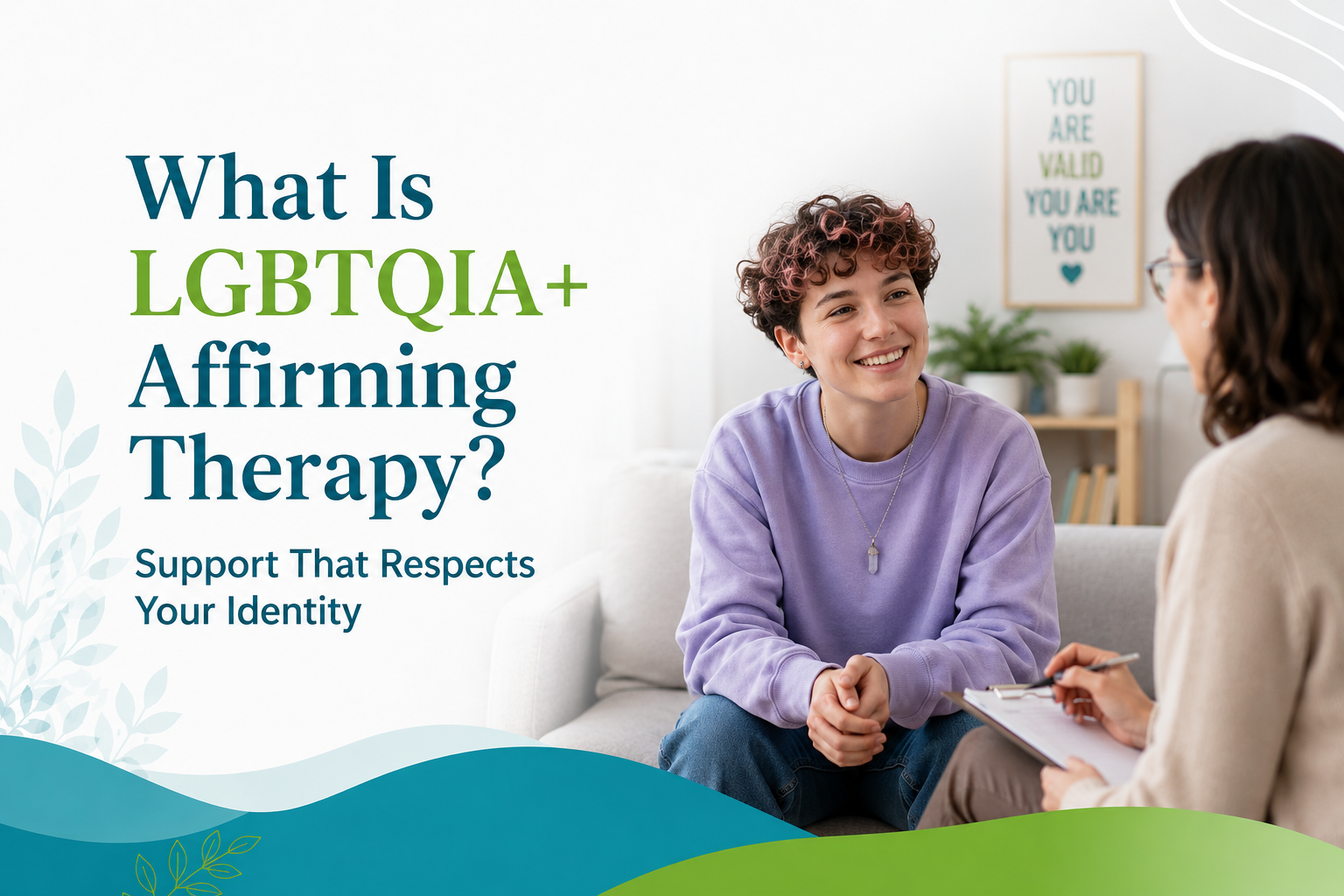
The LGBTQIA+ affirming therapy is a clinical approach that actively recognizes your identity as valid, healthy, and not a problem to be solved.
Rather than viewing LGBTQIA+ identities through a lens of pathology or dysfunction, affirming therapy creates a supportive environment where individuals can explore their experiences, emotions, relationships, and personal goals without fear of judgment.
Affirming therapy can help individuals:
- Build greater self-awareness and self-acceptance
- Develop healthy coping strategies for stress and life challenges
- Improve communication and relationship skills
- Strengthen emotional resilience and confidence
- Process difficult experiences in a safe and supportive environment
- Navigate personal growth, life transitions, and identity exploration
Importantly, affirming therapy is not limited to discussions about sexual orientation or gender identity. Clients may seek support for anxiety, depression, trauma, relationship concerns, self-esteem issues, grief, or other mental health challenges.
Why LGBTQIA+ Individuals Often Need Specialized Care
Minority Stress Is a Clinical Reality
According to Mental Health America, LGBTQIA+ individuals experience significantly higher rates of anxiety, depression, and PTSD than the general population. The primary driver is minority stress: the chronic psychological burden of navigating discrimination, social stigma, systemic barriers, and the ongoing effort of moving through a world that was not designed with you in mind.
Minority stress is not background context. It is a clinical variable that shapes how symptoms develop, how they present, and what interventions are actually effective. A therapist without training in minority stress is not just uninformed — they are likely to misattribute symptoms, offer incomplete treatment, or inadvertently reinforce the harm.
SAMHSA reports that LGBTQIA+ adults are more than twice as likely to experience a substance use disorder compared to non-LGBTQIA+ adults, and that this elevated risk is substantially explained by minority stress rather than individual pathology. Treatment that ignores this framing tends to be less effective.
Common Challenges That Bring LGBTQIA+ Clients to Therapy
Affirming therapists are trained to work with the full range of LGBTQIA+ experiences, including some that require specific clinical knowledge:
- Coming-out stress. Fear of rejection, shifts in family dynamics, workplace concerns, personal safety considerations, and the emotional complexity of managing disclosure across different parts of your life.
- Religious trauma. Shame, internalized negative beliefs, fear of divine rejection, and the particular grief of communities where identity and belonging felt mutually exclusive. This requires careful, experienced clinical handling — it is not simply a matter of leaving religion behind.
- Family rejection and recovery. Processing grief over severed relationships, rebuilding self-worth, navigating estrangement, establishing healthy boundaries, and finding belonging through chosen family and affirming communities.
- Workplace discrimination and microaggressions. Chronic low-level stress from concealment, inequitable treatment, or environments that signal non-belonging. This accumulates and often shows up as burnout, anxiety, or depressive episodes that clients may not initially connect to the workplace context.
- Gender dysphoria and transition support. Supporting clients through social, legal, and medical transition decisions; coordinating care with other providers; and holding space for the emotional complexity of that process without agenda.
What Makes a Therapist Truly LGBTQIA+ Affirming?
A truly LGBTQIA+ affirming therapist has specialized training in LGBTQIA+ mental health, gender-affirming care, and minority stress. They stay informed about evolving community needs, policy changes, and evidence-based best practices while remaining open to learning and growth.
The right question to ask is not "Are you LGBTQIA+?" It is "Are you genuinely affirming, and how do you demonstrate that in your practice?"
Signs of a Genuinely Affirming Therapist
- Uses your correct name and pronouns from day one, without needing reminders or repeated correction
- Understands minority stress and how discrimination, family rejection, and systemic barriers contribute to mental health challenges
- Does not require you to justify your identity before the real therapeutic work can begin
- Is familiar with the full spectrum of LGBTQIA+ experiences, including trans, nonbinary, bisexual, asexual, and intersex identities, not only the most visible ones
- Knows when to bring your identity into the clinical work and when to focus on what actually brought you in
- Never treat your queerness, transness, or any aspect of your identity as a symptom, a phase, or something to resolve
When Shared Identity Helps and When It Does Not
There are situations where working with an LGBTQIA+ therapist can create an immediate sense of understanding and safety. Shared lived experience may help some clients feel more comfortable discussing identity-related concerns.
Shared identity helps most when:
- You are newly exploring your identity and need a space where nothing requires explanation
- Past therapists have caused harm, and you need to rebuild trust quickly
- Your primary therapeutic goals center on identity, chosen family, or community belonging
But shared identity is not a guarantee of fit:
- A gay therapist may not fully understand nonbinary or bisexual experiences
- A trans therapist may assume they understand the asexual experience and stop being curious
- Within the LGBTQIA+ community, lived experience in one area does not equal expertise across all of it
For some people, shared identity is an important preference. For others, the quality of the therapeutic relationship matters more. The right choice is the therapist who makes you feel understood, respected, and supported.
Red Flags That a Therapist May Not Be LGBTQIA+ Affirming
Not every therapist who claims to be inclusive is genuinely affirming.
Potential warning signs include:
- Repeatedly misgendering clients after being corrected
- Using outdated or stigmatizing language
- Treating sexual orientation or gender identity as a problem to solve
- Suggesting that identity-related concerns are simply a phase
- Focusing excessively on identity when it is unrelated to the presenting concern
- Displaying discomfort when discussing LGBTQIA+ topics
- Asking invasive questions without clinical relevance
- Minimizing experiences of discrimination or minority stress
If a therapist consistently leaves you feeling invalidated, misunderstood, or unsafe, it may be time to seek a provider with stronger LGBTQIA+ competency and affirming training.
Questions to Ask Any Therapist Before You Book
You do not need to commit to a therapist to assess whether they are a genuine fit. These six questions cut through surface-level affirmation and get to what actually matters:
- How long have you been working with LGBTQIA+ clients, and what specific training have you completed in the past two years?
- Do you have experience with trans and nonbinary individuals, including clients navigating gender-affirming medical care?
- How do you approach clients who are still exploring or questioning their identity?
- Do your intake forms include pronoun options and open-ended gender fields?
- How do you handle it if a client needs to correct you on something related to their identity?
- Do you have any personal or religious beliefs that might affect your ability to provide fully affirming care?
Their answers should help you determine whether they have the experience, training, and approach that align with your needs.
Affirming Care Goes Beyond Talk Therapy
For many LGBTQIA+ individuals, mental health care also includes psychiatric medication, and affirming care has to extend there too.
An affirming psychiatric provider:
- Understands that anxiety, depression, and PTSD in LGBTQIA+ clients are often rooted in minority stress, not purely in biochemistry
- Does not treat gender dysphoria as a disorder requiring medication to suppress
- Coordinates thoughtfully if a client is undergoing hormone therapy or other gender-affirming medical treatment
- Does not require a client to justify their identity before providing appropriate mental health support
Not sure whether you're looking for a psychologist, counselor, social worker, or psychiatric provider? Read our guide to Mental Health Therapist Licenses, which explains the various credentials and how they may impact your care.
For Teens and Young Adults
What the Research Shows
The Trevor Project's 2024 National Survey on LGBTQ Youth Mental Health found that LGBTQIA+ youth are more than four times as likely to seriously consider suicide compared to their non-LGBTQIA+ peers. The same research consistently identifies two factors that most protect against that risk: access to at least one affirming adult and connection to an affirming community.
These are not marginal findings. They represent one of the clearest intervention opportunities in adolescent mental health.
For Young People Seeking Support
The considerations for adolescent LGBTQIA+ clients are similar to those for adults (training, experience, affirming approach), with additional factors: a therapist who works well with teens understands adolescent development, knows how to navigate school systems and family dynamics, and creates a confidential space a young person can actually trust.
If your school or college counselor is the first contact, they can be a valuable bridge, though they are not a substitute for an experienced affirming therapist if the issues are significant.
For Parents
If your child has come out to you or is questioning their identity, finding them the right therapist is one of the most meaningful things you can do. Research from The Trevor Project and others is consistent: LGBTQIA+ youth with at least one affirming adult in their life have substantially better mental health outcomes.
When searching for a therapist for your child, look for someone who:
- Has specific training in adolescent LGBTQIA+ mental health
- Creates a confidential therapeutic space your child can trust
- Involves parents in treatment in ways the young person is comfortable with
- Does not attempt to change, redirect, or question your child's identity
NuTrans Health works with teens and young adults in North Carolina and New Jersey, both in person and via telehealth.
"Our clients should never arrive at a session carrying the weight of having to explain or justify who they are. The work starts from a place of full acceptance. That is not optional, it is the baseline." Kalia Lapomarel (LCSW)
Telehealth for LGBTQIA+ Clients in North Carolina and New Jersey
Telehealth removes a major access barrier for both states. For LGBTQIA+ clients who are not yet out in their communities, who live far from affirming providers, or who simply need a safer and more private environment for care, NuTrans Health offers telehealth across North Carolina and New Jersey, meaning care is available regardless of your location or circumstances.
Choosing the right therapy format can be just as important as choosing the right therapist. Our article, Teletherapy vs. In-Person Counseling: Which One is Right for You?, can help you make an informed decision.
Take the first step toward healing and self-discovery today
While some clients prefer working with an LGBTQIA+ therapist, affirming care ultimately depends on competence, cultural understanding, and a strong therapeutic relationship.
At NuTrans Health, our experienced psychiatrist in charlotte is committed to providing LGBTQIA+-affirming, inclusive, and compassionate care tailored to your unique needs. Whether you're exploring your identity, navigating relationships, managing stress, or seeking emotional support, we're here to help you thrive in a safe and judgment-free environment.
Contact NuTrans Health to connect with a therapist who understands, supports, and empowers you every step of the way.
Frequently Asked Questions
Does my therapist need to be LGBTQIA+ to provide affirming therapy?
No. An affirming therapist does not need to identify as LGBTQIA+, but they should have relevant training, experience, and a demonstrated commitment to providing inclusive, culturally competent care.
What is minority stress, and why does it matter in therapy?
Minority stress is the chronic psychological burden of navigating discrimination, stigma, and social marginalization. LGBTQIA+ individuals experience it at significantly elevated rates, making it a major contributor to higher rates of anxiety, depression, PTSD, and substance use within the community. An affirming therapist treats it as a clinical reality, not background context.
What is the difference between LGBTQIA+ affirming therapy and regular therapy?
Affirming therapy actively validates your sexual orientation and gender identity as healthy and normal. It treats minority stress and discrimination-related harm as real clinical concerns and never attempts to change who you are. Regular therapy may or may not take this stance, and a therapist without specific training in LGBTQIA+ mental health can cause harm unintentionally, even without hostility.
What should I ask a therapist to find out if they are truly affirming?
Ask about their specific training and experience with LGBTQIA+ clients, their familiarity with trans and nonbinary identities, whether their intake forms include pronoun options, how they handle being corrected by a client, and whether any personal or religious beliefs might affect their practice. A genuinely affirming therapist will answer all of these directly and without discomfort.
How do I transition away from a therapist who is not affirming?
You do not owe a non-affirming therapist an explanation. You can simply stop booking and seek a new provider. If you want to name what happened, you might say: "This is not the right fit for me, and I am looking for a provider with more specific training in LGBTQIA+ mental health." Switching is a clinical decision, not a personal one.
What if I've had a bad experience with a therapist before?
You are not being picky or difficult. If a past therapist deadnamed you, treated your identity as something to explore rather than accept, or left you spending the session educating them — that experience is valid, and protecting yourself based on it is smart.
A genuinely affirming therapist will never make you feel that way. Use the six questions in this article to screen any new provider before you commit. A good therapist will welcome those questions without defensiveness.
Related Blogs
Mental Health Services in Raleigh NC and How AI Improves It
Mental Health Services in Raleigh NC and How AI...
Read MoreMental Health Counseling and Workplace Stress in Raleigh
Mental Health Counseling and Workplace Stress in Raleigh The...
Read MoreTeletherapy vs. In-Person Counseling: Which One is Right for You?
Teletherapy vs. In-Person Counseling: Which One is Right for...
Read More