Modern life is faster, louder, and more indoor than ever. Many people spend most of their day moving between screens, enclosed rooms, traffic, and artificial lighting. Even when life looks “fine” on the outside, it can feel emotionally heavy on the inside. Stress builds quietly. Sleep becomes lighter. Attention feels scattered. Mood dips without a clear reason. Over time, the nervous system can begin to operate in a constant state of alert.
One of the simplest and most overlooked supports for mental health is also one of the oldest: time outdoors.
Nature is not a cure all, and it does not replace therapy, medication, or professional care when those are needed. But it can be a powerful foundation. Regular exposure to natural environments can help calm stress responses, lift mood, improve focus, support sleep, and increase emotional resilience. It also offers something many people are missing today: space to breathe, process, and feel connected again.
This blog explores how spending time in nature supports mental health, why it works, who benefits most, and how to make it practical even with a busy schedule or limited access to green spaces.
Table of Contents- Why Nature Matters for Emotional Well Being
- How Nature Influences the Brain and Emotional Health
- Mental Health Benefits of Spending Time Outdoors
- How Nature Supports the Body and Emotional Health
- Different Types of Nature Exposure and Their Effects
- Why Nature Feels Mentally Restorative
- Who Benefits Most From Time Outdoors?
- How Much Time Outdoors Is Enough?
- Practical Ways to Add Nature Into a Busy Life
- Nature Based Practices That Support Mental Health
- When Nature Time Feels Hard
- How Nature Enhances, But Does Not Replace, Professional Care
- A Simple Weekly Nature Plan for Emotional Well Being
- How Nature Supports the Mental Health of Children and Teens
- How Nature Supports Emotional Renewal and Inner Growth
- Create Sustainable Emotional Well Being With NuTrans Health
Why Nature Matters for Emotional Well Being
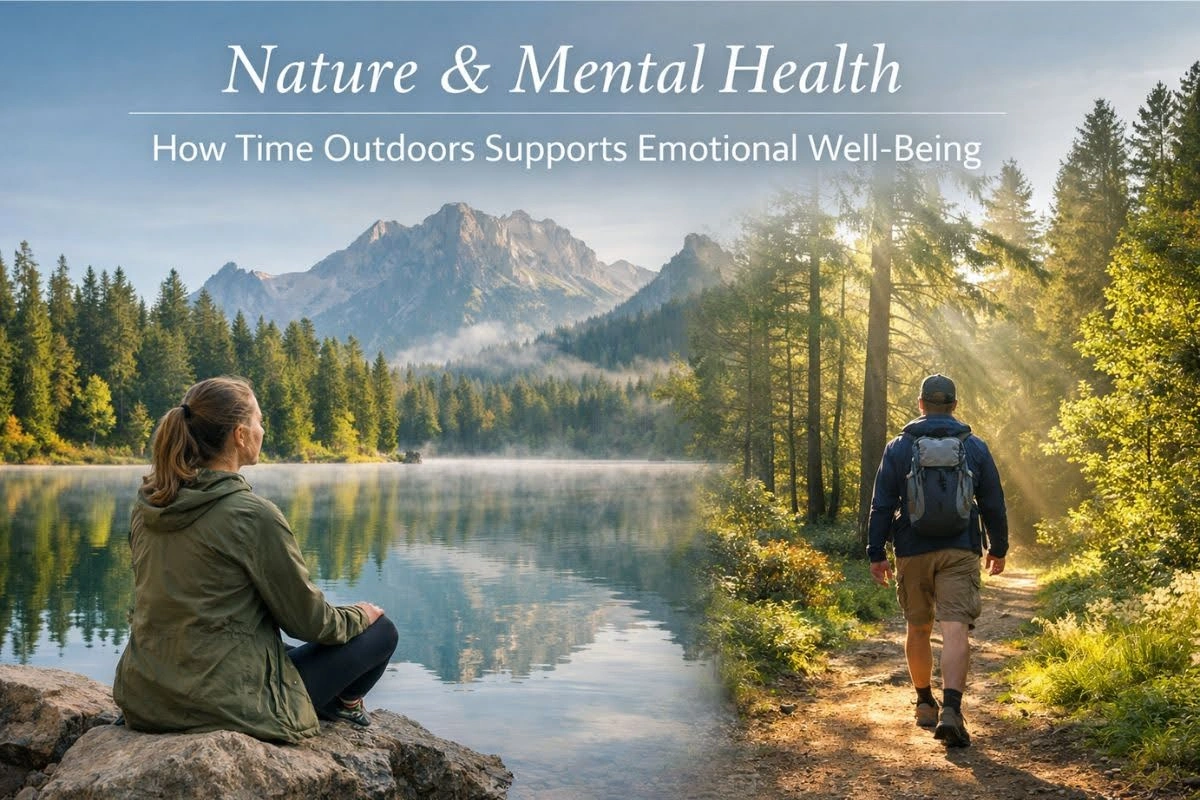
Mental health is shaped by more than thoughts and feelings. It is influenced by sleep, hormones, nervous system regulation, movement, sunlight, social connection, and the environment around us. When the environment is constantly demanding, crowded, noisy, or overstimulating, emotional balance becomes harder to maintain.
Nature provides a different kind of input. It tends to be rhythmic, spacious, and less cognitively demanding. Natural settings offer soft fascination: birds, clouds, leaves moving in wind, water flowing. These gentle stimuli can help the brain shift out of survival mode and back into a more regulated state.
For many people, being outdoors creates an immediate emotional shift, such as feeling lighter, clearer, calmer, or more grounded. That change is not imaginary. It is a real interaction between the brain, body, and surroundings.
How Nature Influences the Brain and Emotional Health
Research across psychology, neuroscience, and public health consistently shows associations between time in nature and better mental health outcomes. While exact effects vary from person to person, common findings include reduced stress, improved mood, decreased symptoms of anxiety and depression, improved attention, and better overall well being.
Several theories explain why nature helps.
1. Stress reduction and nervous system regulation
When stress is high, the body activates a survival response. Heart rate rises, muscles tense, breathing becomes shallow, and the mind becomes more threat focused. Natural environments can help shift the body toward a calmer state associated with parasympathetic nervous system activity. This shift supports relaxation, digestion, emotional regulation, and recovery.
2. Attention restoration
Many people feel mentally exhausted from constant notifications, multitasking, and high information load. Nature supports attention restoration by giving the brain a break from effortful focus. Natural scenes engage attention gently, allowing mental fatigue to recover.
3. Improved sensory balance
Indoor life often involves harsh lighting, repetitive sounds, and limited sensory variety. Nature offers more diverse, soothing sensory input. Fresh air, natural light, moving scenery, and open space can reduce overstimulation and support emotional stability.
4. Movement and body based calming
Many outdoor activities naturally include movement. Walking, hiking, cycling, or gardening support mental health through physical activity, blood flow, and endorphin release. Movement also helps discharge built up stress from the body.
5. Sunlight and circadian rhythm
Natural light supports the body’s internal clock. Regular morning or daytime sunlight helps regulate melatonin, sleep quality, and mood. People who spend little time outside often have disrupted circadian rhythms, which can worsen anxiety and depression.
6. Social connection and belonging
Outdoor spaces often encourage low pressure connection, such as walking with someone, sitting in a park, or joining community activities. Nature also supports a broader sense of belonging and perspective, which can reduce feelings of isolation.
Mental Health Benefits of Spending Time Outdoors
Reduced stress and calmer mood
One of the most immediate benefits people report is feeling calmer. Even short outdoor breaks can reduce tension and emotional overload. Over time, regular nature exposure can help lower baseline stress, making it easier to cope with daily demands.
Lower anxiety and improved emotional regulation
Anxiety often involves a nervous system that is highly alert and threat sensitive. Nature can provide safety cues: open space, slower pace, predictable rhythms. This can help reduce hypervigilance and support emotional regulation. It also creates mental distance from worry loops.
Support for depression and low mood
Depression can reduce motivation, energy, and pleasure. Nature provides gentle stimulation without demanding performance. Sunlight, movement, and sensory variety can support neurotransmitter balance and improve mood. Even when motivation is low, a short outdoor routine can be more manageable than indoor exercise or social activity.
Better focus and reduced mental fatigue
Many people struggle with focus due to stress, screen exposure, or cognitive overload. Time outdoors can improve attention, working memory, and mental clarity. This can be especially helpful for students, professionals, and individuals with attention difficulties.
Improved sleep quality
Poor sleep worsens mood and makes stress harder to manage. Outdoor light exposure during the day improves sleep drive at night. Physical activity, fresh air, and reduced evening screen time also support deeper rest.
Increased sense of meaning and perspective
Nature often triggers a sense of awe or perspective. When the mind feels trapped in small worries, being outdoors can remind the brain that life is bigger than the immediate stressor. This can support hope, gratitude, and meaning.
How Nature Supports the Body and Emotional Health
Mental health and physical health are inseparable. Time outdoors improves several physical factors that directly affect emotional well being:
- Lower blood pressure and heart rate variability improvements in some people
- Better vitamin D levels with appropriate sunlight exposure
- Improved fitness and metabolic health through movement
- Reduced inflammation associated with chronic stress
- Improved breathing patterns and lung comfort in fresh air
- Greater energy and reduced fatigue in many individuals
When the body feels more regulated, the mind often follows.
Different Types of Nature Exposure and Their Effects
Not everyone has access to forests, beaches, or mountains. The good news is that nature benefits can come from many forms of outdoor exposure.
Green spaces
Parks, gardens, trees, and grassy areas are strongly linked with mental health benefits. Even urban parks can provide a meaningful mental reset.
Blue spaces
Water environments, such as rivers, lakes, oceans, or fountains, are often especially calming. Many people report reduced anxiety and improved mood near water.
Micro nature
Even small exposures matter. A balcony with plants, a tree lined street, sunlight through a window, or a short walk near greenery can offer benefits.
Gardening and hands on nature
Gardening combines movement, sensory input, and purpose. It can reduce stress and improve mood while also creating a sense of accomplishment.
Wildlife and natural soundscapes
Bird songs, wind, rain sounds, and animal encounters can create calming effects. Listening to natural soundscapes can support relaxation even when outdoor time is limited.
Why Nature Feels Mentally Restorative
A big part of nature’s impact is how it changes the brain’s relationship with time and attention.
Indoors, especially in work environments, the brain operates with constant task switching. Outdoors, the mind can wander. This wandering is not laziness. It is a healthy mental process that supports integration, problem solving, and emotional processing.
Many people have had the experience of finding clarity on a walk. That happens because the brain is less pressured to perform, allowing deeper thoughts and feelings to surface and settle.
Nature also reduces social performance pressure. There is no need to look productive, impressive, or perfect while sitting under a tree or walking quietly. This sense of permission can be deeply healing.
Who Benefits Most From Time Outdoors?
Almost everyone can benefit, but certain groups may experience particularly strong improvements:
- People experiencing chronic stress or burnout
- Individuals with anxiety symptoms, overthinking, or tension
- People with mild to moderate depression or low mood
- Those struggling with sleep disruption
- Individuals who feel disconnected, lonely, or emotionally numb
- People working long hours indoors or on screens
- Students facing attention fatigue
- Individuals recovering from grief or emotional overwhelm
Even for people with severe mental health conditions, nature can still be supportive as a complement to professional care.
How Much Time Outdoors Is Enough?
There is no perfect number that applies to everyone. What matters most is consistency.
Helpful targets that many people can realistically do:
- 10 to 15 minutes outdoors daily
- 30 minutes outdoors three to five times per week
- One longer nature visit weekly, such as a park walk or hike
- Even a short exposure can shift the nervous system. Over time, regular outdoor routines can build stronger emotional resilience.
Practical Ways to Add Nature Into a Busy Life
Many people want to spend more time outdoors but feel blocked by time, weather, safety concerns, or lack of access. Here are realistic strategies.
Start with “minimum viable nature”
Instead of aiming for big trips, build a small daily routine:
- Walk outside for 10 minutes after lunch
- Sit in the sun with tea for 5 minutes
- Take phone calls while walking outdoors
- Step outside between tasks for fresh air
- Small steps build consistency.
Pair nature with something you already do
Habit stacking makes outdoor time easier:
- Morning coffee outside
- Short walk after dinner
- Stretching on the balcony
- Listening to an audiobook while walking
- Taking children to a park as routine, not an event
Use weekends strategically
If weekdays are packed, make weekends your nature anchor:
- One longer park visit
- A local trail walk
- A beach or lakeside trip
- A botanical garden visit
Make it social
Nature time can double as connection:
- Walk with a friend
- Family picnic
- Group hike
- Outdoor prayer or reflection time
- This supports mental health through both nature and relationships.
Make it screen free when possible
Even 15 minutes without scrolling helps the brain recover. Consider leaving your phone on silent or using it only for safety and music.
Nature Based Practices That Support Mental Health
Mindful walking
While walking, notice:
- the feeling of your feet on the ground
- air on your skin
- sounds around you
- shapes and colors in your environment
This helps regulate anxiety and bring attention back to the present.
Grounding exercises outdoors
A simple grounding practice:
Name 5 things you can see
- 4 things you can feel
- 3 things you can hear
- 2 things you can smell
- 1 thing you can taste
This is especially helpful during stress or panic.
Breathing with natural rhythm
Try slow breathing while observing nature:
- Inhale for 4
- Hold for 2
- Exhale for 6
- Repeat for 3 to 5 minutes
Longer exhales calm the nervous system.
Sit spot practice
Choose one outdoor spot and sit there regularly. Over time, the brain begins to associate that place with calm and safety.
Nature journaling
After being outdoors, write a few lines:
- What did I notice?
- What shifted in my body or mood?
- What do I need today?
This helps integrate emotions and reduce mental clutter.
When Nature Time Feels Hard
For some people, being outdoors is not instantly soothing. That is normal.
Reasons it may feel difficult include:
- anxiety that increases in open spaces
- fear related to safety or past trauma
- sensory sensitivity
- discomfort with stillness
- depression that reduces motivation
- chronic pain or fatigue limiting mobility
In these cases, start gently:
- sit near an open window
- stand outside for 2 minutes
- walk with a trusted person
- choose safe, familiar places
- use gradual exposure rather than forcing long trips
Nature should feel supportive, not like another task to “do perfectly.”
How Nature Enhances, But Does Not Replace, Professional Care
It is important to be honest: nature is helpful, but it is not a replacement for mental health treatment when symptoms are severe.
Professional support may be necessary when:
- anxiety is persistent and interferes with daily life
- depression lasts weeks and reduces functioning
- trauma symptoms are strong
- panic attacks occur frequently
- suicidal thoughts or self harm urges appear
In these situations, nature can still be a valuable part of recovery, but it should be paired with evidence based care such as therapy, medical support, or structured programs.
A Simple Weekly Nature Plan for Emotional Well Being
Here is an easy structure you can adapt:
Daily
- 10 minutes outdoors, preferably in daylight
Three times per week
- 20 to 30 minute walk in a park or tree lined area
Once per week
- A longer nature experience, such as a hike, beach visit, or garden time
When stress spikes
- 2 minutes outside plus slow breathing
This plan is flexible. The goal is consistency, not perfection.
Major changes can often heighten stress and uncertainty, and our article How Life Transitions Can Stir Anxiety And Practical Ways to Cope offers practical guidance to help you navigate these periods with greater confidence and emotional balance.
How Nature Supports the Mental Health of Children and Teens
Children are especially sensitive to the environment. Outdoor play supports emotional regulation, attention, social skills, and resilience.
Helpful approaches include:
- daily outdoor time after school
- weekend park routines
- nature based hobbies like cycling or sports
- family walks without phones
- limiting indoor screen heavy downtime by adding outdoor breaks
Teens often resist structured advice. One way to help is to make nature exposure social and low pressure, like walking together, visiting a café near a park, or joining a group activity outdoors.
How Nature Supports Emotional Renewal and Inner Growth
Beyond stress reduction, nature often supports something deeper: reconnection.
Many people feel emotionally disconnected, not because they lack ambition, but because they lack quiet space to feel. Nature provides that space. It helps people slow down, tune in, and remember what matters.
Time outdoors can support:
- self reflection without judgment
- grief processing
- emotional release
- spiritual grounding
- perspective on life challenges
- renewed motivation and hope
This is why nature is frequently included in wellness traditions across cultures.
To strengthen emotional connection and communication in everyday life, you may also find our article How to Validate Someone’s Feelings and Become a Better Listener helpful, where we share practical strategies to build empathy and trust in meaningful conversations.
Create Sustainable Emotional Well Being With NuTrans Health
Emotional well being is not built through willpower alone. It is supported by the environment, the nervous system, daily habits, and the quality of our attention. Nature offers a powerful, accessible way to support mental health through calm, movement, sunlight, and connection.
At NuTrans Health, we understand that emotional well being is shaped by more than thoughts alone. It is influenced by the environment, daily habits, physical health, and the way the nervous system responds to stress. Time outdoors is one of the simplest and most accessible tools for supporting balance, clarity, and resilience.
While nature cannot replace professional care when it is needed, it can become a meaningful part of a comprehensive wellness plan. For individuals seeking deeper support, working with a qualified Therapist in Charlotte, NC at NuTrans Health can help integrate lifestyle strategies with evidence based therapeutic care. Through our Mental Health Counseling services and integrated care approach, NuTrans Health provides structured support that addresses both emotional and physical wellbeing.
Through structured programs, professional counseling, and personalized lifestyle guidance, our mission is to empower individuals to create sustainable habits that strengthen both physical vitality and emotional resilience. Lasting transformation does not require drastic change. It begins with small, intentional steps practiced consistently over time, building a foundation for long term wellbeing and balanced living.
Related Blogs
Mental Health Services in Raleigh NC and How AI Improves It
Mental Health Services in Raleigh NC and How AI...
Read MoreMental Health Counseling and Workplace Stress in Raleigh
Mental Health Counseling and Workplace Stress in Raleigh The...
Read MoreTeletherapy vs. In-Person Counseling: Which One is Right for You?
Teletherapy vs. In-Person Counseling: Which One is Right for...
Read More