New fathers experience profound stress, identity shifts, sleep deprivation, and emotional upheaval that can trigger significant mental health challenges. And yet, despite this reality, men’s postpartum depression remains largely in the shadows.
Cultural expectations around masculinity, the pressure to “be strong,” and the assumption that the postpartum period is primarily a mother’s struggle can silence men in ways that leave them feeling confused, isolated, and ashamed. But the truth is simple: postpartum depression in men is real, valid, and deserves attention.
This blog explains what postpartum depression looks like in men, why it is often overlooked, and how loved ones can help break the silence. It also highlights practical ways for men to find the support they need during this challenging transition
Table of Contents- What is Postpartum Depression in Men
- Why Men’s Postpartum Depression Often Goes Undiagnosed
- Signs and Symptoms of Postpartum Depression in Men
- How Postpartum Depression Affects Families
- How Partners and Loved Ones Can Help
- How Men Can Support Their Own Mental Health
- Why Men’s Experiences Deserve Recognition
- Find Real Support and Healing With NuTrans Health
What is Postpartum Depression in Men
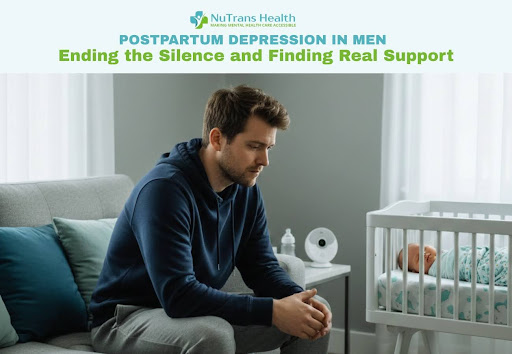
Postpartum depression (PPD) in men, also known as paternal postpartum depression, refers to depressive symptoms that appear during a partner’s pregnancy or within the first year after the baby is born. Research shows that up to 10% of fathers experience PPD, with the numbers rising even higher when the mother is also struggling. Despite this, men’s experiences often go unnoticed or unspoken.
Although men do not experience childbirth-related hormonal shifts, they still go through changes such as lower testosterone and higher cortisol (the stress hormone). Factors like disrupted routines, financial pressure, lack of sleep, and the demands of caring for a newborn can make fathers far more vulnerable to depression.
Many fathers do not realize their symptoms are postpartum depression. Instead of sadness, they may feel irritable, withdrawn, angry, or inadequate, signs that are often mistaken for normal stress rather than a mental health concern.
Realizing that postpartum depression can affect men too is the first step toward meaningful support.
Why Men’s Postpartum Depression Often Goes Undiagnosed
Despite increasing awareness, paternal postpartum depression remains significantly underdiagnosed. Several factors contribute to this silence:
1. Social expectations of masculinity
Men are often taught, even subconsciously, that they should be strong, stable, and emotionally composed. The idea that a father could be struggling during the postpartum phase may feel like a threat to this identity. Many men fear judgment, worry about appearing weak, or believe that speaking up will burden their partner.
2. Misinterpretation of symptoms
Men’s depression can present differently from women’s. Instead of tearfulness or sadness, men may feel more numb, frustrated, or withdrawn. They may work longer hours to avoid home stress or become more distant in their relationships. These symptoms are easily mistaken for normal adjustment challenges rather than mental health concerns.
3. Focus on the mother and baby
The postpartum period centers heavily on the baby’s health and the mother’s recovery. Fathers may feel their emotions are secondary or irrelevant. Some are reluctant to speak up because they believe their partner’s needs are more urgent.
4. Lack of screening
Most doctors screen postpartum mothers for depression, but paternal mental health is rarely addressed. Without routine screening, many men go unnoticed until symptoms become severe.
5. Relationship strain
In relationships where communication or role adjustments are already difficult, a father may fear that expressing his emotional struggles will increase the tension. This often leads to silence, which ultimately widens the disconnect.
These factors together create a difficult environment for men to understand their mental health, let alone seek support. Recognizing the barriers is crucial for breaking them down.
Signs and Symptoms of Postpartum Depression in Men
While every man’s experience is different, postpartum depression in men commonly includes a mix of emotional, behavioral, and physical symptoms. Understanding these signs can help fathers and their families identify concerns early.
Emotional symptoms
Persistent sadness or low mood
Feelings of hopelessness or pessimism
Increased anxiety or worry
Irritability or anger that seems out of character
Emotional numbness or detachment
Feeling overwhelmed or unable to cope
Behavioral symptoms
Withdrawing from family, friends, or partner
Working excessively to avoid home life
Engaging in risky behaviors (drinking, substance use, high-risk hobbies)
Loss of interest in activities once enjoyed
Difficulty bonding with the baby
Increased conflict with partner
Physical symptoms
Sleep disruptions beyond the baby’s needs
Fatigue or exhaustion
Changes in appetite
Headaches or physical tension
While many of these symptoms can be part of the adjustment to new parenthood, the key indicator is duration and impact. When symptoms persist for weeks or interfere with daily functioning, they may signal postpartum depression.
How Postpartum Depression Affects Families
Postpartum depression in men does not occur in isolation; it affects the entire family system. The emotional distance, withdrawal, irritability, or lack of engagement can create tension in the relationship and affect the baby’s early development.
Impact on the couple’s relationship
When a father is struggling, communication often suffers. Partners may misinterpret withdrawal as disinterest or anger. Over time, resentment can grow on both sides, especially if the mother is also experiencing postpartum challenges.
Impact on the baby
A father’s emotional engagement is important for bonding, attachment, and the child’s early development. Postpartum depression can disrupt father-infant bonding, leading to long-term emotional and behavioral effects in children.
Impact on the overall family dynamic
With both parents overwhelmed, daily routines, shared responsibilities, and emotional connection can become strained. This strain can ripple through the household, creating an environment that feels unstable or tense.
Awareness of these effects shows why paternal mental health is essential to family well-being, not an optional add-on.
How Partners and Loved Ones Can Help
Ending the silence around men’s postpartum depression requires collective effort. Partners, family members, and friends can all play an important role in helping fathers feel understood, supported, and seen.
Here are some ways to help:
1. Start open conversations
Instead of assuming that the father is coping well, make space for honest dialogue. Simple check-ins such as “How are you really feeling?” or “This must be a lot, what has been hardest for you?” can open doors to deeper discussion.
2. Normalize the experience
Remind fathers that postpartum depression is common, real, and treatable. Normalizing the experience reduces shame and helps them feel less alone.
3. Share responsibilities
Exhaustion is a major contributor to postpartum depression in both parents. Helping redistribute tasks such as feedings, diaper changes, and household chores can give fathers space to rest, reset, and gather their emotional energy.
4. Encourage connection with the baby
Bonding does not always come naturally, and that is okay. Gentle encouragement, offering opportunities for the father to hold, feed, or soothe the baby, supports emotional connection and reduces feelings of inadequacy.
5. Advocate for professional support
Persistent symptoms are a sign that professional help can make a meaningful difference.Therapy provides a safe and judgment-free environment for fathers to explore their emotions, understand their triggers, and build coping strategies.
Support from loved ones plays a powerful role in helping men feel safe enough to seek help.
How Men Can Support Their Own Mental Health
While support from others is important, fathers also benefit from developing personal tools to navigate postpartum depression. These strategies can help men regain balance and feel more grounded during this demanding season.
1. Acknowledge your feelings
The first step toward healing is recognizing that your emotions are real and worthy of attention. Naming what you feel, such as frustration, fear, sadness, or guilt, reduces the power of silence.
2. Prioritize sleep whenever possible
Sleep deprivation is one of the strongest predictors of postpartum depression. Even short naps or sharing nighttime duties can help restore emotional resilience.
3. Make time for connection
Staying connected with supportive friends, family, or community helps reduce isolation and offers perspective during difficult moments.
4. Move your body
Exercise releases endorphins and provides a healthy outlet for stress. Even a short walk can shift mood and reduce tension.
5. Seek professional help
Therapy is not a sign of weakness; it is an investment in yourself and your family. A mental health professional can help you work through the emotional and practical challenges of early fatherhood.
You can find information about local therapy options by exploring Postpartum Depression Treatment in Raleigh.
Taking these steps can empower fathers to navigate postpartum depression with resilience and clarity.
Why Men’s Experiences Deserve Recognition
Postpartum depression in men has remained in the shadows for far too long. The silence surrounding men’s emotional health not only affects fathers but ripples through families and communities. By acknowledging men’s postpartum experiences, offering understanding, and promoting open conversation, we create space for healing and connection.
When fathers feel safe to express their struggles, they gain the opportunity to grow emotionally, strengthen their relationships, and fully experience the joys and challenges of parenthood.
Ending the silence is not just about recognizing a mental health condition; it is about valuing men’s emotional well-being as much as their physical, financial, or caregiving contributions.
For a deeper look at how depression can affect those around you, our article Recognizing Depression in Friends and Family: Early Signs & Support provides compassionate guidance.
Find Real Support and Healing With NuTrans Health
Reaching out for help is a courageous step, and no father should face postpartum depression alone. At NuTrans Health, we offer compassionate, evidence-based Mental Health Counseling for men managing the emotional challenges of early parenthood. For those facing mood changes, relationship strain, or intense stress, our therapists provide supportive guidance to help you move toward healing, clarity, and confidence.
When you feel ready to understand your emotions, strengthen your relationships, and build a healthier path forward, NuTrans Health is here to support you every step of the way.
Related Blogs
Mental Health Services in Raleigh NC and How AI Improves It
Mental Health Services in Raleigh NC and How AI...
Read MoreMental Health Counseling and Workplace Stress in Raleigh
Mental Health Counseling and Workplace Stress in Raleigh The...
Read MoreTeletherapy vs. In-Person Counseling: Which One is Right for You?
Teletherapy vs. In-Person Counseling: Which One is Right for...
Read More