For generations, many of us have been handed a familiar formula for a successful and fulfilling life. Study hard. Choose a stable career. Work tirelessly. Get married. Buy a house. Accumulate achievements. Retire comfortably. This linear path, often presented as common sense, has shaped personal decisions, family expectations, and cultural norms across the world.
And yet, more people than ever are quietly asking a difficult question: If I followed the formula, why do I still feel unfulfilled?
Despite remarkable access to education, technology, and opportunity, rising numbers of people report burnout, anxiety, loneliness, and a vague but persistent sense that something is missing. The traditional checklist of milestones may still carry value, but for many, it no longer guarantees meaning, connection, or contentment.
This blog explores why the old life formula falls short, how modern realities have changed the landscape of fulfillment, and what a more adaptive, authentic, and sustainable model of fulfillment might look like today.
Table of Contents- How the Traditional Success Formula Took Shape
- Why the Old Formula No Longer Guarantees Fulfillment
- The Psychological Gap: Why Following the Rules Feels Empty
- The Myth of “Arrival”
- What Does Fulfillment Look Like Now?
- The Role of Mental Health in Fulfillment
- Redefine Your Path Beyond Cultural Expectations
- Signs You May Be Living by an Outdated Formula
- How Can You Rethink Fulfillment in Practical Terms?
- Is Fulfillment About Perfect Balance or Intentional Alignment?
- The Courage to Redefine
- Fulfillment Is Not Anti Achievement
- Build a Life That Truly Feels Like Your Own
- What Will Fulfillment Look Like Tomorrow?
- The NuTrans Health Perspective on Modern Fulfillment
How the Traditional Success Formula Took Shape
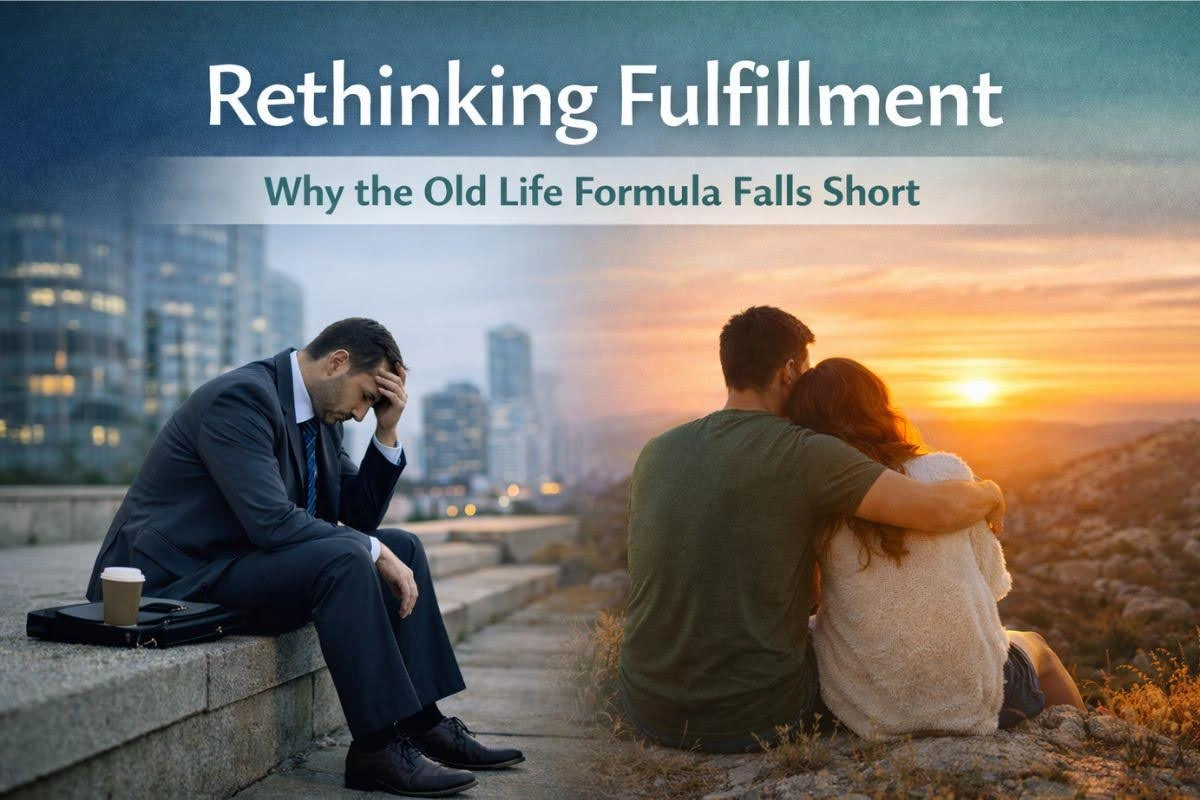
The traditional life blueprint did not appear randomly. It emerged from historical conditions that rewarded stability and predictability.
In industrial and post industrial societies, the path was relatively clear:
- Education led to employment.
- Employment led to financial security.
- Financial security led to marriage, home ownership, and family life.
- Loyalty to one employer often meant lifelong stability.
- Retirement followed decades of consistent work.
This formula made sense in a world where economic mobility was more linear and career trajectories were more stable. Social institutions were stronger, communities were geographically rooted, and expectations were clearer.
But the world has changed dramatically.
Today:
- Career paths are nonlinear.
- Job markets shift rapidly.
- Technology reshapes industries overnight.
- People relocate frequently.
- Social media alters perceptions of success.
- Economic pressures are different.
- Personal identities are more fluid and individualized.
Yet many of us are still evaluating ourselves using outdated metrics.
Why the Old Formula No Longer Guarantees Fulfillment
Although the traditional life formula once offered clarity and direction, changing social, economic, and psychological realities have revealed its limitations in delivering lasting fulfillment.
1. Achievement Does Not Equal Meaning
The old formula equates fulfillment with achievement. Degrees, promotions, income brackets, and visible milestones become the markers of success.
But achievement satisfies external standards. Fulfillment is an internal experience.
You can reach every milestone and still feel:
- Disconnected
- Emotionally exhausted
- Lonely
- Misaligned with your values
- Unsure why your success feels hollow
Achievement answers the question, “Have I succeeded?”
Fulfillment answers the
question, “Does this life feel meaningful to me?”
Those are not the same.
2. The Hedonic Treadmill Effect
Psychologists describe something called the hedonic treadmill. When we achieve something we once desired, the happiness boost is temporary. We adapt quickly. The new milestone becomes normal, and we begin chasing the next one.
New job → feels exciting → becomes routine.
New house → feels rewarding → becomes
standard.
Salary increase → feels validating → becomes expected.
The formula assumes each step will permanently increase life satisfaction. In reality, without deeper meaning or alignment, satisfaction fades.
3. Comparison Culture Has Intensified
In earlier generations, comparison was limited to your immediate community. Now, social media exposes us to curated highlights from thousands of people daily.
We compare:
- Careers
- Relationships
- Bodies
- Travel experiences
- Parenting styles
- Wealth
- Productivity
The old formula already created pressure. Digital culture amplifies it.
Instead of feeling accomplished, many people feel behind, even when they are objectively doing well.
4. Burnout as a Status Symbol
The old model glorifies relentless productivity. Being busy is equated with being important. Exhaustion becomes proof of dedication.
But chronic overwork leads to:
- Emotional fatigue
- Reduced creativity
- Health problems
- Strained relationships
- Loss of joy
When burnout becomes normalized, fulfillment becomes secondary to output.
5. Identity Is No Longer Singular
Previous generations often built identity around one central role: career, parenthood, or community position.
Today, identity is more complex:
- Multiple career shifts
- Hybrid work environments
- Diverse family structures
- Global mobility
- Evolving personal values
The rigid formula does not accommodate this fluidity.
The Psychological Gap: Why Following the Rules Feels Empty
Many people feel unfulfilled not because they failed, but because they succeeded at someone else’s definition of success.
This creates a psychological gap between:
- The life you built
- The life that feels authentic
When goals are externally defined, motivation may be high, but internal satisfaction remains fragile.
Fulfillment requires alignment between:
- Values
- Behavior
- Relationships
- Purpose
- Daily experience
Without alignment, achievement feels performative rather than nourishing.
The Myth of “Arrival”
The old formula implies there is a final state of arrival. A point at which you have done enough, earned enough, and become enough.
But life does not work like that.
Growth is continuous. Identity evolves. Priorities shift.
Waiting to feel fulfilled “once everything is perfect” postpones contentment indefinitely.
Fulfillment is not a destination. It is a process.
What Does Fulfillment Look Like Now?
What Replaces the Traditional Formula for Success?
Fulfillment today is less about rigid milestones and more about adaptive alignment.
Here are five pillars of a more sustainable model.
1. Values Driven Living
Instead of asking, “What should I achieve next?”
Ask, “What matters most to me right
now?”
Values shift over time. They may include:
- Creativity
- Connection
- Autonomy
- Contribution
- Stability
- Learning
- Health
- Adventure
When daily actions align with core values, even small steps feel meaningful.
2. Psychological Flexibility
Life rarely unfolds according to plan.
Psychological flexibility means:
- Adapting when circumstances change
- Revising goals without self judgment
- Accepting uncertainty without paralysis
- Allowing identity to evolve
Rigid adherence to a predefined script increases distress when life deviates from it.
Flexibility protects fulfillment.
3. Depth Over Display
The old formula rewards visible milestones.
Modern fulfillment often comes from:
- Deep relationships
- Meaningful conversations
- Purposeful work
- Creative expression
- Quiet satisfaction
- Personal growth
These are less visible but more enduring.
4. Sustainable Success
Instead of asking, “Can I achieve this?”
Ask, “Can I sustain this?”
Success that destroys health, relationships, or mental wellbeing is unstable.
Sustainable fulfillment integrates:
- Rest
- Boundaries
- Emotional health
- Physical care
- Realistic expectations
5. Contribution Beyond Status
Research consistently shows that contribution enhances life satisfaction.
Contribution does not require fame or wealth. It may include:
- Mentoring
- Supporting family
- Volunteering
- Sharing knowledge
- Creating something useful
Meaning deepens when life impacts others positively.
The Role of Mental Health in Fulfillment
Unfulfillment is not always about life direction. Sometimes it reflects:
- Anxiety
- Depression
- Chronic stress
- Trauma
- Burnout
These conditions can distort perception and reduce access to joy.
Addressing mental health does not mean abandoning ambition. It means strengthening the foundation upon which fulfillment is built.
Redefine Your Path Beyond Cultural Expectations
One of the most challenging aspects of rethinking fulfillment is confronting inherited expectations.
Family, culture, and society often define:
- What success looks like
- When milestones should happen
- What is considered impressive
- What is considered failure
Choosing a different path can trigger:
- Guilt
- Fear
- Self doubt
- Social pressure
But fulfillment requires internal authority.
The question shifts from:
“What will people think?”
to
“What allows me to live
with integrity?”
Signs You May Be Living by an Outdated Formula
- You feel successful but not satisfied.
- You constantly chase the next milestone.
- Rest feels unproductive or guilty.
- Your schedule reflects obligations, not priorities.
- You fear slowing down because you might question everything.
- You measure self worth primarily by output.
These are not personal flaws. They are signals.
How Can You Rethink Fulfillment in Practical Terms?
Instead of abandoning ambition, refine it.
Ask yourself:
- What energizes me consistently?
- What drains me repeatedly?
- Which commitments reflect my values?
- Which commitments reflect external pressure?
- What would “enough” look like?
- Where am I overextending?
- What small shift could improve daily experience?
Fulfillment rarely requires dramatic life upheaval. Often, it begins with recalibration.
Is Fulfillment About Perfect Balance or Intentional Alignment?
A fulfilling life may include:
- Career growth
- Family engagement
- Personal development
- Leisure
- Community involvement
But balance does not mean equal distribution at all times. It means conscious prioritization.
Seasons change:
- Early career may require intense focus.
- Parenthood shifts priorities.
- Health challenges alter pace.
- Later life may emphasize legacy and reflection.
The old formula assumes uniformity. Real life requires adaptability.
The Courage to Redefine
Rethinking fulfillment requires courage.
Courage to:
- Question inherited beliefs
- Admit dissatisfaction
- Make gradual changes
- Seek support
- Redefine success privately
It is not about rejecting structure entirely. It is about aligning structure with authenticity.
Fulfillment Is Not Anti Achievement
It is important to clarify: rejecting the old formula does not mean rejecting ambition.
Ambition becomes healthier when:
- It reflects personal values.
- It includes wellbeing.
- It allows rest.
- It supports relationships.
- It tolerates change.
Achievement can coexist with fulfillment when it is not the sole measure of worth.
Periods of change can feel overwhelming, and if you are navigating uncertainty or major shifts, our article on How Life Transitions Can Stir Anxiety And Practical Ways to Cope offers practical strategies to manage stress and regain emotional balance.
Build a Life That Truly Feels Like Your Own
A modern approach may include:
- Choosing work that aligns with strengths, not just salary.
- Prioritizing emotional intimacy over social performance.
- Protecting downtime as fiercely as productivity.
- Seeking therapy or coaching when clarity is needed.
- Allowing goals to evolve.
- Measuring success by internal alignment, not external applause.
For those committed to building a life rooted in authenticity, emotional depth, and meaningful connection, our article Supporting Someone Through Trauma Healing: What You Can Do That Truly Helps offers practical insights on fostering empathy, strengthening relationships, and showing up with intention during challenging times.
What Will Fulfillment Look Like Tomorrow?
The traditional script provided stability in a different era. But fulfillment in today’s world demands flexibility, emotional awareness, and conscious choice.
The question is no longer:
“Did I follow the formula correctly?”
It is:
“Does my
life reflect who I am becoming?”
When fulfillment is defined personally rather than socially, it becomes sustainable.
The NuTrans Health Perspective on Modern Fulfillment
The old life formula promised that if you checked the right boxes, happiness would follow. For many, it did not.
Fulfillment is not a linear checklist. It is a dynamic relationship between values, actions, connection, growth, and wellbeing.
The modern path is less predictable but more personal. It invites reflection over comparison, alignment over appearance, sustainability over exhaustion, and meaning over milestone accumulation.
Rethinking fulfillment does not mean abandoning responsibility or ambition. It means redefining success in a way that honors both achievement and humanity. And perhaps that is the true evolution of the life formula.
At NuTrans Health, we recognize that fulfillment is not achieved through rigid formulas or external checklists. It is built through intentional choices, emotional wellbeing, resilience, and alignment with what truly matters. Working with a Therapist in Charlotte, NC can provide the guidance and perspective needed to explore these shifts in a meaningful and sustainable way. Sustainable fulfillment requires more than productivity or achievement.
It requires balance, clarity, and the right support systems, including our Stress Management Program, designed to help individuals build resilience, regulate stress, and create healthier patterns for long term wellbeing.
Related Blogs
Mental Health Services in Raleigh NC and How AI Improves It
Mental Health Services in Raleigh NC and How AI...
Read MoreMental Health Counseling and Workplace Stress in Raleigh
Mental Health Counseling and Workplace Stress in Raleigh The...
Read MoreTeletherapy vs. In-Person Counseling: Which One is Right for You?
Teletherapy vs. In-Person Counseling: Which One is Right for...
Read More