Doomscrolling can be reduced by setting clear limits on screen time, filtering out negative content, and replacing scrolling with healthier habits like reading, exercise, or mindfulness. By taking control of what you consume, turning off unnecessary notifications, and creating phone-free routines, you can break the cycle of constant negative input and protect your mental health.
Multiple studies indicate that doomscrolling is linked to increased psychological distress and lower overall well-being, including reduced life satisfaction In this article, you’ll learn what doomscrolling is, why it happens, how it affects your mental health, and practical ways to stop it and protect your well-being.
Table of Contents- What Is Doomscrolling?
- Why Do People Doomscroll? (Psychology Explained)
- How Doomscrolling Affects Mental Health (Anxiety, Sleep & Focus)
- Signs You Are Doomscrolling Too Much
- How to Stop Doomscrolling (Proven Strategies)
- How to Stop Doomscrolling at Night
- Best Alternatives to Doomscrolling for Better Mental Health
- The Long-Term Effects of Doomscrolling on Mental Health
- Reclaim Your Mental Health with Nutrans Health
What Is Doomscrolling?
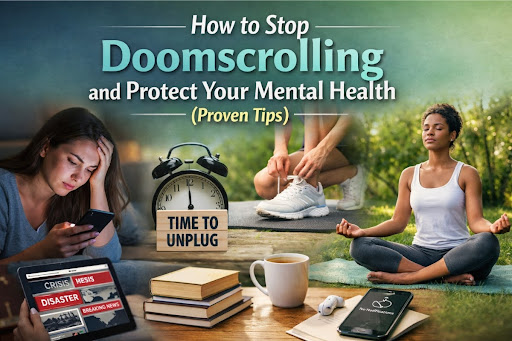
Doomscrolling refers to the tendency to continuously scroll through negative or distressing content, particularly on social media, news platforms, or apps.
It often involves:
- Reading alarming news headlines repeatedly
- Consuming content related to crises, disasters, or conflicts
- Feeling unable to stop despite emotional discomfort
This behavior became especially common during global crises like the COVID-19 pandemic, but it has continued as a daily habit for many people.
Why Do People Doomscroll? (Psychology Explained)
Doomscrolling isn’t just a habit; it is driven by how our brains respond to uncertainty, fear, and information. Several psychological factors make it difficult to stop, even when the content is overwhelming.
1. Negativity Bias
Humans are naturally wired to focus more on negative information because it helps with survival. This makes alarming news more attention-grabbing than positive content.
2. Fear of Missing Out (FOMO)
People feel the need to stay updated, especially during uncertain times, which leads to constant checking of news and social feeds.
3. Lack of Control
When the world feels unpredictable, people seek information to regain a sense of control, even if that information increases anxiety.
4. Algorithm-Driven Platforms
Social media platforms are designed to keep you engaged. The more you interact with negative content, the more similar content you are shown.
5. Dopamine-driven behavior
Scrolling provides small, repeated rewards that keep users engaged, making it hard to stop
Together, these factors create a cycle where the more you scroll, the harder it becomes to stop, which reinforces the habit of doomscrolling.
How Doomscrolling Affects Mental Health (Anxiety, Sleep & Focus)
Doomscrolling may seem harmless, but it can have serious psychological effects. Studies show that spending more than 4 hours a day on social media is significantly associated with higher levels of anxiety and depression among young adults
1. Increased Anxiety
Research published in Computers in Human Behavior found that more than 2 hours of daily screen time can double the risk of elevated anxiety. Constant exposure to negative information keeps your brain in a heightened state of alertness.
- Triggers worry and overthinking
- Creates a sense of constant danger
- Makes it difficult to relax
2. Emotional Exhaustion
Consuming distressing content repeatedly can drain your emotional energy.
- Leads to burnout
- Reduces emotional resilience
- Causes feelings of overwhelm
3. Sleep Disruption
Scrolling late at night can negatively affect sleep.
- Blue light interferes with melatonin production
- Negative content increases mental activity
- Makes it harder to fall asleep
4. Reduced Focus and Productivity
Doomscrolling fragments attention and reduces concentration.
- Shortens attention span
- Increases procrastination
- Makes it harder to complete tasks
5. Feelings of Helplessness
Constant exposure to global issues can make individuals feel powerless.
- Creates a sense of lack of control
- Leads to emotional numbness
- Reduces motivation
Signs You Are Doomscrolling Too Much
Doomscrolling often becomes a habit before you realize it. Recognizing the signs early can help you take control before it starts affecting your mental health. You might be doomscrolling if you notice:
- Spending more time scrolling than intended, often losing track of time
- Feeling anxious, stressed, or emotionally drained after using your phone
- Repeatedly checking the news or social media for updates throughout the day
- Scrolling first thing in the morning or right before going to bed
- Finding it difficult to stop, even when the content feels overwhelming
- Using scrolling as a way to avoid tasks, responsibilities, or emotions
These signs indicate that scrolling has shifted from intentional use to a compulsive behavior, which can negatively impact your well-being if not addressed.
How to Stop Doomscrolling (Proven Strategies)
Breaking the doomscrolling habit requires small, intentional changes in how you use your phone and consume content. The goal is not to avoid information completely, but to regain control over your attention and emotional well-being.
Here are practical strategies that work:
1. Set Time Limits for Screen Use
One of the most effective ways to reduce doomscrolling is to create boundaries.
- Use app timers or screen time limits
- Allocate specific times for checking the news
- Avoid endless scrolling sessions
Example: Limit news consumption to 20 minutes twice a day.
2. Curate Your Content
Take control of what you consume.
- Unfollow negative or triggering accounts
- Follow positive, educational, or uplifting content
- Mute keywords or topics that cause stress
Your feed should support your well-being—not harm it.
3. Replace the Habit with Healthier Alternatives
Doomscrolling is often a default behavior. Replace it with something better.
- Go for a walk
- Practice mindfulness or meditation
- Journal your thoughts
- Engage in a hobby
4. Practice Mindful Consumption
Instead of consuming content passively, be intentional.
- Ask yourself: “Is this helping me?”
- Notice how content makes you feel
- Stop when you feel overwhelmed
5. Turn Off Notifications
Notifications trigger the urge to check your phone.
- Disable non-essential alerts
- Limit social media notifications
- Reduce constant distractions
6. Create Phone-Free Zones
Set boundaries for when and where you use your phone.
- No phone during meals
- No phone in the bedroom
- No phone during focused work
7. Limit News Exposure
Staying informed is important—but overexposure is harmful.
- Choose 1–2 reliable sources
- Avoid checking the news repeatedly
- Focus on summaries instead of constant updates
8. Use Technology to Your Advantage
Use apps designed to reduce screen time.
- Screen time trackers
- Focus apps
- Website blockers
9. Build Awareness of Triggers
Identify when and why you doomscroll.
- Are you bored?
- Are you anxious?
- Are you avoiding something?
Understanding triggers helps you break the cycle.
How to Stop Doomscrolling at Night
Nighttime is when doomscrolling tends to have the strongest impact on mental health, as it directly affects sleep quality and emotional state. Breaking this habit can significantly improve both your rest and overall well-being.
- Set a screen cut-off time: Avoid using your phone at least 30–60 minutes before bed
- Keep your phone away from your bed: Place it out of reach to reduce the temptation to scroll
- Use night mode or blue light filters: Minimize the impact on your sleep cycle
- Replace scrolling with a calming routine: Read a book, journal, or practice relaxation techniques
- Avoid negative content before sleep: Consuming distressing information at night increases overthinking and anxiety
- Create a consistent bedtime routine: Signal your brain that it’s time to wind down
Reducing doomscrolling at night helps your mind relax, improves sleep quality, and prevents anxiety from carrying into the next day.
Best Alternatives to Doomscrolling for Better Mental Health
Replacing doomscrolling with healthier activities is essential for breaking the habit and improving your mental well-being. The goal is to shift from passive, negative consumption to activities that are engaging, calming, and purposeful.
- Physical activity: Walking, stretching, or exercising helps reduce stress hormones, improve mood, and boost overall energy
- Mindfulness practices: Meditation, deep breathing, or grounding exercises help calm the mind and reduce anxiety
- Reading or learning: Books, podcasts, or educational content provide value without emotional overload
- Creative activities: Writing, drawing, or hobbies help redirect attention and promote emotional expression
- Social connection: Talking to friends or family can reduce feelings of isolation and provide emotional support
- Journaling: Writing down thoughts and feelings helps process emotions and clear mental clutter
- Listening to music or podcasts: Positive or relaxing audio content can shift your mood and reduce stress
- Spending time outdoors: Nature helps lower stress levels and improves mental clarity
These alternatives not only reduce screen time but also actively support emotional balance, helping you build healthier habits and protect your mental health.
Learning simple techniques to calm your nervous system can help you manage stress and reduce the urge to keep scrolling.
The Long-Term Effects of Doomscrolling on Mental Health
If left unchecked, doomscrolling can go beyond short-term stress and start affecting long-term mental and emotional well-being. Over time, repeated exposure to negative content can shape how you think, feel, and respond to everyday situations.
- Chronic anxiety: Constant exposure to distressing information can keep the brain in a prolonged state of alertness
- Negative thinking patterns: Repeated focus on negative content can shift your mindset toward pessimism or fear
- Reduced emotional resilience: Continuous stress can make it harder to cope with challenges
- Digital dependency: Over time, scrolling can become a default behavior for dealing with boredom or discomfort
- Lower overall well-being: Persistent mental fatigue and emotional strain can impact quality of life
Recognizing common anxiety disorder symptoms can help you understand how doomscrolling may be affecting your mental health.
Reclaim Your Mental Health with Nutrans Health
Doomscrolling can quietly take a toll on your mental health, increasing anxiety, disrupting sleep, and draining your energy. By setting boundaries, building healthier digital habits, and being mindful of what you consume, you can break the cycle and regain control over your well-being. Managing stress and anxiety becomes easier with the right guidance and support.
NuTrans Health connects you with experienced therapists in Charlotte, NC, offering personalized support for anxiety, depression, and stress management.
Book your consultation today and take control of your mental well-being.
Related Blogs
Mental Health Services in Raleigh NC and How AI Improves It
Mental Health Services in Raleigh NC and How AI...
Read MoreMental Health Counseling and Workplace Stress in Raleigh
Mental Health Counseling and Workplace Stress in Raleigh The...
Read MoreTeletherapy vs. In-Person Counseling: Which One is Right for You?
Teletherapy vs. In-Person Counseling: Which One is Right for...
Read More