Anxious patterns reach for reassurance. Avoidant ones create distance. Disorganized ones do both at once. What matters most is that none of these is fixed traits. They took shape early, through your first relationships with caregivers, and they can be reshaped through self-awareness, honest communication, and approaches like Cognitive Behavioral Therapy or Emotionally Focused Therapy.
This guide explains what attachment patterns are, the different types, common signs and triggers, and practical steps that support healthier connections.
Table of Contents
- What Are Attachment Patterns?
- Types of Attachment Patterns
- Common Attachment Triggers in Relationships
- What Helps Build Secure Attachment
- When to Consider Professional Support
- Build Healthier Relationships with Support from NuTrans Health
What Are Attachment Patterns?
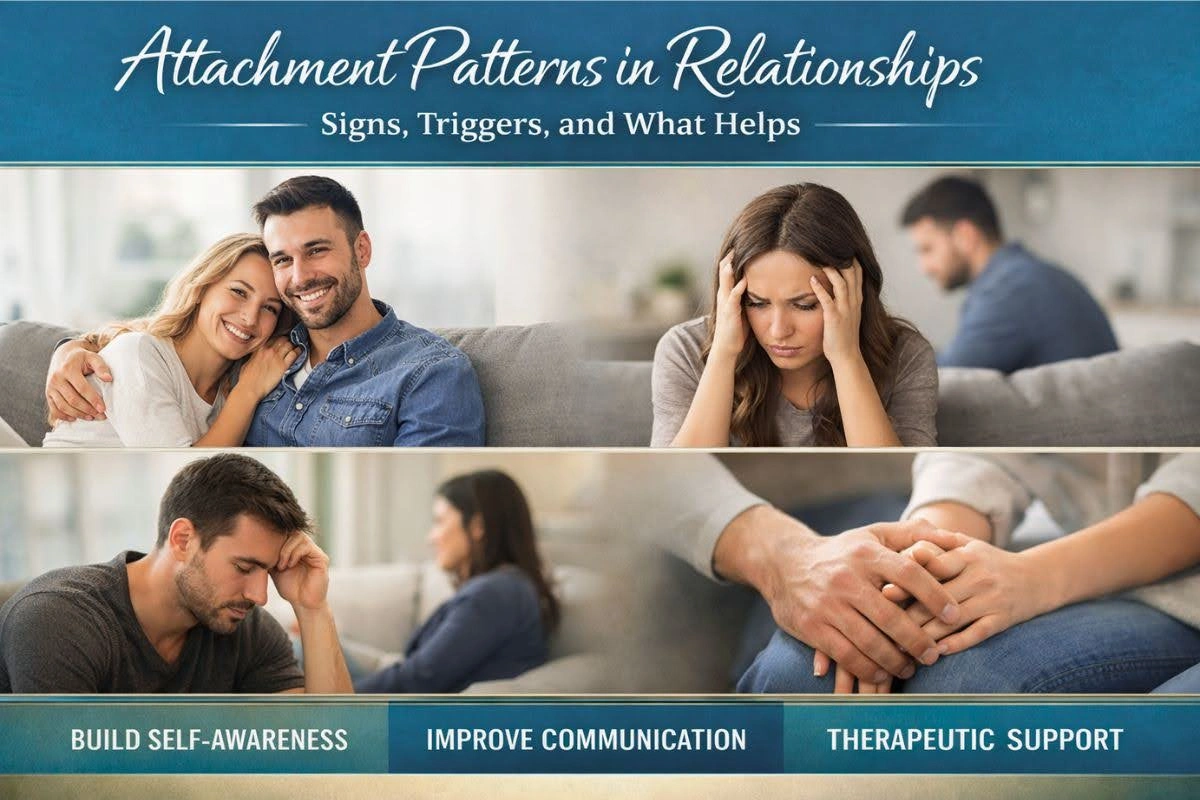
Attachment patterns or styles refer to the ways individuals form emotional bonds and respond to closeness, separation, and conflict in relationships. These patterns are shaped early in life through interactions with caregivers and continue to influence adult romantic relationships, friendships, and even workplace dynamics.
Attachment theory was first developed by John Bowlby and later expanded through research by Mary Ainsworth. Their work demonstrated that early caregiver responsiveness plays a key role in shaping a person’s expectations about safety, trust, and emotional availability.
While Patterns of closeness begin in childhood, they are not fixed. With awareness and intentional effort, individuals can develop more secure ways of relating.
Types of Attachment Patterns
Most research identifies four primary bonding styles in adults: secure, anxious, avoidant, and disorganized. Each style has distinct patterns in relationships.
1. Secure Attachment
Individuals with secure attachment generally feel comfortable with intimacy and independence. They trust their partners and communicate openly.
Common signs include:
- Comfort with emotional closeness
- Healthy boundaries
- Ability to resolve conflict constructively
- Trust in the relationship
- Emotional regulation during stress
Secure attachment does not mean relationships are perfect. It means individuals can navigate challenges without extreme fear of abandonment or avoidance.
2. Anxious Attachment
People with anxious attachment often crave closeness but fear rejection or abandonment. They may become preoccupied with the relationship and seek frequent reassurance.
Common signs include:
- Fear of being left
- Overthinking partner behavior
- High sensitivity to changes in communication
- Difficulty tolerating distance
- Strong emotional reactions during conflict
Anxious attachment is often rooted in inconsistent caregiving during childhood, where emotional availability felt unpredictable.
3. Avoidant Attachment
Individuals with avoidant attachment tend to value independence and may feel uncomfortable with too much emotional closeness.
Common signs include:
- Difficulty expressing vulnerability
- Withdrawing during conflict
- Downplaying emotional needs
- Feeling suffocated by intimacy
- Prioritizing independence over connection
Avoidant patterns often develop when caregivers are emotionally distant or dismissive.
4. Disorganized Attachment
Disorganized attachment involves a mix of anxious and avoidant tendencies. Individuals may deeply desire closeness but simultaneously fear it. Relationships can feel intense, confusing, or unpredictable.
Common signs include:
- Push-pull dynamics
- Fear of intimacy and abandonment
- Emotional highs and lows
- Distrust mixed with longing for connection
- Difficulty feeling safe even in stable relationships
Disorganized or mixed attachment is often linked to early trauma, neglect, or frightening caregiving experiences.
Common Attachment Triggers in Relationships
Connection styles become most visible when they are activated by emotional triggers. These triggers often relate to fears about safety, closeness, rejection, or loss of independence. Understanding your triggers helps reduce reactive behaviors and creates space for healthier responses.
Triggers for Anxious Attachment
Individuals with anxious attachment are often sensitive to signs of distance or disconnection. Common triggers include:
- Delayed responses to messages
- Changes in tone or communication patterns
- A partner requesting space
- Conflict that feels unresolved
- Perceived emotional withdrawal
These situations may activate fears of abandonment and lead to reassurance seeking or heightened emotional responses.
Triggers for Avoidant Attachment
Avoidant attachment is commonly triggered by perceived pressure or emotional intensity. Triggers may include:
- Requests for deeper emotional discussion
- Increased dependency from a partner
- Conflict that feels overwhelming
- Expectations for frequent communication
- Feeling criticized or controlled
In response, individuals may withdraw, shut down, or create emotional distance to regain a sense of control.
Triggers for Disorganized Attachment
Disorganized attachment often involves conflicting fears around both closeness and separation. Triggers may include:
- Growing emotional intimacy
- Trust-building moments
- Vulnerability in conversations
- Perceived rejection
- High-intensity conflict
These situations may create push-pull dynamics, emotional highs and lows, or inconsistent behaviors.
What Helps Build Secure Attachment
Building secure attachment is a gradual process that involves strengthening emotional awareness, communication, and relational consistency. The following strategies can help support that shift.
1. Increase Self Awareness
The first step is recognizing your attachment pattern and how it shows up during stress. Notice your emotional reactions and ask yourself:
- What am I feeling right now?
- What fear is being activated?
- Is this reaction based on the present situation or past experiences?
Self-awareness creates space between trigger and response.
2. Strengthen Emotional Regulation
When attachment is activated, the nervous system can become dysregulated. Learning to calm the body helps prevent reactive behaviors. Helpful strategies include:
- Slow breathing exercises
- Grounding techniques
- Taking a brief pause before responding
- Journaling thoughts before discussing them
Regulation allows you to respond thoughtfully rather than react impulsively.
3. Practice Clear and Direct Communication
Secure attachment involves expressing needs without blame. For example:
- I feel anxious when we do not talk for long periods. Can we plan a check-in time?
- I need some space to process, but I want to revisit this conversation later.
Clear communication reduces assumptions and builds trust.
4. Create Consistency and Reliability
Security develops through repeated experiences of safety. Following through on commitments, responding consistently, and repairing after conflict help strengthen relational trust.
5. Therapy
Professional support can accelerate the development of secure attachment. Cognitive Behavioral Therapy helps identify and reframe unhelpful thought patterns, while Emotionally Focused Therapy strengthens emotional bonding and communication in relationships.
Therapy provides a structured environment to process past experiences and build what is often referred to as earned security.
6. Boundary Setting
Secure Relationship style involves balancing closeness with autonomy. Establishing healthy, respectful boundaries ensures that both partners’ needs are acknowledged.
This may include:
- Communicating limits clearly
- Respecting requests for space
- Expressing needs without blame
- Honoring mutual expectations
Boundaries create safety, predictability, and trust within relationships.
Explore our guide on Healthy Relationship Boundaries and how to set limits with care and confidence to strengthen communication and protect your emotional well-being.
When to Consider Professional Support
While many people can improve attachment styles through self-reflection and healthier communication, some situations benefit from structured therapeutic support. Relationship concerns often become more complex when they are rooted in trauma, repeated relationship distress, or long-standing emotional patterns.
You may consider professional support if you experience:
- Repeated cycles of unstable or conflict-driven relationships
- Intense fear of abandonment or rejection
- Persistent emotional withdrawal or difficulty with vulnerability
- Push-pull dynamics that feel exhausting or confusing
- Trauma history affecting intimacy or trust
- Conflict that escalates quickly and feels difficult to repair
Individual therapy can help increase insight, strengthen emotional regulation, and process past experiences that shaped connection patterns.
Couples therapy can support partners in identifying pursue-withdraw cycles, improving communication, and building emotional safety.
Seeking support is not a sign of relational failure. It is a proactive step toward developing healthier patterns, a deeper connection, and long-term relationship stability.
Learn practical strategies in our guide on Techniques to Calm Your Nervous System to better manage stress and emotional triggers.
Build Healthier Relationships with Support from NuTrans Health
Attachment patterns shape how you relate, respond, and reach for the people you love, but they are not permanent. With insight and the right support, greater security is always possible.
NuTrans Health offers couples therapy in Charlotte, NC, that helps partners recognize these cycles, communicate with less fear, and build the emotional safety that secure connection depends on.
If you are ready to understand your patterns and build a steadier, more trusting relationship, reach out to our experienced therapists in Charlotte to begin.