Breathing is the one thing you do every moment of your life without thinking about it. Conscious breathing is a simple, evidence-informed practice. Research in neuroscience and physiology shows that controlled breathing can directly influence the autonomic nervous system, helping regulate stress responses, heart rate, and emotional reactivity.
This guide explores what conscious breathing is, why it matters, the science-backed benefits, and simple ways you can begin practicing it today.
Table of Contents- What Is Conscious Breathing?
- How Conscious Breathing Works in the Body
- The Difference Between Automatic and Conscious Breathing
- Science-Backed Benefits of Conscious Breathing
- Common Myths About Conscious Breathing
- Basic Principles of Conscious Breathing
- Simple Ways to Start Practicing Conscious Breathing
- When and Where to Practice Conscious Breathing
- Integrating Conscious Breathing Into Daily Life
- Who Can Benefit From Conscious Breathing?
- Take a Simple Start for Lasting Health with NuTrans Health
What Is Conscious Breathing?
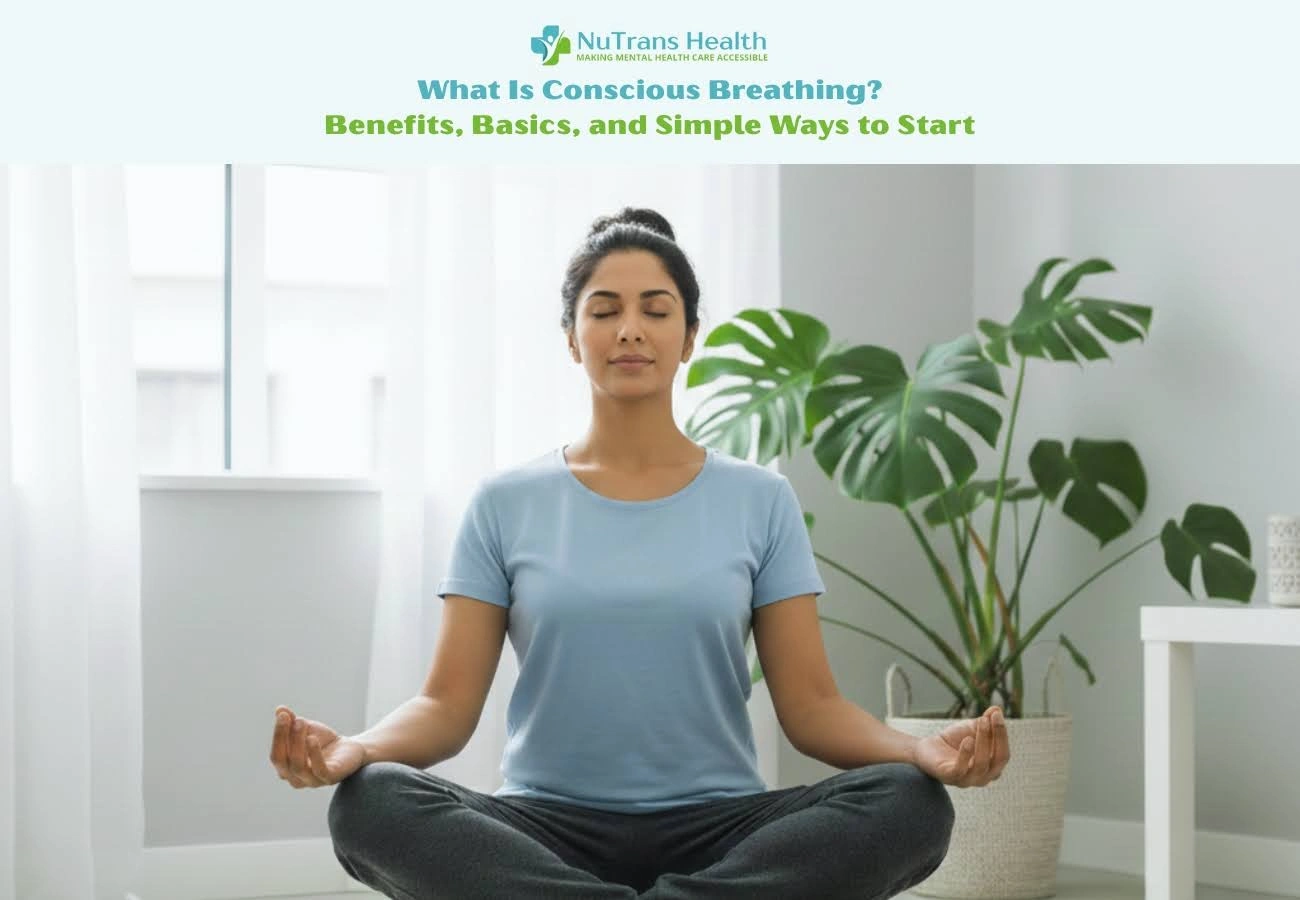
At its core, conscious breathing involves three elements:
- Awareness – noticing how you are breathing
- Control – gently guiding the breath
- Presence – staying focused on the breathing process
This does not mean forcing the breath or breathing unnaturally. Instead, conscious breathing encourages slow, steady, and relaxed breathing patterns that support the body’s natural systems.
Conscious breathing is often used in practices such as:
- Mindfulness and meditation
- Yoga and breathwork
- Stress reduction techniques
- Athletic training and recovery
- Therapy and emotional regulation
Importantly, it does not require belief systems, special equipment, or long sessions. Even one minute of conscious breathing can create measurable effects in the body.
How Conscious Breathing Works in the Body
To understand why conscious breathing is so powerful, it helps to understand how breathing interacts with the nervous system.
The Autonomic Nervous System
Your autonomic nervous system has two main branches:
- Sympathetic nervous system – responsible for fight-or-flight responses
- Parasympathetic nervous system – responsible for rest, recovery, and digestion
When you are stressed, anxious, or overwhelmed, the sympathetic system dominates. Your breathing becomes shallow, fast, and chest-focused.
Conscious breathing activates the parasympathetic nervous system, signaling safety to the body. This leads to:
- Slower heart rate
- Lower blood pressure
- Reduced muscle tension
- Improved digestion
- Calmer mental state
This is why slow, intentional breathing is often used in moments of stress, panic, or emotional overload.
The Difference Between Automatic and Conscious Breathing
Most adults breathe too shallowly, primarily using the upper chest rather than the diaphragm. This type of breathing is efficient for short bursts of activity but problematic when it becomes habitual.
Automatic Breathing
- Shallow and rapid
- Centered in the chest
- Often unconscious
- Associated with stress and tension
Conscious Breathing
- Slower and deeper
- Engages the diaphragm
- Intentional and aware
- Associated with calm and focus
By practicing conscious breathing, you retrain your body to return to healthier breathing patterns even when you are not actively thinking about it.
Science-Backed Benefits of Conscious Breathing
Research across neuroscience, psychology, and physiology has demonstrated significant benefits of controlled breathing practices.
1. Reduces Stress and Anxiety
One of the most immediate effects of conscious breathing is stress reduction. Slow breathing lowers cortisol levels and reduces nervous system arousal.
Studies show that controlled breathing can:
- Decrease symptoms of anxiety disorders
- Reduce panic attack intensity
- Improve emotional regulation
This makes conscious breathing a valuable tool for both everyday stress and clinical anxiety management.
2. Improves Focus and Mental Clarity
Conscious breathing increases oxygen delivery to the brain while calming mental chatter. Many people report improved concentration, clearer thinking, and better decision-making after just a few minutes of practice.
This is why breathing techniques are often used before:
- Important meetings
- Public speaking
- Exams or presentations
- Athletic performance
3. Supports Emotional Regulation
Breath and emotion are closely linked. When emotions rise, breathing changes automatically. Conscious breathing helps you interrupt emotional spirals before they take over.
Benefits include:
- Reduced emotional reactivity
- Improved mood stability
- Greater self-awareness
This makes conscious breathing especially helpful during conflict, grief, frustration, or overwhelm.
4. Enhances Physical Health
Beyond mental benefits, conscious breathing supports physical health in several ways:
- Improves lung efficiency
- Supports cardiovascular health
- Reduces muscle tension
- Aids digestion
- Improves sleep quality
Deep breathing also supports lymphatic circulation and oxygen delivery throughout the body.
5. Improves Sleep Quality
Many sleep issues are linked to an overactive nervous system. Conscious breathing before bed helps shift the body into a parasympathetic state, making it easier to fall asleep and stay asleep.
Even a simple breathing routine done for five minutes before bedtime can significantly improve sleep onset.
6. Builds Mind-Body Awareness
Over time, conscious breathing increases awareness of physical sensations, emotional states, and stress signals. This awareness allows earlier intervention before stress becomes overwhelming.
Common Myths About Conscious Breathing
Despite its simplicity, conscious breathing is often misunderstood.
Myth 1: You Have to Meditate for Long Periods
Reality: Even 30 seconds to 2 minutes of conscious breathing can be beneficial.
Myth 2: It’s Only for Relaxation
Reality: Breathing techniques can also energize, sharpen focus, and enhance performance.
Myth 3: You Can Do It Wrong
Reality: There is no perfect breath. Awareness and gentleness are more important than technique.
Basic Principles of Conscious Breathing
Before starting specific techniques, it helps to understand a few foundational principles.
1. Breathe Through the Nose
Nasal breathing filters air, regulates airflow, and supports nitric oxide production, which improves oxygen uptake.
2. Use the Diaphragm
Allow the belly to expand as you inhale, rather than lifting the shoulders.
3. Slow the Exhale
Longer exhales activate the parasympathetic nervous system more strongly than inhales.
4. Stay Comfortable
Breathing should feel relaxed and sustainable, not forced.
Simple Ways to Start Practicing Conscious Breathing
You do not need to overhaul your routine. Start small.
1. One-Minute Awareness Practice
- Sit or stand comfortably
- Notice your breath without changing it
- Observe where you feel it most
- Continue for one minute
This builds awareness without pressure.
2. Box Breathing (4–4–4–4)
A simple, structured technique:
- Inhale for 4 seconds
- Hold for 4 seconds
- Exhale for 4 seconds
- Hold for 4 seconds
Repeat for 3–5 rounds. This technique is widely used in high-stress professions.
3. Extended Exhale Breathing
- Inhale for 4 seconds
- Exhale for 6–8 seconds
Repeat for 2–5 minutes. This is especially effective for calming anxiety.
4. Morning Reset Breath
Before checking your phone in the morning:
- Take 5 slow, deep breaths
- Focus on expanding the belly
- Set an intention for the day
This creates a calmer baseline for the day ahead.
5. Breath Breaks During the Day
Set reminders to pause once every few hours:
- Take 3 conscious breaths
- Relax the jaw and shoulders
These micro-practices prevent stress accumulation.
When and Where to Practice Conscious Breathing
One of the strengths of conscious breathing is flexibility.
You can practice:
- At your desk
- In traffic
- Before a meeting
- During exercise recovery
- Before sleep
- While waiting in line
No one needs to know you are doing it.
Integrating Conscious Breathing Into Daily Life
Rather than treating breathing as a separate task, integrate it into existing routines:
- Breathe consciously while brushing your teeth
- Slow your breath while walking
- Take one deep breath before responding in conversation
These small integrations create lasting change.
To put conscious breathing into practice, read our guide on Two Easy Techniques to Calm Your Nervous System and Improve Mental Well-Being.
Who Can Benefit From Conscious Breathing?
Conscious breathing is suitable for:
- Busy professionals
- Students
- Athletes
- Parents
- People managing stress or anxiety
- Anyone seeking better focus or calm
Because it is gentle and adaptable, it is accessible to people of all ages and fitness levels.
For practical examples of how breathing supports nervous system regulation, see Two Easy Techniques to Calm Your Nervous System and Improve Mental Well-Being.
For a complementary perspective on emotional regulation and mental health, read Why Laughter Heals: Exploring the Mental Health Benefits of Humor.
Take a Simple Start for Lasting Health with NuTrans Health
We believe meaningful health improvements begin with simple, sustainable practices. Conscious breathing is one of the most accessible tools for supporting nervous system balance, emotional resilience, and overall well-being.
As part of a holistic approach to health, conscious breathing complements nutrition, movement, and lifestyle strategies that support long-term vitality. Start with a few intentional breaths today and build from there. Small, consistent steps can create lasting change.
At NuTrans Health, our mental health experts support your journey with evidence-based strategies that address nutrition, lifestyle, and nervous system balance together. If you are ready to take a more intentional step toward better health, explore how NuTrans Health can support you, starting with small changes that lead to meaningful results.
Related Blogs
Mental Health Services in Raleigh NC and How AI Improves It
Mental Health Services in Raleigh NC and How AI...
Read MoreMental Health Counseling and Workplace Stress in Raleigh
Mental Health Counseling and Workplace Stress in Raleigh The...
Read MoreTeletherapy vs. In-Person Counseling: Which One is Right for You?
Teletherapy vs. In-Person Counseling: Which One is Right for...
Read More