Seeking help for a substance use disorder is a life changing decision, and one of the most common fears is, “Will I lose my job if I go to treatment?” The fear of losing income, stability, or professional credibility often delays the very help that could restore all three.
The reality is that many people successfully keep working or take protected leave while they get help. With the right approach, you can protect your position, maintain confidentiality, and create a structured plan that supports both your health and your responsibilities. Recovery is not a pause in your life. It is the foundation for rebuilding your life with greater clarity, resilience, and long term stability than ever before.
This guide breaks down practical steps to balance treatment and employment, including how to talk to your employer, what leave options may apply, how confidentiality works, and how to return to work with a sustainable plan.
Table of ContentsStart with the most important mindset shift
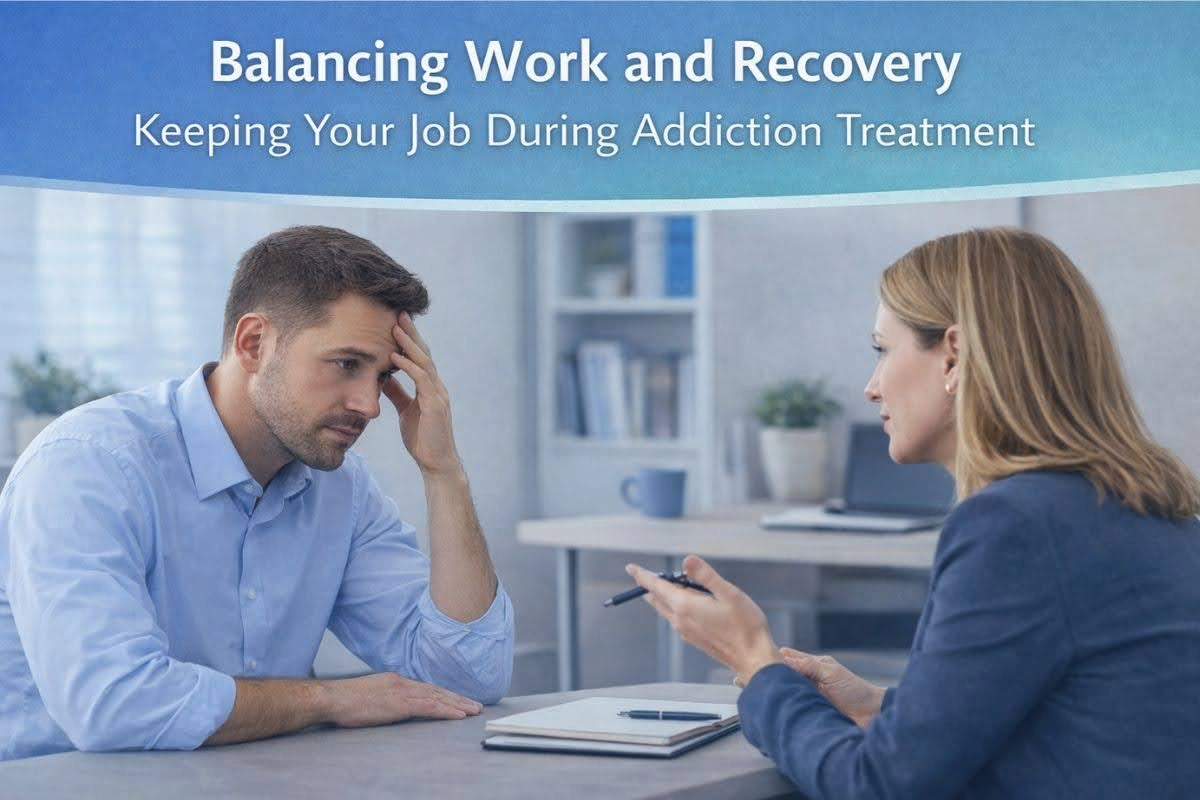
Addiction treatment is not a “break” from your life. It is healthcare. When you treat it like healthcare, your decisions become clearer:
- You plan time away like you would for any medical condition
- You share only what is necessary
- You focus on stability and performance, not perfection
- You build recovery support the same way you build a work schedule
A Practical Step by Step Guide to Balancing Work and Addiction Treatment
This step by step guide outlines practical actions you can take to protect your job, manage workplace expectations, and stay focused on recovery throughout treatment.
Step 1: Decide what level of treatment fits your work reality
Not every treatment plan requires leaving work completely. Many people assume rehab means weeks away, but there are multiple levels of care:
- Outpatient therapy (weekly sessions)
- Intensive Outpatient Programs (IOP) (multiple sessions per week, often evenings)
- Partial Hospitalization Programs (PHP) (daytime structured treatment, return home at night)
- Residential or inpatient treatment (24/7 care for a period of time)
A clinician can recommend the best level of care based on safety, severity, relapse risk, and co-occurring mental health needs. If you need medically supervised withdrawal, prioritize that first.
Outpatient treatment or an Intensive Outpatient Program can often be arranged around your work schedule. When inpatient care is necessary for your health or safety, the focus shifts to planning medical leave and clear communication rather than adjusting daily hours.
Step 2: Understand your workplace rights and leave options
Your protections depend on where you work, your contract, and your location. Below are common frameworks people rely on.
If you are in the United States
FMLA (Family and Medical Leave Act): FMLA can allow eligible employees to take job protected leave for treatment of substance use disorder when it qualifies as a serious health condition and the leave is for treatment (not for substance use itself). The U.S. Department of Labor’s FMLA guidance states that leave may be taken for substance abuse treatment by a health care provider or by a provider on referral, while absences due to use (rather than treatment) do not qualify.
ADA (Americans with Disabilities Act): The ADA may protect employees with substance use disorders in certain situations, especially individuals in recovery or those not currently engaging in illegal drug use. “Current illegal drug use” is not protected in the same way, and workplaces may still enforce safety and conduct rules. The EEOC provides a dedicated resource on substance use and the ADA, and the U.S. Department of Justice has specific guidance related to opioid use disorder.
Confidentiality of treatment records (42 CFR Part 2): In the U.S., certain substance use treatment records have special confidentiality protections under federal regulations (42 CFR Part 2), and HHS has issued updated rules. This matters when you are deciding what documentation to provide and to whom.
If you are in the United Kingdom
Time off for medical appointments is not an automatic legal entitlement in every case, but many employers allow it, and employers have a duty of care regarding employee health and wellbeing. ACAS provides guidance on time off for medical appointments, and the UK Health and Safety Executive discusses supporting employees with drug or alcohol problems at work.
If you are elsewhere
Protections vary widely. The safest approach is to check your employment contract, HR policies, and local labor laws, and get advice from a local professional if needed. If you are in Pakistan and looking for immediate support resources, helpline directories exist that list local options.
Step 3: Choose a privacy first disclosure strategy
You do not always need to disclose “addiction treatment” to get time off or accommodations. In many workplaces, you can request leave for a medical condition without naming the condition.
A practical rule:
- Tell your employer what you need (time off, schedule changes, reduced travel, etc.)
- Not the full diagnosis (unless you choose to share it)
In the U.S., employers are limited in when they can ask disability related questions or require medical examinations, and guidance exists on appropriate inquiries.
What you can say (examples)
- “I’m receiving medical treatment and need time off for appointments.”
- “My health care provider recommends a temporary schedule adjustment.”
- “I need medical leave starting [date] and I will provide required documentation.”
Who should know
Keep the circle small:
- HR (for paperwork and leave)
- Your direct manager (only what they need to manage workload)
- A trusted colleague (optional, for coverage support)
Avoid oversharing with coworkers. Your recovery deserves privacy.
Step 4: Plan the logistics like a project
Treat your treatment plan like a high stakes project plan with clear deliverables.
Before you start treatment, prepare:
- A short coverage plan (what must be done, what can pause)
- A handoff document (key logins are never included, but note where files are and what deadlines exist)
- An out of office message that is vague and professional
- One point of contact for urgent issues (if you will be reachable at all)
If you are taking leave
Try to set one clean boundary:
- “I will be offline until [date]. For urgent matters contact [name].”
If your role allows, you can offer a single weekly check in. But be careful: recovery needs real separation from stress.
Step 5: If you must keep working, build a recovery friendly schedule
Balancing outpatient treatment with employment carries a significant risk of overload. A schedule that looks good on paper can still collapse under stress.
Work adjustments that often help
- Start later or end earlier on treatment days
- Reduce overtime temporarily
- Limit travel for a set period
- Move high stress meetings away from therapy days
- Shift to remote or hybrid temporarily if possible
The goal is not comfort. The goal is stability.
What not to do
- Do not pack treatment into your “free time” while keeping the same workload
- Do not rely on willpower alone
- Do not skip sleep, meals, or support meetings to “prove” you can handle it
- Recovery is not something you squeeze in. It is something you build around.
Step 6: Handle documentation without oversharing
Most workplaces only need:
- A fit note or medical certificate (depending on country)
- Confirmation of appointment times (sometimes)
- Forms for leave (if applicable)
If your workplace requests specifics you are not comfortable sharing, ask whether a general medical note is sufficient.
Step 7: Returning to work after treatment
Coming back is often the hardest part. You are healthier, but you may be rebuilding confidence, routines, and stress tolerance.
Make your first 30 days simple
- Keep your schedule predictable
- Avoid major new projects if possible
- Reduce exposure to triggers (late nights, alcohol centered events, unmanaged stress)
- Maintain treatment continuity (therapy, aftercare, peer support)
Consider a return plan
Some people benefit from a formal return to work plan that includes:
- A phased schedule for 2 to 4 weeks
- Clear performance priorities
- Defined boundaries (no overtime, limited travel, etc.)
- Regular check ins with a manager or HR
Access to occupational health support can make the return process smoother, as these services often help coordinate phased schedules and workplace adjustments, particularly in larger organizations and in the UK.
Step 8: What if relapse happens
Relapse can be part of recovery, but it must be taken seriously. If you notice warning signs (skipping support, isolating, rationalizing “just once”), act early:
- Contact your treatment provider immediately
- Increase support (meetings, therapy, accountability)
- If safety is compromised, seek urgent medical help
From an employment perspective, focus on what is controllable:
- Re engage with treatment
- Document attendance and medical recommendations
- Keep communication professional and minimal
If workplace policies involve drug and alcohol rules, safety requirements may apply, particularly in high risk roles. The UK HSE emphasizes handling substance misuse with discretion while considering legal and safety responsibilities.
To better understand the science behind addiction and why treatment is essential, read our in depth guide on How Substance Abuse Affects the Brain, which explains the neurological impact of substance use and the recovery process.
Tips for having a calm conversation with your manager or HR
Use a simple structure:
- Context (brief): “I’m dealing with a health issue and starting treatment.”
- Need: “I need time off / schedule adjustments from [date] to [date].”
- Plan: “Here’s how coverage will work.”li>
- Next step: “I’ll provide the documentation you require.”
Keep it short. You are not asking for permission to get well. You are arranging work responsibly while you get medical care.
For additional strategies and everyday tools to strengthen your recovery journey, explore our guide on Practical Ways to Support Sobriety, where we share actionable tips to help you maintain long term stability.
Protect Your Career While Prioritizing Recovery with NuTrans Health
Keeping your job during addiction treatment is possible, and many people do it successfully. The most effective approach is practical, not emotional: know your options, communicate only what is necessary, and set up a work plan that protects your recovery. It is entirely possible to protect your health while maintaining your professional responsibilities. Seeking help is not a setback. It is a strategic investment in your long term wellbeing, performance, and future.
At NuTrans Health, we understand the unique challenges working professionals face when entering treatment. Our programs, including Outpatient Substance Use Treatment, are designed to support recovery while allowing you to continue meeting your career and family responsibilities. With flexible scheduling, confidential care, and personalized support, you can begin healing without putting your life on hold.
Related Blogs
Mental Health Services in Raleigh NC and How AI Improves It
Mental Health Services in Raleigh NC and How AI...
Read MoreMental Health Counseling and Workplace Stress in Raleigh
Mental Health Counseling and Workplace Stress in Raleigh The...
Read MoreTeletherapy vs. In-Person Counseling: Which One is Right for You?
Teletherapy vs. In-Person Counseling: Which One is Right for...
Read More