Substance abuse is a profound medical condition rooted in brain chemistry, neurobiology, and psychology. Substances such as alcohol, opioids, stimulants, nicotine, and cannabis all affect the brain’s complex network of neurons and neurotransmitters, altering how we think, feel, and behave.
This article delves into how substance abuse affects the brain, exploring the underlying mechanisms, the different substances’ impacts, and the long-term consequences on cognition, emotion, and behavior.
Table of Contents- The Brain’s Reward System: Why We Seek Pleasure
- The Chemistry of Addiction: The Role of Brain Neurotransmitters
- How Different Substances Affect the Brain
- How Chronic Stress Keeps the Brain Trapped in Addiction
- Why the Adolescent Brain Is Especially Vulnerable to Addiction
- How the Brain Repairs Itself After Addiction
- What Science Reveals About the Long-Term Effects of Addiction
- Gender and Genetic Differences in Brain Response
- How Prevention and Early Intervention Make a Difference
- The Promise of Neuroscience in Addiction Recovery
- Reframing Addiction as a Brain Disease
- NuTrans Health: Empowers Recovery Through Compassion and Science
The Brain’s Reward System: Why We Seek Pleasure
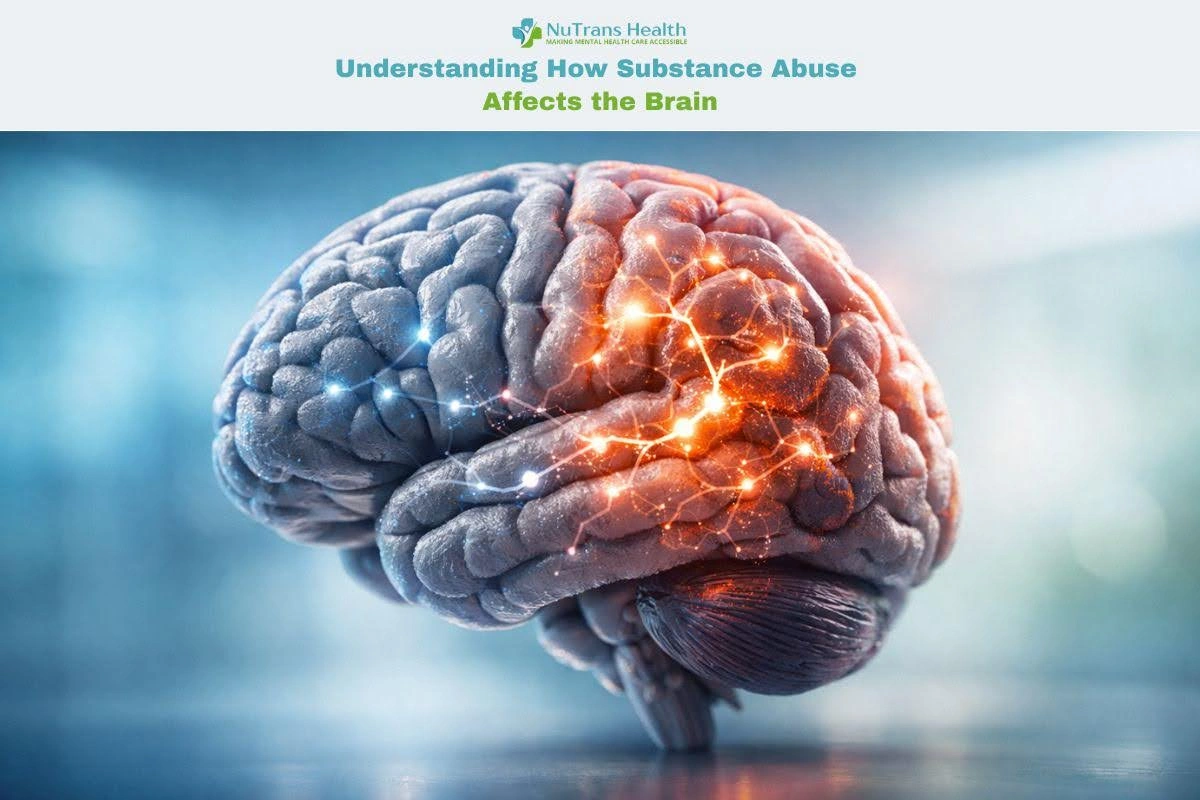
To understand substance abuse, it’s essential to first understand the brain’s reward system, primarily located in the mesolimbic pathway, a network connecting the ventral tegmental area (VTA), nucleus accumbens, and prefrontal cortex.
When we engage in enjoyable activities like eating, exercising, or socializing, the brain releases dopamine, a neurotransmitter that signals pleasure and reinforces behavior. This “reward circuit” motivates us to repeat life-sustaining activities.
How Substances Hijack the Reward System
Drugs and alcohol artificially amplify dopamine release, producing euphoric sensations far more intense than natural rewards. This overstimulation teaches the brain that the substance is vital for survival, a false but powerful message.
Over time, the brain adapts by:
- Reducing dopamine receptor availability (tolerance)
- Weakening response to natural rewards
- Creating cravings whenever cues associated with the drug appear
Thus begins the cycle of addiction: intense pleasure, followed by craving, tolerance, and dependency.
The Chemistry of Addiction: The Role of Brain Neurotransmitters
Each drug affects the brain differently, but all interact with its communication system, the synapses where neurotransmitters pass signals between neurons.
Here’s how key neurotransmitters are involved:
a. Dopamine: The “Feel-Good” Chemical
Most addictive substances flood the reward system with dopamine, causing euphoric highs. Over time, the brain produces less dopamine naturally, leading to feelings of emptiness or depression when not using the drug.
b. GABA and Glutamate: The Balance of Calm and Excitation
- GABA inhibits brain activity, promoting relaxation.
- Glutamate excites neurons and supports learning and memory.
Alcohol and sedatives increase GABA while suppressing glutamate, leading to drowsiness and impaired memory. Chronic use disrupts this balance, making withdrawal potentially dangerous and even fatal.
c. Serotonin: Mood and Impulse Control
Drugs like MDMA (ecstasy), LSD, and some antidepressants act on serotonin pathways, which regulate mood, appetite, and sleep. Excessive use can deplete serotonin, leading to depression and anxiety.
d. Endorphins: The Natural Painkillers
Opioids mimic endorphins, binding to pain receptors and creating relief and euphoria. Over time, the brain stops producing endorphins naturally, causing severe withdrawal pain when use stops.
How Different Substances Affect the Brain
While all addictive substances alter brain chemistry, they do so through different mechanisms. Let’s look at the most common categories.
a. Alcohol
Alcohol is a central nervous system depressant. It enhances GABA and inhibits glutamate, slowing brain activity and impairing judgment, coordination, and memory. Chronic use causes:
- Shrinkage of the hippocampus (memory center)
- Disruption of the prefrontal cortex, affecting decision-making
- Damage to white matter, slowing neural communication
Heavy drinkers often experience blackouts, poor impulse control, and cognitive decline. In extreme cases, Wernicke-Korsakoff syndrome (caused by thiamine deficiency) leads to permanent brain damage and memory loss.
b. Opioids (Heroin, Morphine, Prescription Painkillers)
Opioids bind to the brain’s mu-opioid receptors, blocking pain and flooding the reward system with dopamine. Over time, the brain reduces its receptor sensitivity and endorphin production.
Long-term effects include:
- Reduced pain tolerance
- Depression and anhedonia (inability to feel pleasure)
- Respiratory depression and potential overdose
Brain imaging studies show structural changes in the amygdala and prefrontal cortex, areas linked to emotion and self-control.
c. Stimulants (Cocaine, Methamphetamine)
Stimulants increase dopamine and norepinephrine, leading to energy, focus, and euphoria. However, chronic use burns out the dopamine system, leaving the user exhausted and emotionally blunted.
Long-term stimulant abuse can cause:
- Severe anxiety and paranoia
- Memory deficits and psychosis
- Neurotoxicity and cognitive impairment
Methamphetamine, in particular, causes oxidative stress that destroys dopamine neurons, leading to a Parkinson’s-like state in severe cases.
d. Cannabis
THC (tetrahydrocannabinol), the psychoactive compound in cannabis, mimics anandamide, a natural cannabinoid neurotransmitter. It binds to CB1 receptors, altering memory, coordination, and perception.
While some effects are reversible, chronic heavy use can lead to:
- Reduced motivation (amotivational syndrome)
- Cognitive decline, especially in adolescents
- Altered connectivity in brain regions regulating reward and learning
e. Nicotine
Nicotine activates acetylcholine receptors, releasing dopamine and creating alertness and relaxation simultaneously. Its short half-life (about 2 hours) drives frequent use to avoid withdrawal.
Chronic exposure changes receptor density and function, reinforcing dependence. Although less neurotoxic than other drugs, nicotine primes the brain for other addictions, a phenomenon called the gateway effect.
How Chronic Stress Keeps the Brain Trapped in Addiction
One of the key characteristics of addiction is its chronic relapsing nature. Even after years of abstinence, environmental cues such as a smell, song, or place can trigger cravings.
This is due to long-lasting changes in brain circuitry:
a. The Prefrontal Cortex: Decision-Making and Impulse Control
The prefrontal cortex (PFC) governs self-control, judgment, and planning. Substance abuse weakens this area, reducing the ability to resist urges. That’s why addicted individuals often act impulsively, even knowing the consequences.
b. The Amygdala and Stress Response
The amygdala, responsible for emotional memory, becomes hypersensitive during withdrawal. It triggers anxiety and fear, motivating relapse as the brain seeks relief.
c. Neuroplasticity and Memory Encoding
Drugs “rewire” the brain through neuroplasticity, the process of forming new neural connections. Repeated drug exposure engrains powerful memory associations (drug = pleasure), making recovery a battle against deeply rooted patterns.
Why the Adolescent Brain Is Especially Vulnerable to Addiction
The adolescent brain is still under construction, especially the prefrontal cortex, which matures around age 25. This makes teenagers more prone to risky behavior, impulsivity, and experimentation.
Drug exposure during this period has magnified consequences:
- Disruption of neural pruning, affecting learning and memory
- Altered dopamine signaling, predisposing to lifelong addiction
- Greater risk of mental illness, such as anxiety and depression
Early prevention and education are crucial, as the developing brain is far more plastic and thus more susceptible to both harm and healing.
How the Brain Repairs Itself After Addiction?
One of the most encouraging findings in neuroscience is that the brain has remarkable resilience. Recovery from addiction is not only possible but can lead to measurable neural regeneration.
a. Neuroplastic Healing
With sustained abstinence, the brain begins to:
- Rebalance neurotransmitters
- Restore dopamine receptor sensitivity
- Rebuild gray matter volume, especially in the prefrontal cortex
Cognitive functions like memory, attention, and decision-making often improve significantly within months to years of sobriety.
b. The Role of Therapy and Environment
Therapies such as Cognitive Behavioral Therapy (CBT), Mindfulness-Based Relapse Prevention, and Medication-Assisted Treatment (MAT) help retrain thought patterns and regulate stress response.
A stable, supportive environment and healthy lifestyle, including nutrition, exercise, and sleep, also enhance neurogenesis (the growth of new neurons).
To make informed choices about mental health care, visit our article A Simple Guide to Mental Health Therapist Licenses: Understanding LPC, LMFT, LCSW, and Other Credentials, where we explain each license and what it means for your treatment.
What Science Reveals About the Long-Term Effects of Addiction
Even after recovery, some structural and chemical changes may persist. Chronic substance abuse has been linked to:
- Reduced hippocampal volume (memory impairment)
- Diminished white matter integrity (slower communication)
- Altered stress hormone regulation (increased cortisol levels)
- Higher vulnerability to neurodegenerative diseases
However, these risks vary widely based on duration of use, genetics, type of substance, and recovery interventions. Importantly, ongoing abstinence and cognitive engagement can mitigate or even reverse many effects.
Gender and Genetic Differences in Brain Response
While addiction affects everyone, research shows that biological sex and genetics play significant roles in how the brain responds to substances and recovers from their effects.
a. Gender-Specific Effects
Research shows that men and women experience addiction differently:
- Women progress from initial use to addiction faster (telescoping effect) and experience stronger cravings linked to hormonal cycles.
- Men often exhibit higher risk-taking behavior and external triggers.
b. Genetic Susceptibility
Twin studies reveal that 40–60% of addiction risk is genetic. Variations in dopamine receptor genes (such as DRD2) and metabolism-related genes can influence vulnerability. However, genetics is not destiny, as environment and behavior play equally critical roles.
How Prevention and Early Intervention Make a Difference
Addressing substance abuse before it begins is one of the most effective ways to protect brain health and reduce the long-term impact of addiction. The key ways prevention and early intervention make a difference are outlined below:
a. Education and Awareness
Teaching the science of addiction, not just its social consequences, empowers people to make informed choices. Understanding how substances rewire the brain reframes addiction as a health issue, not a moral failure.
b. Strengthening Coping Skills
Stress, trauma, and mental illness often precede substance abuse. Programs that teach emotional regulation, mindfulness, and problem-solving skills reduce the need for self-medication.
c. Community and Connection
Social isolation is one of addiction’s strongest predictors. Positive community connections such as family, mentors, and recovery groups activate the same reward pathways as drugs, offering natural reinforcement for sobriety.
The Promise of Neuroscience in Addiction Recovery
Addiction research has entered a new era. Advances in functional MRI (fMRI), optogenetics, and neurostimulation (like transcranial magnetic stimulation, or TMS) are revealing ways to directly modify neural circuits involved in craving and relapse.
Emerging therapies include:
- Deep Brain Stimulation (DBS) for severe, treatment-resistant cases
- Psychedelic-assisted therapy (e.g., psilocybin, ketamine) showing promise in reprogramming maladaptive networks under clinical supervision
- Precision medicine that tailors treatment to an individual’s genetic and neurochemical profile
The ultimate goal is to shift from punishment to personalized healing, restoring brain health and dignity to those affected.
Reframing Addiction as a Brain Disease
Substance abuse profoundly alters the brain’s structure and function, reshaping circuits responsible for pleasure, motivation, decision-making, and emotion. But understanding these mechanisms also opens the door to compassion and effective treatment.
Addiction is not a failure of willpower; it is a chronic brain disorder that can be managed and healed through science, therapy, and support. The same neuroplasticity that once fueled dependency can, with time and care, restore balance and resilience.
Every moment of recovery strengthens new neural pathways, proof that the brain, like the person it belongs to, has an incredible capacity for change.
For practical ways to support your recovery journey, explore our blog on Two Easy Techniques to Calm Your Nervous System and Improve Mental Well-Being to learn simple strategies for restoring inner balance and emotional health.
NuTrans Health: Empowers Recovery Through Compassion and Science
At NuTrans Health, we believe that true healing begins with understanding, especially when it comes to the science of addiction and recovery. Our experienced Therapist in Charlotte, NC provides compassionate, evidence-based care to help individuals restore brain health, rebuild confidence, and renew their sense of purpose.
Recovery is not just possible; it’s a journey of growth and transformation. With the right guidance and support, every step forward brings you closer to balance, resilience, and lasting wellness.
Related Blogs
Mental Health Services in Raleigh NC and How AI Improves It
Mental Health Services in Raleigh NC and How AI...
Read MoreMental Health Counseling and Workplace Stress in Raleigh
Mental Health Counseling and Workplace Stress in Raleigh The...
Read MoreTeletherapy vs. In-Person Counseling: Which One is Right for You?
Teletherapy vs. In-Person Counseling: Which One is Right for...
Read More