Geek culture, once dismissed as niche, has now become a global force shaping entertainment, social identity, and even therapeutic practices. People find genuine psychological support in spaces such as video games, tabletop adventures, anime fandoms, cosplay, and online communities, This growing movement, often referred to as Geek Therapy, recognizes that the stories, play, and communities traditionally labeled “geeky” can have powerful mental-health benefits.
Geek hobbies often function as immersive tools for self-expression, emotional regulation, connection, and healing. In moments of stress, activities like D&D, open-world gaming, and sci-fi fandoms can become meaningful lifelines.
This article explores what Geek Therapy is, why it works, and how gaming and fandom communities foster resilience and well-being.
Table of Contents- What Is Geek Therapy?
- Why Geek Culture Supports Mental Wellness
- How Tabletop Role-Playing Games Like D&D Support Mental Health
- How Video Games Strengthen Mental Health
- The Mental Health Power of Fandom Communities
- How Cosplay and LARPing Help People Explore Identity
- Why Geek Therapy Works
- How to Use Geek Therapy in Everyday Life
- The Future of Geek Therapy
- NuTrans Health Provides Support That Aligns with Your Passions
What Is Geek Therapy?
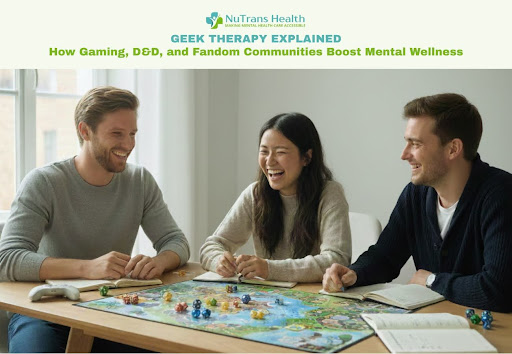
Geek Therapy is a therapeutic approach that integrates elements of geek culture, such as video games, comic books, anime, role-playing games (RPGs), and fandom communities, into mental health support. It is used both clinically by trained therapists and informally by individuals who naturally gravitate toward these interests for emotional comfort.
At its core, Geek Therapy is based on a simple truth:
People heal better when the tools they use resonate with who they are.
Rather than forcing clients into unfamiliar therapeutic methods, Geek Therapy leverages existing passions to make mental-health work more accessible, relatable, and effective. A teenager who struggles to talk about anxiety might open up more easily through a conversation about their favorite video game characters. A socially anxious adult may build confidence in tabletop role-playing games where they can “rehearse” bravery in a safe, imaginative world.
This approach validates interests that society sometimes labels as childish or unproductive. Instead, it acknowledges that meaningful stories and shared adventures can be profound vehicles for healing.
Why Geek Culture Supports Mental Wellness
Many elements of geek culture naturally align with core principles of psychological well-being. Rather than functioning solely as hobbies, they serve deeper purposes such as identity formation, emotional expression, and community building. Here’s why they’re uniquely powerful.
1. Safe Spaces for Identity Exploration
In games and fandom spaces, people can experiment with identities they may feel uncomfortable expressing in the real world.
A shy person may role-play a confident leader.
A queer person may feel more accepted in supportive online communities.
Someone struggling with self-esteem might create a character who embodies their aspirational traits.
This process of trying on different selves can foster personal insight and confidence. It’s similar to the therapeutic technique of “externalization,” where emotions and struggles are explored at a distance, making them easier to manage.
2. Stories That Teach Emotional Skills
Many geek narratives revolve around growth, loss, friendship, bravery, and perseverance. When players witness characters overcoming challenges, they often internalize similar lessons. Games and fandoms offer rich opportunities for:
- empathy-building
- problem-solving
- moral reasoning
- processing complex emotions
A storyline about grief in a game like Spiritfarer or Final Fantasy can resonate deeply with someone experiencing loss. Watching characters navigate adversity can help fans explore their own struggles indirectly.
3. Communities That Provide Belonging
Geek communities have a long history of creating inclusive spaces for people who may feel isolated elsewhere. Cons, gaming groups, online forums, and fan spaces allow individuals with niche interests to find “their people.”
Belonging is a crucial pillar of mental health.
Feeling understood, even by strangers who simply love the same show or game, can reduce loneliness and reinforce self-worth.
4. Play as Stress Relief
Play isn’t only for children; adults benefit enormously from unstructured fun. Geek hobbies provide:
- a sense of mastery
- relaxation
- creativity
- escapism in a healthy way
Games release dopamine, reduce cortisol, and provide a momentary break from stressors, making it easier to return to real-life challenges with renewed energy.
5. Cooperative Activities Encourage Social Skills
Many geek activities require teamwork. Multiplayer games, collaborative storytelling in D&D, and community-driven fandom projects teach:
- communication
- cooperation
- conflict resolution
- patience
These skills translate directly into everyday relationships and work environments.
How Tabletop Role-Playing Games Like D&D Support Mental Health
While Geek Therapy spans many interests, few mediums have seen as much therapeutic use as Dungeons & Dragons and other tabletop role-playing games.
Why D&D Is a Powerful Therapeutic Tool
1. Collaborative storytelling
TTRPGs invite players to build a world together. This fosters trust, communication, and empathy.
2. Emotional distance
Players explore difficult emotions through their characters, providing a safe buffer. For example, someone afraid of confrontation might role-play addressing conflict as a paladin or ranger.
3. Practicing real-life skills
Sessions often involve problem solving, leadership, negotiation, and emotional expression, all practiced in a low-risk environment.
4. Building social confidence
For people with anxiety or social struggles, weekly campaigns create structured, predictable social interactions, making connection feel manageable and fun.
Therapeutic Group D&D
Some mental-health professionals run D&D therapy groups, where campaigns are intentionally designed around themes such as:
- resilience
- self-discovery
- coping with trauma
- communication
Players work through quests that echo their real-world challenges, gaining insight and courage. The metaphorical nature of the game makes difficult topics easier to explore.
How Video Games Strengthen Mental Health
Video games are often misunderstood by those who don’t play them, but research continues to show that gaming can offer significant psychological benefits when used intentionally.
1. Emotional Regulation
Games often provide calming rhythms, problem-solving challenges, or immersive environments that help players unwind. Titles like Stardew Valley, Animal Crossing, or Journey are beloved for their soothing nature.
2. Mastery and Motivation
Completing quests or leveling up provides immediate feedback and a sense of achievement. For people struggling with motivation or depression, these micro-rewards can feel deeply validating.
3. A Sense of Control
Many gamers turn to games during periods of uncertainty. Unlike real life, games offer predictable rules and achievable goals. This sense of control can be grounding.
4. Therapeutic Games
Some games are intentionally designed for mental wellness, teaching mindfulness, breathing techniques, or emotional-awareness skills. Even mainstream games often include storytelling moments that encourage reflection.
5. Social Bonding in Multiplayer Games
Online games like Final Fantasy XIV, Fortnite, or Minecraft connect players across continents, cultivating supportive friendships. Many people find real community in guilds, clans, and servers, sometimes even more fulfilling than offline social networks.
The Mental Health Power of Fandom Communities
Fandoms form around shared love for stories, characters, and worlds, whether it’s Marvel, Star Wars, anime, K-pop, or indie games. These communities have unique strengths.
1. Creative Expression
Fan art, fan fiction, cosplay, and community projects allow individuals to express themselves artistically without fear of judgment. Creativity is a proven mood booster, reducing stress and encouraging flow states.
2. Validation Through Shared Passion
Fandoms normalize excitement over things that outsiders may label “weird.” When someone feels accepted for their enthusiasm, it alleviates shame and fosters self-confidence.
3. Safe Havens for Marginalized Groups
Many fandoms are uniquely inclusive spaces for LGBTQ+ individuals, neurodivergent communities, and people who struggle in traditional social settings. These spaces can provide identity affirmation and emotional support.
4. Meaningful Friendships Formed Online
For people who live in rural areas or have difficulty connecting in person, fandom communities offer real companionship. Friendships formed around shared storytelling often feel deep and emotionally rich.
How Cosplay and LARPing Help People Explore Identity
Cosplay (costume play) and live-action role-play (LARP) invite participants to embody characters they admire. This form of expression allows people to explore:
- courage
- gender identity
- body positivity
- creativity
- leadership
By stepping into a character’s shoes, individuals practice traits they wish to strengthen in themselves. Wearing armor might help someone feel empowered; wearing a whimsical costume might help someone reconnect with joy.
Cosplay communities also tend to be supportive and collaborative, encouraging inclusivity and celebration of all body types, backgrounds, and skill levels.
Why Geek Therapy Works
What makes Geek Therapy so effective isn’t just the content; it’s the connection, personal growth, and storytelling at its core.
1. Narrative Therapy Principles
Geek Therapy aligns naturally with narrative therapy, which views people as the authors of their own stories. When fans engage with fictional narratives, they learn to reinterpret their lives through a more empowered lens.
2. Cognitive Behavioral Benefits
Games help people recognize patterns, practice problem-solving, and reframe negative thinking. Small in-game victories can recalibrate someone’s belief in their ability to succeed.
3. Social Learning Theory
People model behavior from characters they admire. Watching heroes struggle and persevere provides inspiration and coping strategies.
4. Positive Psychology
Geek culture emphasizes:
- creativity
- play
- community
- resilience
All of these align with positive psychology’s focus on strengths and flourishing.
How to Use Geek Therapy in Everyday Life
You don’t need a licensed therapist or specialized program to benefit from the principles of Geek Therapy. Many strategies can be integrated into daily life with intention.
1. Use Fiction to Explore Emotions
Reflect on characters you relate to.
How do they handle struggles?
What strengths do they develop?
What parts of their story parallel your own?
Journaling about these connections can increase self-awareness.
2. Join a Community
Whether it’s a gaming guild, a Discord server, or a local D&D group, joining a community can fulfill the deep human need for belonging.
3. Try Role-Playing for Confidence
Use tabletop games to practice assertiveness, leadership, or empathy in low-stakes scenarios.
4. Curate Your Game Library for Well-Being
Choose games that make you feel calm, inspired, or socially connected. Avoid ones that leave you frustrated or drained.
5. Create Something
Fan fiction, drawing, costume making, and any creative outlet can become therapeutic when done for joy rather than perfection.
You can further support your personal growth journey by exploring Self Esteem Therapy: Boosting Confidence through Mindfulness, which pairs well with the therapeutic benefits found in geek-centered activities.
The Future of Geek Therapy
Geek Therapy is moving from a niche concept to a respected mental-health approach, and its future looks increasingly promising.
1. Growing Clinical Recognition
More therapists are integrating video games, TTRPGs, and fandom discussions into their work. Counseling programs are beginning to teach these methods, helping normalize them within professional practice.
2. Expanding Research Support
Academic interest in the psychological benefits of gaming, storytelling, and role-play is rising. As research grows, it will strengthen evidence-based frameworks and refine how Geek Therapy is applied.
3. More Accessible Community Programs
Therapeutic D&D groups, gaming-based support circles, and fandom-centered wellness initiatives are becoming more common. These programs provide safe, engaging spaces for connection and healing.
4. Innovative Digital Tools
Virtual reality, online RPGs, and immersive digital communities are creating new opportunities for therapeutic experiences, especially for those who feel more at ease in virtual worlds.
5. Increasing Cultural Acceptance
Geek culture’s mainstream popularity reduces stigma, making people more comfortable seeking therapy that embraces their passions.
6. Tailored Support for Diverse Communities
Geek Therapy shows particular promise for neurodivergent individuals, LGBTQ+ communities, and others who benefit from structured play and imaginative exploration. Future models will likely offer even more personalized approaches.
The future of Geek Therapy blends creativity, technology, and inclusivity. As research grows and society continues to embrace geek culture, this therapeutic approach will become an even more accessible way to foster emotional resilience, self-discovery, and community.
If you're curious about how personal growth can strengthen relationships, our article Can Individual Therapy Help a Marriage? offers helpful insights.
NuTrans Health Provides Support That Aligns with Your Passions
At NuTrans Health, we believe that healing becomes most powerful when it aligns with your passions and lived experiences. Geek Therapy reminds us that growth can start in unexpected places, even in the imaginative worlds that give us comfort. For those seeking thoughtful, personalized support, meeting with a Therapist in New Jersey at NuTrans Health can open the door to a more confident and emotionally connected version of yourself.
Related Blogs
Mental Health Services in Raleigh NC and How AI Improves It
Mental Health Services in Raleigh NC and How AI...
Read MoreMental Health Counseling and Workplace Stress in Raleigh
Mental Health Counseling and Workplace Stress in Raleigh The...
Read MoreTeletherapy vs. In-Person Counseling: Which One is Right for You?
Teletherapy vs. In-Person Counseling: Which One is Right for...
Read More