Clinically reviewed by Natashia Shelley, MA, LCMHC — Licensed Clinical Mental Health Counselor, NuTrans Health. Published by NuTrans Health | Psychiatric Medication Management
Sleep directly determines how well ADHD medication works in children. When a child with ADHD does not sleep enough, their medication loses effectiveness, their symptoms worsen, and the brain becomes harder to treat. It is not a side issue. It is not something to address after everything else is figured out. Sleep is one of the most powerful levers in ADHD medication management, and ignoring it is one of the most common reasons treatment stalls.
If your child is on ADHD medication and still struggling at school, at home, or at bedtime, then sleep may be the missing piece.
This guide explains how sleep affects ADHD symptoms, medication effectiveness, and overall treatment outcomes, along with practical strategies to help children sleep better and function at their best.
Table of Contents
- Understanding the Relationship Between ADHD and Sleep
- The ADHD-Sleep Cycle
- How ADHD Medications Affect Sleep
- Why Sleep Matters for ADHD Medication Effectiveness
- How Sleep Challenges Change With Age
- What Parents Can Actually Do
- When to Talk to a Specialist
- Partner With Nutrans Health for Comprehensive ADHD Care
- Frequently Asked Questions
Understanding the Relationship Between ADHD and Sleep
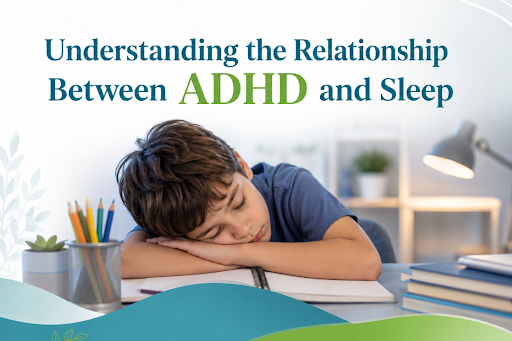
ADHD is a neurodevelopmental disorder that affects attention, impulse control, emotional regulation, and executive functioning. While these symptoms are often discussed in the context of school performance and behavior, ADHD can also significantly affect sleep.
Research estimates that between 50% and 70% of children with ADHD experience significant sleep problems, making sleep difficulties one of the most common co-occurring challenges in ADHD management.
The kids with ADHD frequently experience:
- Delayed sleep onset — taking 45 minutes to over an hour longer to fall asleep than peers
- Frequent nighttime awakenings that disrupt deep, restorative sleep
- Restless sleep with more movement and less stillness throughout the night
- Excessive daytime sleepiness the next morning, even after a full night in bed
- Strong resistance to bedtime routines, not as defiance but as a genuine inability to shift gears
This is not simply a parenting challenge. It reflects real neurological differences in how the ADHD brain produces melatonin — the hormone signal that tells the body it is time to sleep.
For most children without ADHD, melatonin release begins around 9:30 PM. For children with ADHD, that signal does not arrive until around 10:15 PM or later. That one-hour difference makes bedtime feel like a nightly battle for the whole family.
The ADHD-Sleep Cycle
One of the most important concepts for parents to understand is that ADHD and sleep problems often reinforce one another.
A child who is chronically underslept will show:
- Difficulty concentrating and staying on task
- Increased impulsivity and poor decision-making
- Hyperactivity and restlessness
- Emotional outbursts and low frustration tolerance
- Declining school performance
- Irritability and mood instability
This matters for two reasons.
First, some children are assessed as having more severe ADHD than they actually do, when chronic poor sleep is the real driver.
Second, poor sleep and ADHD symptoms feed into each other in a compounding cycle that gets worse over time.
Those worsened symptoms make the following night harder. And the cycle continues — quietly building for months or even years before families realize what is happening.
Breaking that cycle is one of the most powerful things you can do for your child's ADHD treatment.
"Sleep is not a luxury for children with ADHD. It is a core part of treatment — and it belongs in the conversation from day one." — Natashia Shelley, MA, LCMHC, NuTrans Health
How ADHD Medications Affect Sleep
Medication is one of the most effective treatments available for ADHD. However, some medications can influence sleep patterns. Here is where it gets complicated for many families.
Stimulant Medications
The stimulant medications most commonly prescribed for ADHD — such as methylphenidate (Ritalin, Concerta, Focalin) and amphetamines (Adderall, Vyvanse) — work by boosting alertness and focus during the day. They are among the most well-studied and effective treatments for ADHD symptoms.
But their effects do not always stop when the school day ends.
When a child takes a stimulant medication too late in the day, it can:
- Delay the time it takes to fall asleep (sleep onset latency)
- Reduce total sleep time across the night
- Cause difficulty winding down and transitioning to calm in the evening
- Increase nighttime awakenings in some children
- Trigger an emotional rebound effect as the medication wears off, making bedtime more volatile
This creates a difficult cycle for many families. The very medication helping your child thrive in the classroom may be contributing to the exhausted, wired child you are dealing with at 11 PM.
The good news: this is a well-recognized problem with real, manageable solutions that your provider can work through with you.
Non-stimulant medications
Not all ADHD medications carry the same sleep risk. Non-stimulant options, including atomoxetine (Strattera), guanfacine (Intuniv), and clonidine (Kapvay), do not carry the same alerting effect as stimulants. In fact, guanfacine and clonidine are sometimes associated with improved sleep and reduced bedtime anxiety.
These are not the right choice for every child, but they are worth a conversation with your prescriber if stimulant-related sleep disruption is an ongoing problem.
Why Sleep Matters for ADHD Medication Effectiveness
Many parents and even some providers treat sleep as something to address after the ADHD itself is under control. This is a mistake.
When a child with ADHD does not sleep well, the next day looks like this:
- Worse attention and focus — sleep deprivation directly impairs the prefrontal cortex, the same brain region already challenged by ADHD
- More impulsivity — a tired child has even less capacity to pause before reacting
- Emotional dysregulation — frustration, meltdowns, and mood swings increase significantly after poor sleep
- Reduced medication effectiveness — stimulants work best in a well-rested brain; chronic sleep debt blunts their impact
- Worsened anxiety — children with ADHD frequently have co-occurring anxiety, and sleep deprivation amplifies anxious thinking and physical tension at bedtime
If you are not addressing sleep alongside medication, you may be working much harder on ADHD management and getting less out of it.
How Sleep Challenges Change With Age
ADHD-related sleep problems show up differently depending on your child's stage of development. Knowing what to look for makes it easier to catch issues early and have more targeted conversations with your provider.
Young Children (Ages 5–8)
Sleep problems at this age often look like:
- Extreme bedtime resistance
- Repeated requests for water, snacks, hugs, or "one more story"
- Difficulty transitioning from playtime to bedtime
- Needing a parent present to fall asleep
- Frequent nighttime awakenings
- Trouble settling back to sleep independently
Children in this age group are often more sensitive to stimulant medications, making medication timing and dosage especially important when managing both ADHD symptoms and sleep.
School-Age Children (Ages 9–12)
This is one of the most common age groups for medication-related sleep challenges. Sleep issues may include:
- Difficulty winding down at night
- Feeling unusually energetic or "wired" in the evening
- Excessive talking or activity close to bedtime
- Delayed sleep onset
- Emotional outbursts as medication wears off
- Difficulty waking up for school in the morning
Many children in this age range take long-acting ADHD medications that can extend into the evening hours. Parents may mistake medication rebound effects for behavioral problems when they are actually part of the medication's wear-off process.
Teenagers (Ages 13–18)
Teenagers with ADHD face unique sleep challenges because both adolescence and ADHD naturally delay sleep timing. Common issues include:
- Difficulty falling asleep before midnight
- Racing thoughts at bedtime
- Inconsistent sleep schedules
- Excessive daytime sleepiness
- Difficulty waking up for school
- Weekend oversleeping
- Increased evening screen use that further delays sleep
For many teens, late bedtimes are not simply a matter of willpower. ADHD-related delays in melatonin release combined with normal adolescent circadian rhythm changes can make falling asleep early genuinely difficult, even when they want to.
To better understand these challenges, learn more about how ADHD affects everyday tasks and daily functioning.
What Parents Can Actually Do
The cycle can be interrupted. Here are evidence-based strategies that make a measurable difference.
1. Medication timing matters enormously
One of the simplest adjustments is giving medication as early as possible in the morning. This allows the stimulant effects to taper fully before bedtime.
Talk to your child's provider about:
- Moving the morning dose earlier, even by 30 minutes
- Switching from a long-acting to a shorter-acting formulation
- Whether a small early-afternoon booster dose might reduce the evening rebound (sometimes it helps rather than hurts)
- Trialing a non-stimulant like guanfacine or clonidine if sleep disruption is severe
Never adjust timing or dose on your own; always coordinate with your prescriber.
2. Build a consistent wind-down routine
The ADHD brain responds particularly well to predictable structure. A calming pre-sleep routine sends a clear signal that the day is ending.
A good bedtime routine for children with ADHD includes:
- Starting at the same time every night, including weekends
- A warm bath or shower 30 to 60 minutes before bed
- Low-stimulation activities: reading a physical book, gentle stretching, or quiet drawing
- Dimming lights throughout the home in the final hour before bed
- No screens for at least one hour before sleep — blue light from devices further delays the melatonin release that is already late in children with ADHD
3. Consider melatonin — with provider guidance
Melatonin is not a sleeping pill. It is a hormone that helps reset the body's internal clock.
For children with ADHD whose delayed melatonin onset is driving late sleep, a small supplement can genuinely help. Research shows that children with ADHD who use melatonin alongside their medication fall asleep faster and sleep longer overall.
Key points for parents:
- The typical recommended dose is 1 to 3 mg for younger children and 3 to 5 mg for older children, taken 30 minutes before bed
- Always discuss melatonin with your child's provider before starting
- It is not recommended for children under 5 years old
- Use it as a targeted tool with provider oversight, not an indefinite daily habit without reassessment
4. Add physical activity to the day
This one is often overlooked. Regular aerobic exercise during the day, especially in the morning or early afternoon, has been shown to improve both ADHD symptoms and sleep quality in children. It does not need to be a formal sport. Walking, biking, shooting hoops, or even active play all count.
Avoid vigorous exercise within two hours of bedtime, as it can have the opposite effect and make sleep harder.
5. Address anxiety at bedtime
Children with ADHD have higher rates of co-occurring anxiety disorders, and anxiety is one of the biggest hidden drivers of bedtime sleep problems. Racing thoughts, "what if" worries, and physical restlessness at bedtime are often anxiety, not ADHD, and not defiance.
If your child describes a busy or worried mind at night, that is worth raising with a therapist.
6. Screen for underlying sleep disorders
Some children with ADHD have additional sleep conditions that go undiagnosed because they overlap with ADHD symptoms.
Ask your provider specifically about:
- Restless Leg Syndrome (RLS): Children with ADHD have higher rates of low ferritin, which is linked to RLS — an uncomfortable urge to move the legs that makes sleep nearly impossible. A simple blood test can check ferritin levels.
- Obstructive sleep apnea: Fragmented sleep from breathing disruptions worsens daytime ADHD symptoms significantly, and many children with apnea go years without a diagnosis
- Circadian rhythm disorders: A more extreme version of the delayed sleep onset common in ADHD, sometimes requiring specific light-based or behavioral treatment
Treating an underlying sleep disorder can sometimes reduce the apparent severity of ADHD itself.
7. Optimize the sleep environment
Small environmental changes support big improvements in sleep quality:
- Keep the bedroom cool (around 65 to 68°F is optimal), dark, and quiet
- Use white noise or a fan if your child is sensitive to ambient sounds
- Reserve the bed for sleep only — no homework, no devices, no eating in bed
- Blackout curtains make a meaningful difference in the summer months or in rooms with streetlight exposure
When to Talk to a Specialist
It is time to bring sleep to a mental health or psychiatric medication management provider if your child:
- Takes more than 45 minutes to fall asleep most nights
- Wakes repeatedly and cannot return to sleep without help
- Is exhausted during the day, even after what appears to be a full night's sleep
- Has increasing emotional dysregulation, especially in the evenings or mornings
- Began having sleep problems after starting or adjusting ADHD medication
- Has anxiety at bedtime that behavioral strategies alone are not resolving
Understanding when professional treatment should include medication can help families make informed mental health decisions. Explore the signs and guidance for when medicines are necessary for mental health.
Partner With Nutrans Health for Comprehensive ADHD Care
Sleep is not just a side effect of ADHD treatment. It is a critical part of it. When sleep improves, children are often better able to focus, regulate emotions, respond to medication, and succeed at home and school. Addressing sleep alongside ADHD symptoms can lead to more effective and sustainable treatment outcomes.
At NuTrans Health, our experienced therapists in Raleigh provide Family therapy and individual counseling to evaluate ADHD symptoms and sleep patterns together as part of a complete picture. We assess medication timing, dose, formulation, co-occurring anxiety, and home environment as interconnected factors.
Telehealth appointments are available for families who prefer to be seen from home.
Contact Nutrans Health today to schedule an appointment and learn how comprehensive ADHD care can support your child's long-term health, development, and well-being.
Frequently Asked Questions
Does ADHD medication always cause sleep problems in children?
Not always. Stimulant medications can delay sleep, especially if taken too late in the day or at a higher dose. However, many children experience little to no sleep disruption. Because responses vary, sleep should be reviewed during regular medication follow-ups.
What time should my child take their ADHD medication to protect sleep?
Most stimulant medications should be taken early in the morning, ideally with or before breakfast. This gives the medication time to wear off before bedtime. Never adjust the timing or dose without consulting your provider.
Is melatonin safe for a child who is already taking ADHD medication?
For many children, short-term melatonin use alongside ADHD medication is considered safe and may help them fall asleep faster. However, melatonin is a hormone and should only be used under the guidance of a healthcare provider.
Can poor sleep make ADHD medication seem less effective?
Yes. Poor sleep can worsen attention difficulties, impulsivity, and emotional regulation, reducing the overall effectiveness of ADHD treatment.
My child's ADHD medication is working well during the day. Do I still need to worry about sleep?
Yes. Poor sleep can reduce medication effectiveness and worsen attention, behavior, and emotional regulation. Improving sleep may enhance treatment outcomes without needing a medication adjustment.
When should I see a specialist for my child's sleep and ADHD?
Consider seeing a specialist if sleep problems persist despite healthy sleep habits, appear related to medication, or are accompanied by anxiety or significant daytime fatigue. A comprehensive evaluation can identify contributing factors and treatment options.
Are there ADHD medications that are less likely to disrupt sleep?
Yes. Non-stimulant medications such as guanfacine, clonidine, and atomoxetine are generally less likely to interfere with sleep than stimulant medications. Your provider can help determine whether these options are appropriate for your child.
Related Blogs
Mental Health Services in Raleigh NC and How AI Improves It
Mental Health Services in Raleigh NC and How AI...
Read MoreMental Health Counseling and Workplace Stress in Raleigh
Mental Health Counseling and Workplace Stress in Raleigh The...
Read MoreTeletherapy vs. In-Person Counseling: Which One is Right for You?
Teletherapy vs. In-Person Counseling: Which One is Right for...
Read More